@media print { .callout-box { border: 1px solid #000; /* Black border for visibility in print */ padding: 15px; /* Padding to create space inside the box */ background-color: #f9f9f9; /* Light background color for contrast */ margin: 20px 0; /* Margin to space out the box from other content */ box-shadow: none; /* Remove any box-shadow */ } } Print Friendly and PDF

Guide Overview

This guide will assist local authorities in developing and implementing two-way communication processes to solicit and respond to public feedback on shared policy priorities. It is primarily intended for elected officials and staff representatives of local authorities, but it should also be useful to local civil society and citizen associations, as well as anyone interested in solving local problems with public input.

A feedback loop is a mechanism for local leaders to engage in two-way communications with community residents to support informed and responsive decision-making about local issues. The process is straightforward:

  • Reach out to residents to identify and set priorities (Listen).
  • Work with citizens to codesign solutions to address identified priorities or challenges (Respond).
  • Keep residents updated every step of the way, even if the only update is about a new obstacle or slower-than-hoped progress (Report). 

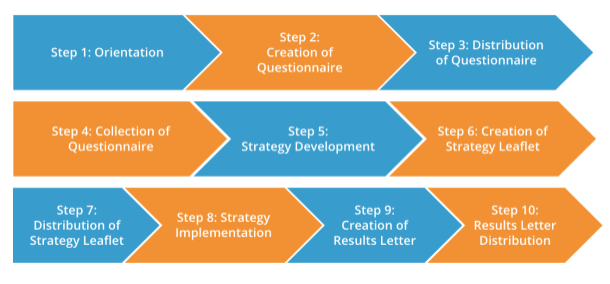
This guide offers a ten-step model for local authorities to design and implement the feedback loop process and, hopefully, to review and build upon successes and lessons learned to institutionalize the process as a regular practice for repeated use.

This guide emerged from the National Democratic Institute’s (NDI’s) years of experience implementing citizen engagement programs in collaboration with subnational government leaders and community members worldwide. In particular, this guide draws on NDI’s experience supporting feedback loops and two-way dialogues among local mayors, council members and community residents in towns and cities in MoldovaGeorgiaMexicoEl Salvador and Slovakia. The steps in the guide also apply best practices from a growing community of activists and leaders implementing more participatory decision-making processes around the world.

In a democracy, elected public officials, supported by unelected officials (like city managers) and professional civil servants, are mandated with managing public affairs to improve the public welfare. This job becomes easier when public officials understand and respond to residents’ priorities. The feedback loop model is therefore a useful and empirically verifiable tool in a local leader’s public engagement toolbox. By systematically bringing citizen input into decision-making and requiring leaders to follow up on commitments to take action openly and transparently, the process strengthens democratic norms and practices, benefits residents and helps local leaders to address complex challenges and manage public expectations.

Who Is This Guide For?

This guide will assist subnational governments,1 referred to throughout as “local authorities,” in planning and implementing a feedback loop with the ultimate aim of institutionalizing the process as a regular part of policymaking and implementation. Completing the first loop allows local authorities to identify effective strategies and adapt for future iterations. By entrenching a tailored approach to two-way dialogue into the regular policy process, feedback loops can help local authorities to better fulfill their mandates and build relationships between elected and unelected officials and residents between election cycles. 

By centering local authority representatives as the drivers and leaders of the process, this guide contributes to the already-extensive global discussion of feedback loops, which currently centers primarily on civil society-driven approaches. Such civil society-centered feedback loops are studied, designed and implemented by organizations such as Feedback Labs, Accountability Labs and People Powered.2 This guide, in comparison, learns from these endeavors to offer detailed guidance on how reformers and pro-accountability actors within government can proactively (ideally in partnership with civil society) implement, learn from and institutionalize the process. 

Therefore, this guide will be of greatest relevance to a local authority and community that wants to “do politics differently,” engaging residents more inclusively; it is designed for those with a small administrative team, limited technological and technical capacities, and generally limited resources, such as staff, money and time. 

The process proposed in this guide must be led by local authority officials (meaning elected representatives, appointed officials and bureaucrats, and administrative staff) and their respective agencies, bodies or institutions. However, this guide may also be useful to civil society groups, activists and residents interested in collaborating with local authorities to solve problems through feedback loops, including by enhancing two-way communication and community-driven policymaking in their communities. 

Box 1. Feedback loops and pro-accountability actors in both state and society

The Accountability Research Center, an exploratory research group of civil society thinkers, practitioners, activists, policy reformers and academics focused on strategies for improving public accountability, studies how government reformers can encourage citizen action from below through “sandwich strategies.” These strategies involve “state-society synergy,” where initiatives and actions from the government and nongovernmental sectors interact to create change with the potential to “drive virtuous circles of mutual empowerment between pro-accountability actors in both state and society.”3

This has direct implications for feedback loops. This guide positions local authorities as leaders of the feedback loop process, but local authorities should recognize how their efforts to engage the public in decision-making will interact with citizen action. Collective action by citizens and civil society can take many forms and serve various goals, mutually reinforcing local authorities’ efforts to address common challenges. The feedback loop process creates invited spaces for citizen voice, such as opportunities to provide input on local decisions and priorities. 

NDI’s experience shows that creating these invited spaces benefits local authorities, but it is not always smooth and comfortable. Local authorities should understand that meaningful citizen participation in decision-making will involve sharing their power. Citizens may enter these invited spaces with demands, pressure and grievances, and local authorities should be prepared to listen and engage in meaningful dialogue about how to address these needs.

Note: This process differs from feedback loop processes in which civil society takes the lead. Nongovernmental actors will face added steps of securing government buy-in to undertake feedback loops (see Step 1); they should also play a role in monitoring the process (see NDI’s Political Process Monitoring guide for advice on this approach).4 For example, in the aftermath of the 2015 earthquake in Nepal, Accountability Labs and Local Interventions Group created Citizen Helpdesks (with donor funding) and enlisted volunteers to listen for information from citizens in remote areas about the conditions and what supplies and resources were needed. They relayed this information back to the government and established systems and methods for government information to reach communities. The government was then able to get resources to remote areas that were affected by the earthquake, and citizens were more informed about government actions and assistance. In this instance, civil society and international funding were fundamental to the initiation, design and implementation of the feedback loop, even though the government was involved as a collaborator. Would this feedback loop exist without civil society pressure? Perhaps not, as civil society “found very little effort to provide information to citizens and a high level of dissatisfaction with government” in a “control community” where Helpdesk activities did not occur.5

This is not to criticize civil society-led projects or to suggest that local authorities should not engage with them (indeed, the previous example resulted in benefits for local communities and government). This is only to point out a difference with the feedback loop efforts owned and led by local authorities put forward in this guide. Civil society can support or partner with local authorities in implementing the feedback loop, especially when resources are limited. In these instances, collaborative strategies aligning government reformers and collective action prove effective. Civil society engagement can play an important role in ensuring that outreach is inclusive and in holding the government accountable through regular updates to the public and “closing the feedback loop.” Thus, while government stakeholders are necessary for the feedback loop process, civil society and community members also have an important role to play. The guide identifies key moments when civil society and broader public engagement can help the local authority to improve the feedback loop process and promote more democratic outcomes by ensuring it is inclusive, accountable, participatory and transparent. 

What is a feedback loop process, and why use it?

Feedback loops enable government responsiveness: The process structures two-way communication for a local authority to listen, analyze and address the opinions, priorities and suggestions of community residents. Feedback loops are a form of ongoing dialogue between members of the public and local authority officials that drives stronger alignment between public priorities and government action to deliver on services, policies and programs. While processes vary, they help local leaders identify and address community needs and challenges (such as those related to specific services and infrastructure, or improvements to communication and consultation practices) in an iterative and participatory way.

Feedback loop processes should be intentionally participatory and inclusive.6 They begin with a decision by officials within a local authority to solicit public input to inform or guide governmental decision-making. This can be general decision-making (“We want to govern in a new way”) or a specific decision (“What should we do about this topic?”). The local authority then designs and implements a plan to collect public input to identify and order priorities, such as on necessary infrastructure improvements or the reform or expansion of services, within the scope of the local authority budget (as often some expense is required). To ensure the process is inclusive, the local authority should deliberately design its outreach to account for diverse communities that are hard to reach or usually underrepresented in decision-making. The government then compiles and analyzes responses and reports its findings to the public to validate the identified priorities. After this, the local authority leads a process to codesign solutions through iterative public dialogue. This results in concrete actions to be taken by the local authority, rooted in public preferences. The local authority then closes the feedback loop by providing regular updates to the public on the status of implementing the agreed actions toward the named priorities. 

In other words, the feedback loop approach is to Listen, Respond and Report: 

  • Listen – Set priorities: Public feedback is collected and analyzed to identify citizen priorities in the community.
  • Respond – Use dialogue to codesign solutions or navigate trade-offs: Once priorities have been identified, officials return to the public to validate priorities and codesign solutions.
  • Report – Communicate updates: Throughout the process, the local authority should regularly communicate what it has heard from the public and be transparent about how data is used, the next steps and progress made toward resolving priorities. 

The feedback loop process is flexible, adaptable and scalable. The ten-step process offers a general framework that can be adapted based on context. Various public consultation and outreach methods make the process accessible and useful for local authorities from a variety of population sizes, resource bases and contexts. Specific methods must be chosen based on the local authority’s circumstances and the nature of the community, including available resources, technical skills and public communication preferences. 

The feedback loop framework is often deployed to support regular governmental processes such as annual budgeting; time-bound or ad hoc processes, such as planning specific public projects; and longer-term economic development planning. Public priorities are used to select particular objectives (often from a predetermined range of options, but they may also be open-ended). The feedback loop framework can also be used to conduct participatory evaluations of public programs and policies, where public input and resident feedback are used to qualitatively evaluate programs, such as student scholarship or economic grants programs, to improve the program’s design or implementation. Delivering on these priorities then becomes a measure of governance responsiveness. 

In some contexts, local authorities are obligated to engage in public participation processes – either under national or local laws, through development partnership agreements (as a requirement for European Union funding, for example), or other external frameworks and relationships. Where these obligations are present, a feedback loop helps local authorities meet these obligations and source residents’ priorities in an effective, participatory and accountable way that makes prioritization and decision-making easier and more responsive. 

A well-designed feedback process, carried out with commitment and seriousness by local authorities, prevents participatory exercises from being merely symbolic or tokenistic. Simulations of true engagement will only discourage citizen participation and increase public mistrust in local authorities and, potentially, democracy in general. Reformers constantly face this challenge; citizens may come to distrust participatory forums and consultations where there is no follow through, viewing them only as cynical “photo ops” where their contributions are not considered. Local authorities must establish genuine dialogue, rather than “information extraction,” which can be exploitative.

The word “loop” captures two key elements of the feedback loop framework: 

  1. A loop must be closed. The process of priority setting, solution codesign, and transparent and regular public reporting is closed when the government reports on whether or not a priority has been achieved. At the end of the process, the local authority closes the loop by issuing an update to residents on progress made, or on how feedback was or was not used, and the reasons why.
  2. A loop should be repeated. After the government has followed up with the public, administrators should convene to review the effectiveness of the closed feedback loop and decide on any improvements that could be made for the next process. The team should then plan to iterate the feedback loop process, whether for the same issue area, decision-making process or other governance sector. For example, if a given local budget cycle is annual, a loop for feedback on priorities for discretionary spending can be institutionalized to be repeated every year and hopefully improved across a set of indicators. Local authorities should also consider their first feedback loop as a pilot process and consider deploying similar techniques in other processes.

What are the benefits to local authorities of feedback loops?

Feedback loops have many demonstrated benefits. Evidence shows they can:

  • Align decision-making with public priorities through data-driven and evidence-based planning and policymaking by ensuring that policy choices, resource allocations and service infrastructure are informed by public opinion.7 These processes inevitably involve trade-offs and can be contentious. When officials need to make controversial decisions and navigate trade-offs, a feedback loop can help officials to listen for strong evidence of the community’s priorities, balancing limited available resources against multiple, and often conflicting, public demands.8
  • Engage community residents to solve local problems through proactive outreach and fostering people’s sense of feeling heard and valued in decision-making. Engaging residents to design or evaluate proposed solutions can build buy-in on a path forward and provide early warning about unworkable or deeply unpopular solutions.9 Through a feedback loop, residents can offer their suggestions to address local problems, learn more about their community’s needs and constraints that decision-makers face, and actively engage in government processes. Feedback loop processes can help inform citizens through dialogue events (Step 7), such as public meetings where government officials explain the public budget, or public communications (Step 6 or 8) when the government articulates how priorities can be addressed. This helps them feel heard and seen by local authorities, which enhances trust in local political institutions and actors. However, in places where public trust in the government is low or nonexistent, this trust building will take more time and effort to engage a large portion of the population using multiple engagement techniques.
  • Build trust between residents and local authorities through repeated and iterative engagements and enhanced communications, which can also translate into votes. A 2019 survey of Canadians indicated that trust increases in democratic institutions (such as city hall) and government actors (such as individual elected officials) the more that people feel “they can influence government” and that “elected officials care what they think.” In addition, those with higher trust are more likely to engage in democratic and community activities, such as volunteering or attending a community meeting.10 The OECD’s 2024 survey of all 38 member countries on the drivers of trust in public institutions indicates that “having a say in government’s decisions” is the leading driver of trust in national government.11 This democratic participation also increases the public’s knowledge of how government works, the powers and responsibilities of different levels of government, and how to get involved.12 Trust also matters for revenue generation and budgeting. Analysis from the World Bank indicates that citizens are more likely and willing to pay taxes when trust in state institutions is higher13 and that higher trust results from more transparent and effective service delivery.14
  • Make public consultation the norm by fostering a democratic governance culture that values informed public participation and recognizes the need for continuous improvement. Implementing feedback loops in support of key government processes can create the expectation that public consultation is the norm in local decision-making rather than the exception. Because many processes are annual or recurring (like a budget), local administrators gain experience in listening for and acting on feedback over time, increasing their ability to bring feedback into different local governance processes.15
  • Improve the quality of public services and preempt complaints by providing local authorities with information on performance and deficiencies, which can be a means of delivering accountability.16 Some local decisions – like budgets, development plans and strategies – are very visible to the public, and residents, civil society and the private sector want to help shape them. This raises the stakes for accountability and transparency. Local authorities can use feedback loops to preempt complaints by setting public expectations about constraints (legal, zoning, fiscal, etc.) that impact what the local authority can realistically achieve at a given time.17 In this way, participation and feedback loops can be part of a larger strategy of open government, with other improvements to government efficiency and efficacy for solving public problems.

Through an institutionalized and repeated use of the feedback loop process, local authorities can go further. They can leverage increased trust with residents – and their experience with tried and tested means of communicating with the public – to take on bigger and more challenging issues over time and in more challenging circumstances, such as:

  • Joining together with neighboring local authorities facing similar issues and – with the backing of their residents as well – pooling resources to resolve shared problems or leveraging community feedback data to lobby the national government for support. Associations of municipalities, leagues of cities or similar bodies may be useful inter-governmental mechanisms for this advocacy.
  • Messaging in crisis, as the government will be able to leverage existing trust as a source of community information and already have practice with multiple methods of outreach to citizens. In addition, one use of the feedback loop is in identifying how citizens prefer to be contacted or are most easily reached. For example, Moldovan mayors created a “community” (that residents could opt into) on a well-known messaging app, Viber, for updates on local projects. Later, this app-based community was used to provide updates during the COVID-19 pandemic and provide a socially distanced platform for communications. Feedback loops can also be used to engage residents in crisis preparedness planning and reforms, or in early recovery and reconstruction prioritization, depending on the nature of the crisis. 

Why do both elected and unelected local officials value and repeat feedback loops? 

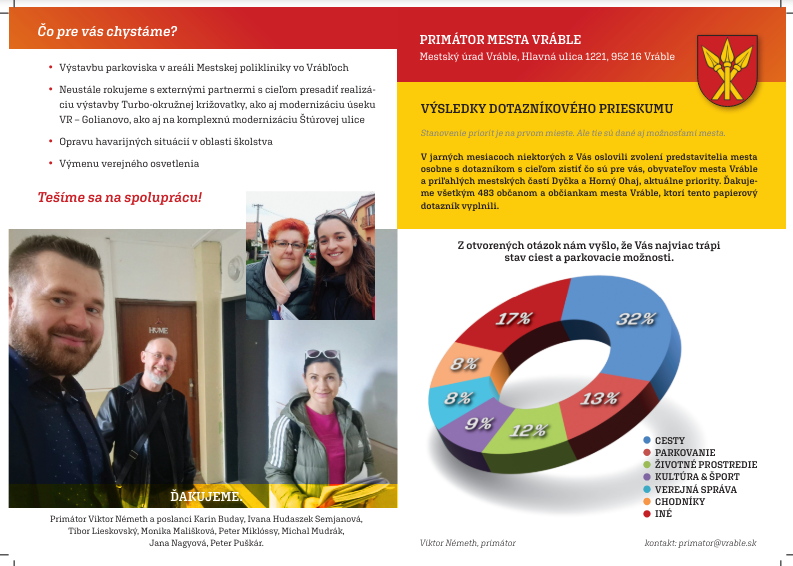
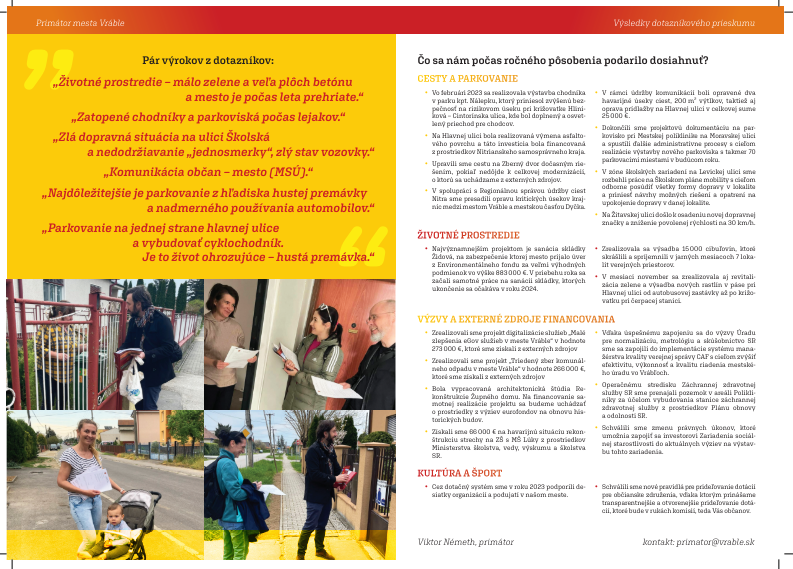
Public service, citizen participation and inclusion are end goals for many local authorities; these public officials, driven by personal motivations, promote citizen participation and innovate local institutions. For example, Slovakian city officials received appreciative responses from residents during canvassing efforts (outside of the usual campaigning season), with some leaving thank-you notes on their returned surveys.18

The uses and benefits of feedback loops will appeal to different types of local officials based on their unique priorities and incentives. For example, elected officials such as mayors or local councilors are accountable to their constituents through the ballot box and therefore have a political incentive to incorporate public priorities into government decision-making processes. As these officials are likely to initiate or authorize the feedback loop effort, they may be encouraged by the potential for higher-than-average electoral success, as enjoyed by Moldovan mayors who implemented feedback loops (see Box 2). Not all officials will be motivated by this incentive, however, opting instead to do the minimum to comply with the law or simulate engagement. However, this could increase the potential rewards for officials who are committed to meaningful public engagement. 

Box 2. What does higher trust with voters (built between elections) look like at election time?

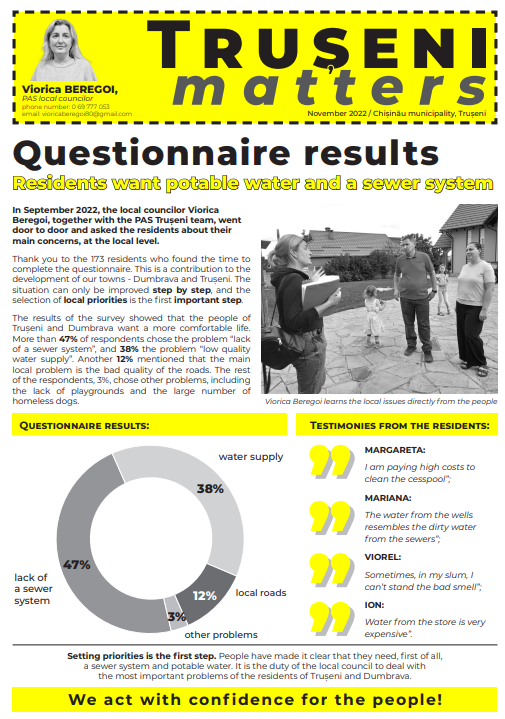
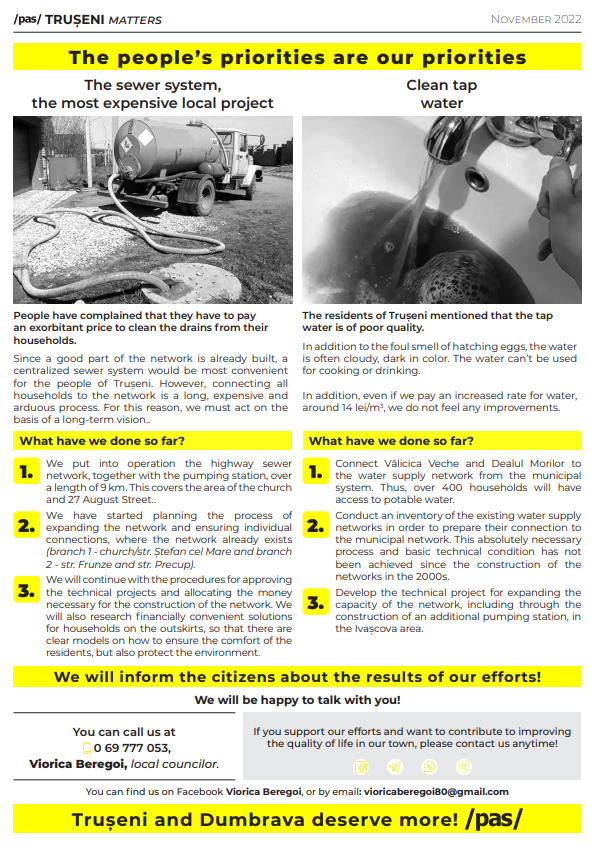
In Moldova, mayors and local councilors who implemented and were directly involved in a feedback loop (including canvassing residents to identify priorities and updating them on progress toward results) tended to win (re-)elections at a higher rate than incumbent mayors nationwide (among those who ran for re-election):

  • 2015 local elections: 80 percent of mayors and local councilors actively implementing the feedback loop process were re-elected.
  • 2019 local elections: 84 percent of implementing mayors and local councilors won re-election (compared to 51 percent re-election rate for incumbent mayors nationwide).
  • 2023 local elections: 90 percent of implementing mayors and local councilors won re-election (compared to a 62.5 percent re-election rate for incumbent mayors nationwide).19

On the other hand, unelected officials in the civil or public service – who will be responsible for designing, implementing and monitoring the process – will find feedback loops useful in supporting decision-making, engaging stakeholders and facilitating effective communication with the public and internally with colleagues. They will benefit from institutionalized and clear internal standards, defined staff responsibilities, and structured processes for participatory engagement that will come from learning from repeated feedback loops.

Box 3. “I know the problems in my community, and what it will take to solve them. Why do I need a feedback loop?”

This is a common refrain from government officials when considering a feedback loop process. Undoubtedly, most officials have a good understanding of their community needs, but the feedback loop approach goes beyond simply measuring who cares about which issues; it also demonstrates to the public that the local authority is proactively soliciting their inputs, listening to what they say and considering their opinions when making decisions.

Local authorities and their residents may also need a push to exit a vicious cycle: authorities do not promote participation because they believe “people do not participate,” and residents do not participate because there is no space for participation, opportunities to participate do not interest them or they doubt their participation will be taken seriously. 

At the same time, residents may view the feedback loop process in different ways. One local government administrator experienced criticism from residents: “The mayor and their team should know and do what needs to be done. If you ask residents, ‘What should I do?’ it means that you don’t know how to be a mayor and that you are not a good administrator.” In this case, the feedback loop team should start with an awareness campaign. Explain why the local authority needs a feedback loop process and how it helps them serve the public. To avoid political opponents attacking the mayor with the same line, seek consensus on an approach with the local council.

Second, studies show that our knowledge of the world and its people is limited if we rely only on personal experience.20 Most individuals typically know around 600 people by name. It would require a herculean effort to speak to enough new people every day for decades to meet (let alone truly know) even 100,000 people. Plus, consider how many of those people you speak to daily would already look, talk and think like you. Evidence on “horizons of our personal experience” highlights that, whether your community consists of 1,000, 10,000 or 10 million people, active consultation and outreach are necessary for leaders to understand the diverse perspectives, needs, interests, priorities and incentives of these different groups.

Finally, even when you can identify key problems in your community through personal experience, you cannot solve problems alone; coordination, communication and collaboration are required. Diagnosing problems is, in some ways, the easy part; mobilizing local resources and communities around a solution is harder. It requires collective efforts to organize local authority resources, powers and expertise, and to foster community buy-in, ownership and understanding. A unilateral decision by one leader (or a small group) may succeed, but a decision backed by community dialogue and deliberation is more likely to survive the inevitable and unexpected pitfalls that often arise during implementation, in part because local authorities will feel responsible for delivering on public promises. 

How do feedback loops compare to other public feedback tools?

A feedback loop shares similar goals with a public grievance redress mechanism21 but is more deliberately participatory and cumulative in its data analysis. A common form of public grievance redress mechanism is a platform (often online) designed to receive and promptly provide responses to specific feedback or complaints from community residents. These systems focus on individual concerns and resolving discrete problems. For example, each complaint is given a “ticket” and routed to the corresponding agency (automatically or after a staff member reviews it) where it is then addressed or receives a response. Examples include Ukraine’s Diia platform or the global FixMyStreet application.22 The end goal of these redress mechanisms is usually technocratic rather than democratic: to address individual complaints and speed government response. These mechanisms can exist in autocracies and democracies – citizens may still have no input into the governance processes behind the mechanism and may not have redress if their issue isn’t resolved. While these types of grievance redress mechanisms are important, the feedback loop emphasizes two-way dialogue between residents and their elected representatives. Two-way dialogue is a break from extractive practices of one-way, one-off forums or hearings, where residents may be heard, but the local authority never informs them about how their feedback is used. This creates an institutional shift toward public consultation as a default approach to policymaking. Service delivery matters, but so does voice and meaningful public participation. The feedback loop process is a democratic tool to strengthen accountability, citizen voice and inclusive decision-making.

The feedback loop Listen, Respond, Report methodology also differs from other participatory and deliberative democracy (PDD) practices,23 such as citizen assemblies, juries and participatory budgeting. While these are not feedback loop tools, they are approaches for participatory and inclusive decision-making, often with greater accountability for local officials (who must abide by votes and decisions, for example). 

  • At the local level, citizen assemblies and juries use representative sampling to select a representative group of residents (often around 100 or so for assemblies and fewer for juries) that is tasked to consider a predetermined problem or issue. The group then generates recommendations (which are sometimes binding for the government). A good process involves dedicated time for education and learning,24 where experts and stakeholders present facts or viewpoints to the assembly, who then deliberate on the best paths forward and arrive at recommendations through consensus. Dissenting voices may generate their own recommendations. These processes can be quite expensive – involving costs for selecting, convening and reimbursing the time of participants and experts, as well as paying for a facilitator to moderate convenings.25 As such, they should be used selectively.
  • Participatory budgeting is a mechanism where a percentage of the local authority budget is set aside for members of the public to propose and submit ideas for funding. After a vetting process to remove impractical ideas, residents vote on their favorite projects, which are funded. 

All of these PDD processes – and others – empower citizens to make decisions that the government must respect. See Annex XIII for additional information.

By comparison, the feedback loop process lies somewhere in between grievance redress mechanisms and formal PDD processes: citizens are proactively consulted for their insights and may be involved in decision-making through co-creating solutions, but the local authority ultimately decides on the path forward while ensuring that these decisions – and progress on reforms – are communicated to residents to close the loop. Box 4 situates the feedback loop approach within an international standard of public participation.

Box 4. Levels of public engagement

Several organizations offer a spectrum of public participation to describe different levels of participation that can be achieved by various government processes. For example, the International Association for Public Participation (IAP2) Federation developed a spectrum that offers five stages (Inform, Consult, Involve, Collaborate, Empower), which is also used by the Public Engagement Toolkit created by the Morris J. Wosk Center for Dialogue.26

For many local authorities, the feedback loop process will help them move from “Inform” to “Consult.” The more that feedback and public input are used as the basis for setting priorities and identifying solutions, the closer local authorities move toward the “Involve” and “Collaborate” ends of the participation spectrum. 

Note that not every problem requires or would necessarily benefit from an involved or collaborative decision-making process. Some issues require technical expertise that the public is not best suited to provide, while others may be so routine that the necessary time and financial costs of an involved or collaborative public engagement are too high to justify.

For a deep dive into levels of public engagement, and examples of methods behind each level, Inform, Consult and Involve, see Annex II: Levels of Public Engagement.

What will this cost?

Responding to public priorities is the job of democratic governments. Meaningful responsiveness takes time and may cost some money; in short, this is the “cost of doing business” for democratic governments. While being smart and efficient when matching your budget to your public engagement is crucial, a lack of budget is not a persuasive reason not to conduct this process. In practice, the ten steps of the feedback loop process look different for every local authority, but they are designed to be feasible in all democratic governance contexts and across the spectrum of available resources. 

The feedback loop process is designed to be as low-cost as possible so that scarce time and budget can be directed to implementing priorities.

  • Time costs include the time of municipal officials and staff to prepare for and collect citizen feedback, analyze inputs and communicate with the public.
  • Convening costs include (again) the time of municipal officials and participating community residents and any logistic costs required for meeting in a public or community space. Note that sufficient thought should be given to ensuring that diverse community members can meaningfully and effectively participate in the convenings – this may involve some logistic costs or costs associated with reasonable accommodation for people with disabilities or working parents. For example, would offering childcare or language interpretation allow more residents to participate in a meeting?
  • Materials costs include those associated with printing questionnaires during data collection (e.g., surveys), the cost of postage if mailing surveys, or the cost of fuel or transportation if visiting residents door to door. Costs will arise for developing and printing reports on the feedback findings, next steps and updates for public distribution. Such costs can vary based on the chosen approach. It is crucial for local administration leadership to understand and budget for these costs upfront.
  • Costs to implement identified solutions include those related to development and implementation. Public feedback will ideally point to a specific challenge or set of challenges – related to infrastructure, public services or broader development planning – that will require expenditures from the public budget to be addressed. Cost requirements to implement prioritized reforms or plans can be allocated over time as appropriate. The feedback loop builds in periodic updates to inform the public about implementation timelines, delays and when promises are fulfilled. Most people understand that projects and reforms require time, money and materials, which may lead to delays. The key is to communicate openly and proactively about these issues.

It is always advisable to overestimate human time and material cost requirements as unexpected events or obstacles to this – or any process – inevitably occur, and contingency planning is a useful mitigation measure.

Is a feedback loop just extra work for busy officials?

Rather than “extra work,” this process should help local authorities do the work they are already doing more efficiently. The time spent listening to feedback should result in clear priorities for staff and officials to respond to; these priorities will be the basis of direction and strategy to align the entire local administration toward common goals, and officials can be confident that they are aligned with residents on the same priorities. 

While a local authority must provide services, maintain infrastructure and foster the sustainable economic and social development of their community, the local authority is also responsible for the prudent and responsible investment of local taxes, fees and other revenue resources. This requires decisions to balance public demands for particular investments against the reality of a city’s financial and operational capacities. To determine this balance, leaders must consider the return on investment of particular expenditures, not just in monetary or revenue terms, but also concerning potential impacts on community well-being, health and vibrancy. With regard to investments, cash-strapped local authorities – armed with a list of public priorities – may find success in fundraising for projects from within their own communities, by partnering with neighboring communities to build a shared project, or by approaching the national government or private sector investors. Public feedback data provides evidence for these investment priorities and can support advocacy for external or community-based funding.

Box 5. Learn from experience – Tackling big projects through a priority-driven phased approach

In a Moldovan city, leaders who implemented a feedback loop process faced a funding conundrum. Resident responses to a door-to-door survey indicated that paving local roads was a top priority. However, the municipality did not have sufficient funds for a full-scale paving project. Officials worried that paving only part of the roadways would cause contention, since some residents would benefit over others. They also worried about delaying the paving project and instead addressing a different priority issue because residents would feel they had been ignored after participating in the survey. What to do? 

Local officials decided to make their newly forged community engagement work for them: they entered into dialogue with the community about how to approach the paving project, given the reality of the limited budget. Together, they found a compromise, deciding to pave a particular street that year, with plans to pave additional sections in the future. With the community on board for this incremental approach, and their understanding of why an incremental approach was necessary, the local authority was able to meet resident priorities within their budget and to manage public expectations about the pace of change: win-win.

II. Implementation Guide – How to Apply the Feedback Loop Framework in Your Community

This section offers step-by-step guidance to design and implement a feedback loop, drawing on the experience of local authorities from Moldova, Mexico, El Salvador, and Slovakia, where NDI has supported feedback loop processes and shared learning for over a decade. This guidance also draws from the experiences of other local authorities worldwide that have designed and implemented their own two-way communication programs based on similar principles and methods, including Queensland, Australia,27 and Dublin, Ireland,28 among others.

The following presents the feedback loop implementation process as a series of discrete steps. However, keep in mind that these steps – especially the initial steps – are closely linked and may not, in practice, take place one after the other as outlined here. In reality, it is likely that several steps will need to happen in parallel or sometimes be repeated

Finally, consider the following framework to be flexible guidance rather than a rigid formula. While the contents of each step are important, the emphasis, order and timing will need to be adapted based on your best judgment of what is needed in your circumstances.

1.0 Overview

Step 1: Authorize a feedback loop process

“Talk with people, not at people.”
- Yvonne Aki-Sawyerr, OBE, Mayor of Freetown, Sierra Leone29

“Local government is not the lowest form of government in an ecosystem of governments, but the highest form of coordination and advocacy for the community.”
- Charles Marohn, Founder of Strong Towns30

Summary:

  • Local officials – perhaps spurred on by civil society pressure – assess whether a feedback loop can help them solve local problems.
  • Consider the problems facing the community – can public feedback help to navigate trade-offs or prioritize a path forward among competing issues?
  • Examine current outreach practices – how does the local authority talk to residents and how residents talk to officials?
  • A series of do-no-harm and inclusion questions helps prepare the team to communicate with hard-to-reach communities and avoid exacerbating divisions or marginalization.
  • Finally, authorization to implement the feedback loop is given, unlocking resources and kickstarting the formation of a team – whether by a formal resolution, act, or decree, or the less formal assignment of staff and resources to the process. 

As a first step, consider whether a feedback loop is suited to the local context and would be worthwhile to address a particular challenge or issue. Once a local authority decides to implement a feedback loop, ideally, it would issue a formal authorization through a legal or administrative instrument. A formal authorization ensures that the weight and resources of the local authority unit are behind the process (and enables access to resources and staff as needed). On the other hand, reform-minded officials may worry that specifying a legal or administrative instrument from the outset can create additional hurdles and delays and spark resistance. They may instead opt for an informal, ad hoc approach to pilot the feedback loop effort on a small scale, and then formalize it through a statute later after building awareness among staff and with the benefit of lessons learned. Consider the benefits and drawbacks of formal authorization compared to informal agreement with respect to, among other things, accountability and the allocation of staff, time and financial resources.

The decision should be made with a particular problem or goal in mind that the feedback loop could potentially address. It may be easier to start with an established process, such as setting local budget priorities or development planning. Why do you want to convene people for their feedback? You could seek public input to design a government program, reform a regulation, evaluate a policy, or some similar goal. 

Leaders should be prepared to listen for information about their current outreach practices and to identify the governance process(es) that the feedback loop data would contribute to, among other information. In other words, consider:

  • How the local authority currently engages with the public and how the public speaks to the local authority
  • Whether and how that dialogue is integrated into local authority decision-making processes or the day-to-day work of the local administration (elected officials and staff)
  • The resources the local authority can bring to the process
  • The unique circumstances of the community – Are there particular groups in the community that are difficult to engage with or are apathetic/disengaged? Are there divisive or controversial fractures in the community that need to be monitored?

1.1 Who takes this first step toward implementing a feedback loop?

After the process is authorized, it must be continuously reinforced and supported by senior leadership; otherwise, the process risks losing momentum. For example, the initiator and driver of the process may be: 

  • a recently elected mayor
  • a pro-participation champion working as a political appointee or senior civil servant (such as a city manager)
  • a reform-minded local councilor or assembly member

Responding to public feedback usually requires the local authority to do something meaningful, so it should be unsurprising that feedback loops tend to be successful when local authorities lead the process.

What if the first push for more feedback comes from outside government?

Importantly, if the first push for a feedback loop comes from actors outside the local authority, then it will be necessary to secure buy-in from government decision-makers before a decision is adopted and formalized in a legal or administrative instrument. This may be complicated even when local authorities lead the process: in El Salvador, for example, local authorities often have to get buy-in from political party leaders or legislators, given how municipalities rely on higher-level authorities for public funding. While this step focuses on authorizing the process, see Step 2 for advice on how to build buy-in and encourage participation in a process once it is authorized.

When making this initial decision, leaders should evaluate the following to help justify the case for a feedback loop process.

Box 6. Decision tree: Should we implement a feedback loop?

What is the nature of the challenge we are trying to solve? Is a feedback loop the right solution to this challenge (i.e., is feedback necessary or useful for reaching our goal)? Consider:

  1. Will we be able to complete all of the steps?
  2. Can we set a clear objective?
  3. Who will do the work?
  4. What skills and resources (e.g., people, money, time) will we need?
  5. How will we collect sufficient data?
  6. Who do we need to reach? How will we reach them?
  7. Will we be able to take action on the feedback and update the public promptly?
  8. How will we close the loop and issue a final report once action is completed?

The following questions will be used as signposts throughout the guide.
 

1.2 What are we trying to achieve with public input?

Implementing the feedback loop framework helps governments move from reactive one-off responses toward fostering a culture of government responsiveness to public voices about specific local problems. Responsiveness involves governments not just committing to change (with the commitment being an example of a response), but actually meeting its commitment and recognizing the legitimacy and relevance of the public’s input into the process; responsiveness can be enhanced when governments take the additional step to justify and explain their actions.31

A problem or challenge is the discrepancy between how things are and how they should be or ought to be. The solution to a problem bridges that discrepancy, bringing us closer to an improved or ideal situation.

Depending on your context, your peers in the local authority may be more receptive to different framings of the question, “What are we trying to achieve with public input?” For example:

  • “What choice should we make?” These are instances where participation helps improve decision-making, such as legitimizing decisions or co-creating policies. It is most useful when there is a clear set of options – e.g., Add a bike lane to street A or street B.
  • “What is our top priority?” These are processes where public input to set priorities will help to navigate trade-offs, such as when residents are asked to decide which issue or challenge to address first. This question helps support drafting institutional documents like a budget, development plan or investment plan.
  • “How can we improve?” You can consider a single program and aim for in-depth feedback (such as from immediate beneficiaries) to improve it, or leverage a broader concerns survey (see Step 4 and Annex IX on surveys) to identify the least or most popular services or public goods in the local authority (and then follow up to learn more about why residents feel this way).

SIGNPOST QUESTION

What problem are you trying to solve, and how will the feedback loop help to address it?

While the goal of “engaging more citizens in decision-making” is a useful starting point, the feedback loop process often benefits from a more concrete understanding of how feedback will be used. Setting priorities based on public feedback will help local authorities take these considerations into account when developing budgets, drafting development or investment plans, and devising long-term strategies. Recurring government planning processes offer important entry points for residents to share their views on the community’s direction. These are big-picture moments where public feedback can be used to navigate trade-offs (for instance, choosing to fund renovations to the school rather than build a new community center).

Box 7. Managing wicked problems through Listen, Respond, Report

Some of the problems local authorities handle are often called “wicked problems.”32 A wicked problem in public policy – such as crime, unemployment or high housing costs – poses unique challenges:

  • The problem is complex: Its constituent elements are hard to track or disentangle, are influenced by external factors and trends, and may shift or change over time.
  • The effect of any solution is uncertain: You cannot predict all of the consequences or risks of proposed solutions, and it is difficult to tell when the problem is truly solved.
  • Divergence between stakeholders: Opinions on the problem and the ideal solutions differ, reflecting stakeholders’ unique values, intentions and contexts.

These kinds of problems are never permanently solved, and instead the public official’s task is to manage them. Moreover, they often require coordination with levels of government, institutions, civil society and others outside the local authority. Even if these problems are uniquely challenging, they are still suitable starting points for feedback loop processes.

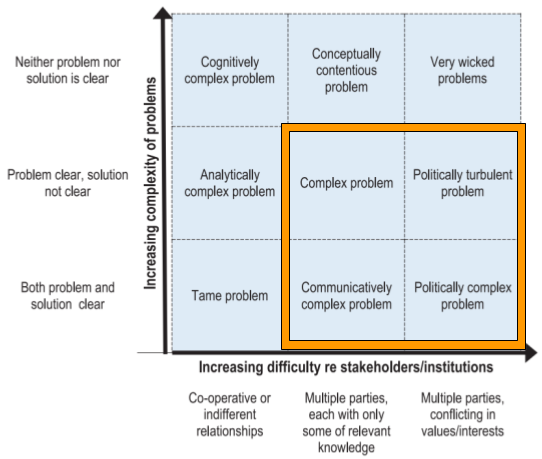
The chart in Figure 1 can help your team analyze the kinds of issues that could be addressed by a feedback loop – whether a wicked problem or something more routine. The bottom right section of the figure has been highlighted to indicate the types of problems where this feedback loop approach is most optimally useful. Problems that a feedback loop can ideally address should be clearly definable, as members of the public will need to readily understand the core issues at play. If the issues are highly complex or technical, you should turn to technical experts before the public.

Consider the two axes in Figure 1:

  • Increasing difficulty regarding stakeholders and institutions: Disagreement and opposition are part of local politics. The feedback loop process helps local authorities rank priorities and, in turn, speak to the public about the order in which identified priorities can be addressed and what is being done to resolve them. This communication helps those whose priorities are ranked lower than their neighbors still feel heard (“We will get to priority B, just not this year”) and learn the reasons why their priority ranks lower than others (e.g., “More people voted for project A”). A feedback loop will not resolve these divisions but can help the local authority navigate and manage them equitably and responsively.
  • Solutions are complex or not immediately clear: Once a problem has been identified as a priority, the solution may be obvious, but usually there are multiple ways to approach it. This is where efforts in Step 7 (on dialogue and co-designing solutions) will be helpful. Ultimately, it will be the government’s decision to determine and act on the best or most feasible course of action, but public input can be useful in exploring and weighing alternatives and trade-offs. In addition, communications around the process – including explanations for why and how a certain course was chosen – can help bring the public along with whatever course of action is decided.

Figure 1: An evaluation matrix of tame and wicked problems in public policy. The highlighted portion indicates problems most suitable for the Listen, Respond, Report approach. Reproduced with authors’ permission from John Alford & Brian W. Head (2017) “Wicked and Less Wicked Problems: A Typology and a Contingency Framework.” Policy and Society. 36:3, page 402

The image is a 3x3 matrix categorizing problems by their complexity and stakeholder difficulty. The vertical axis ranges from "Both problem and solution clear" at the bottom to "Neither problem nor solution is clear" at the top, indicating increasing complexity of problems. The horizontal axis ranges from "Co-operative or indifferent relationships" on the left to "Multiple parties, conflicting in values/interests" on the right, indicating increasing stakeholder or institutional difficulty. Each cell represents a type of problem, including "Tame problem," "Analytically complex problem," "Cognitively complex problem," "Communicatively complex problem," "Complex problem," "Conceptually contentious problem," "Politically complex problem," "Politically turbulent problem," and "Very wicked problems." Four cells in the middle and right columns of the bottom and middle rows—"Communicatively complex problem," "Politically complex problem," "Complex problem," and "Politically turbulent problem"—are highlighted with an orange border.

Context questions for authorizing the feedback loop

When selecting the problem your feedback loop approach will address, you will need to consider how that problem (and especially the implementation of any particular solution) fits into the decision-making and governing processes of your local authority. The following questions will help generate a quick stakeholder mapping (see Section 1.6 and Box 10 for a more detailed stakeholder mapping exercise) and context analysis that can support an initial decision to authorize the process.

If necessary, a more robust context analysis can be conducted once a team is formed (Step 2); see questions in Annex III: Context Analysis and Do No Harm.

Is the problem within the jurisdiction of the local authority? Who will be responsible for implementation?

If the local authority cannot control its own budget or make decisions concerning the problem, then in the near future there will be no effective outlet or corresponding action based on public feedback. The local authority should start by asking for public participation in making decisions that it is responsible for; otherwise, the local authority risks undermining public trust by setting unachievable expectations. If the decision is outside the local authority’s control (and rests with a national ministry, for example), the best the local authority can do is use public input to advocate on behalf of the community; this should be seen as a long-term effort. The local authority should also inform residents that local leaders cannot immediately fix a problem (and explain why), even if they agree that it should be fixed and have urged higher-level authorities to take action. In addition, consider which staff, agencies, or departments of the local authority are responsible for deciding or coordinating implementation: Does the mayor decide alone, or do they need the council’s approval? What departments may need to work together and be consulted on the feasibility of proposed solutions?

However, it is possible that residents and the local authority will agree to take on a challenge that is beyond the local authority’s responsibility or capacity to address alone. This will often present a wicked problem, especially because more stakeholders will have an interest in the process as issues cut across multiple communities and jurisdictions. For example, a small town near mines or a major port may not have the jurisdiction to regulate oversized vehicles using nearby highways but will struggle with the effects of this traffic on road quality and safety. In this instance, the feedback loop may only be “closed” or reach a resolution after action or regulatory activity by a national ministry. The local authority may have some success advocating on behalf of the community, but their advocacy will be harder to ignore when acting jointly with peers in neighboring communities. See the following example:

Box 8. Learn from experience – Advocacy group of mayors from the Prut Valley, Moldova

In the last decade, mayors, local councilors and residents living along Moldova’s national route R34, which connects main country roads with the commercial port of Giurgiulești, experienced an increase in heavy trucks traveling to and from the port. This increased traffic and tonnage damages the roads, and occasional reckless driving poses dangers to traffic and people living nearby.

In 2015, mayors from 13 villages – unable to address the problem alone – formed a collective advocacy group with the aim of making the route safer and better managed. This group engages various local and national government agencies, including the Ministry of Transportation and the Ministry of Internal Affairs. In 2017, the advocacy group and these agencies developed a joint action plan to address the issue, including a system to monitor traffic in real time, working with police and other local administrations to install and manage the equipment. Over the years, the group has grown to include additional local administrations. The mayors continue meeting to share advice with representatives, introduce their efforts to newly elected mayors from communities along the route, and advocate to the national government to fund needed improvements. Throughout the process, they have supplemented their advocacy with surveys of their residents and provided updates on their joint progress to their local constituencies.

Does the local authority reasonably expect to have the capacity (resources, staff, etc.) to solve this problem and to implement the feedback loop?

While a local authority is legally allowed to make a decision, it still needs to follow through and take action. This question will be dealt with in greater detail by the core team in Step 3, but an initial evaluation of the local authority should indicate whether it has or lacks capacity to take action. Many local authorities focus on processes that must happen (regardless of whether the public is involved in the decision or not), such as planning, budgeting and service delivery. There is an existing process, staff and general administrative capacity in place to (more or less effectively) complete these tasks; the question then becomes how the local authority can bring public feedback into the process.

Can we engage the public effectively? Can we make the question easy to understand, ensure broad participation and use the feedback we receive?

Section 1.3 of this step focuses on the local authority’s current public engagement. In addition to understanding the strengths and weaknesses of current public communication and dialogue practices, the local authority should be ready to present the process and requests for public feedback in a way that is easy to understand. To participate effectively, residents will need to understand enough about the process, the information and feedback they are being asked to provide, and how it will be used.

Examples of feedback loops in action

Consider the following applications of feedback loops by local authorities from around the world:

Setting budget priorities

  • In Moldova, mayors implemented feedback loops to set budget priorities, using residents’ surveys to rank which development projects – often related to infrastructure or services such as garbage collection – to address first. Priority-based budgeting is an increasingly common approach to setting priorities strategically and using public input to navigate trade-offs in budget allocation.
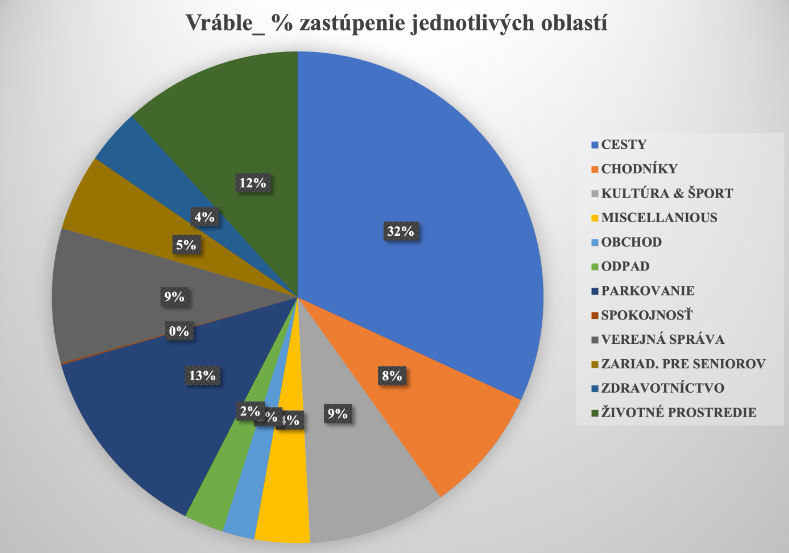
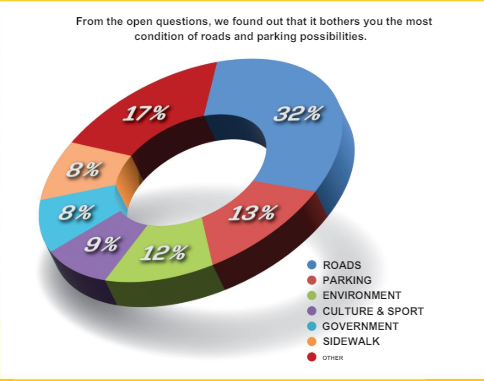
  • In Slovakia, teams of mayors and local councilors analyzed the results of a door-to-door survey to rank top priorities for investment, with residents selecting between issues such as roads, parking and recreation.
  • Cities in the United States, such as St. Paul, Minnesota; Lawrence, Kansas; and Fort Worth, Texas, have deployed a priority-based budgeting approach that allows residents to individually explore budget scenarios and trade-offs. By placing residents in the role of decision-maker, the budget simulation (called the Balancing Act) helps residents understand the constraints, context and consequences of the local budget process and informs their feedback to local leaders.33

Developing strategies and plans

  • In Mexico, city planning departments used public feedback to co-create municipal development plans or government programs, which are strategic documents that define and direct the work of municipal government to promote local development and improve the quality of people’s lives over three years.
  • In El Salvador, civil society and officials worked together to collect feedback from local artisans and entrepreneurs, using the information to generate recommendations on improving the local economy.

Improving or expanding particular services

  • A feedback loop can be used to assess residents’ perceptions of a particular municipal program and to source ideas for improving it. In Georgia, local officials and civil society examined the performance of a municipal economic grants program, holding discussions with beneficiaries (and unsuccessful applicants) to source feedback on how the application, approval and management process of the grants could be improved.

1.3 Assess the nature of current public engagement approaches

Before authorizing a feedback loop approach for your particular problem or issue, you will need to consider to what extent and how public engagement is already happening in your community. How and when does the local authority talk to residents, and how and when do residents talk to the local authority? Answering these questions will help the local authority determine the focus and scope of the feedback loop approach.

The specific methods employed in your feedback loop process will depend on how the local authority currently communicates with and learns about issues from the public, any gaps in that communication, and available skills and resources to be able to realistically implement new methods. You might start by looking at the relevant legal framework or obligations on public consultation that apply to the local authority. These will set out what should be happening and can be compared against existing practices (what is happening).

What should be happening: 

Is there an existing legal or administrative obligation to conduct public outreach or consultations for policymaking? Yes/No

Yes:

Is the local authority meeting those obligations? Yes/No

No:

See “What is happening”

Yes:

Great! Consider whether a feedback loop could expand or improve the local authority’s current processes.

No:

A feedback loop could be useful if there is a required obligation and public input is missing or not effectively listened for or used.


What is happening: 

Is there an existing two-way public outreach process that already collects and responds to public feedback? Yes/Yes, but consultation is extractive/No

Yes, the government collects and responds to public input (two way)

Yes, but consultation is extractive (unclear impact on decision)

OR

No, the government only communicates to the public (one way)

What are the characteristics of this two-way process?

  • When does it occur? 
  • On what issues? 
  • For what purpose? What governance process does this feedback feed into or influence – a budget, plan, strategy or something else? 
  • Who is responsible for it? 
  • How is public feedback recorded or documented? 
  • Does the local authority respond to the feedback? If so, how? 
  • Who in the public is reached? Are men and women reached in similar or equal numbers? Is it “usual suspects” (people who regularly contact or engage with government) or a more diverse group?

In the following steps, consider how this process can be used as a starting point for a feedback loop – either as a model to be duplicated to other issue areas or as a foundation to be expanded and built on. 

How does the government communicate with the public? 

  • Does the local authority regularly provide publications or updates to the public about its work or programs?                        
  • Does the authority have a formal way to receive one-off complaints and suggestions from the public?                        
  • Where do these communications take place (e.g., in city hall, at public meetings, online)?                        
  • When do they take place (evenings, during the workday, weekends, at any time)?                        
  • Who receives the communication? Are some people more or less likely to hear from the local authority? Why (gender norms, lack of internet, rural, language barrier)?                        
  • Are these locations and times conducive to broad participation and inclusion – such as for people with caregiving responsibilities? Or persons with disabilities? Working-age people? People who live outside the town center?                         

If there are only informal ways to reach local officials (using personal connections, with no formal tracking of requests, etc.), and public updates are rare or vague, then the feedback loop process can help establish a more solid and broadly participatory basis for decisions. Similarly, if communications reach few residents and are rare, the following steps offer guidance on more inclusive methods.

These and other considerations will help you to understand how close the local authority already is to using two-way dialogue and citizen participation in decision-making. Is the local authority missing information or not hearing from certain groups? Perhaps it already collects plenty of information, but the data is hard to use since it is not stored or managed efficiently.

Overall, the key question at this stage is to identify whether there are ways to adapt and expand pre-existing channels of communication to integrate elements of the feedback loop process. If so, this will save you from needing to “reinvent the wheel.” Instead of starting a new public engagement process, you can take an existing one and expand the number of residents involved, create time or space to hear feedback from the public, add a more systematic method of recording feedback, or simply build in a step to respond to the collected feedback to explain potential actions. Consider leveraging pre-existing mailing lists or channels for public updates (radio, newsletter, public hearings). Can these move from being means of informing the public to means of collaborating with residents and ensuring they have a voice in decision-making? (See Box 4 on levels of engagement).

Remember:

Throughout the process, the local authority must avoid making public participation and feedback collection tokenistic. To the greatest extent possible, citizen priorities must be centered as driving government action.34 Meaningful government responsiveness means public feedback is taken seriously and consistently applied; in short, collecting feedback is not a “one-off.”

1.4 Do No Harm

Determining “who gets how much and when” can be politically contentious and risk creating or exacerbating social and political divisions. To plan for and mitigate these risks, the team implementing a feedback loop process should be prepared to apply “do-no-harm” principles. There are different approaches, but a common framework involves mapping “dividers” – actors and factors that push communities apart – and “connectors” – actors and factors that promote peace and cohesion. Then consider your intended actions (what you will do, the resources you will deploy and how) and patterns of behavior (how your team interacts with the community and the message this interaction communicates). 

When authorizing and planning the process (especially with regard to context analysis and inclusion in Step 2), the following are examples of questions to keep in mind:

  • Who will be consulted during the feedback loop process? Will outreach privilege or legitimize certain organizations, groups or voices over others?
  • How will your team listen to and handle grievances that may arise during the process?
  • Will everyone (men, women, boys and girls, etc.) benefit equally if the problem is solved? Who stands to benefit from proposed solutions, and who might lose out?

For more detail on context analysis and do no harm, see Annex III.

Box 9. Learn from experience – Community engagement toolkits from the local level in Australia, Ireland and the United Kingdom

These three countries have long histories of devolved and active local government and accordingly have a wealth of published guidance online for local officials and individual residents to understand local processes and ways to get involved. For example:

While guidance accounts for differences between these communities, such as important local minorities or different legal and decision-making bodies and processes, they all rely on common foundational principles. Irish local governments striving for “genuine, purposeful, and collaborative” processes will find common cause with Australian counterparts’ principles of transparent, open and meaningful public engagement.

In sum, fostering more inclusive, democratic and participatory local governance is an ongoing process in countries around the world. Collaboration between civil society and government can generate effective guidance on inclusive and tailored practices relevant to the social, legal and political context.

1.5 Authorize The Feedback Loop Process

At this point, the team within the local authority considering a feedback loop process should have a clear sense of:

  • The process or problem they hope to use feedback for
  • The existing mechanisms for outreach and dialogue with the public
  • The context in which the process will occur, especially who in the local authority will receive feedback and where it will fit into decision-making processes

Equipped with this information, local leadership can decide whether to formally authorize the process. Formal authorization ensures the budget for staff time and material costs is allowable, empowers the feedback loop team, and prepares the local authority to receive and act on the feedback regarding budgets, development planning or service delivery. Further, formal authorization may be necessary to allow the feedback team to leverage the local authority’s communication channels and administrative resources to organize a response or to collect and store public information on government computers and servers (see the discussion of data governance frameworks in Step 4).

Depending on the legal-institutional context of the local authority, examples of authorizations include: an executive decree or order from the mayor’s office; memorandum of understanding between the local authority and civil society organizations (CSOs) helping to implement the feedback process; a local council resolution, an administrative order, or a memorandum assigning staff to the task.

However, there are exceptions: If the process is not linked to or funded by the local authority, a formal authorization is not necessarily needed. For example, in situations where a feedback loop will be led by a less formal group – such as a political faction, political party, group of local elected officials, a single elected official (such as an opposition council member), or in partnership with external stakeholders such as civil society or an international organization – only a general commitment to participate in the feedback loop process is likely sufficient.

SIGNPOST QUESTION

What are the risks if we cannot complete all of the steps?

There are risks to an incomplete feedback loop. Closing the loop means feedback is not only collected but used – and the public has a clear understanding of how. Do you have concerns about your team’s ability to complete the steps to the end and follow through with the public? Concerns may relate to staff availability, agreement among political stakeholders, or a limited budget for outreach.

Consider the following risks:

  • The loop isn’t closed: The most common and most disastrous risk of implementing a feedback loop is the failure to “close the loop.” Failing to close the loop generally means that “people’s voices were solicited but not acted on.”40 From the residents’ point of view, their feedback disappeared into a vacuum, never to be seen again and with no discernible impact on government behavior. This can have deeply negative consequences for public trust in local authorities. Residents will be less inclined to supply feedback when asked in the future. At worst, trust in local authorities or their legitimacy may evaporate, especially if feedback about critical services is ignored. In this case, residents may take service delivery into their own hands or turn to parallel governance institutions.
  • Feedback is too voluminous to analyze, inaccurate or unusable: The feedback loop is closed in the sense that some action was taken to address the problem, but challenges like the personal bias of decision-making officials, lack of access to relevant information, or limited technical know-how “reduced or negated any possible positive impact.”41 Requests for input and feedback should not require specialized technical knowledge or training of the community members being approached. Input should be kept general enough that the average resident can respond based on their life experience living in the community. This puts more responsibility on the designers of the feedback loop’s data collection tools. This is a key reason why data collection should focus on setting priorities rather than on the technical aspects of a particular solution. More detailed feedback can be collected in later dialogue activities.

1.6 Secure buy-in

Authorization of the feedback loop is often necessary to fund, staff and begin the process; this step refers to a broader process of securing buy-in that must still be built and maintained across decision-makers and members of the public.

The feedback loop process may affect high-impact or high-value decisions – such as the budget, development plans or services. In responding to feedback, the team will need to work with elected officials, civil service, political staff and others across local authority institutions who also help make these decisions or support these functions within the local authority. Once a team is formed (see Step 2), it will be worthwhile assigning some members of the team the job of managing buy-in – meaning informing, engaging and updating important stakeholders at important steps.

Who should be brought in – A simple stakeholder mapping

Managing buy-in should start with a simple stakeholder mapping exercise. The specific method for stakeholder mapping can differ, but the goal is to prioritize who to engage, at what times and how. Begin by simply listing stakeholders and then compare them by evaluating their power (influence to support or block the process) or their interests (where they align with your goals and where they do not). See Annex III for more information.

  • Elected officials: Consider elected officials (if they have not already authorized or are not already leading the implementation team), such as the mayor and local councilors. In addition, consider peer-elected officials or factions: If you are part of a political party or coalition within the elected council, will you share information about the process with others in the body and invite them to participate? Some may turn you down, but some may not. Collaborating across party or faction lines can demonstrate to the public that the exercise is nonpartisan and focused on their feedback rather than the priorities of elected officials.
  • Bureaucratic leadership and staff: The heads of departments relevant to the problem or issue that your feedback loop will tackle (e.g., the head of the finance department for budgeting) can be especially helpful. In addition, determine whether there are subject matter experts in the local administration whose skills can support the process – for example, officers responsible for right to information and transparency issues, teams responsible for citizen communication or engagement, urban planners, or gender and inclusion officers. Buy-in might involve a face-to-face meeting with a key decision-maker or an all-hands meeting to brief staff on the plan and answer questions.  Be clear about what you’re asking for and how the process will affect them, and be responsive to any feedback they have. With these leaders informed of the process, they may avail the process of their staff’s expertise, time and resources. They can also provide information about relevant timelines and ongoing coordination. These officials and their staff can guide the feedback loop team through the potentially byzantine requirements and expectations of their bureaucracies. This will help set realistic timelines.  Remember that you cannot bring public priorities into a process that has already ended! For example, in certain countries, local infrastructure priorities are communicated to the central government five to six months before the local budget is finalized. This allows the central government time to calculate and allocate inter-government transfers (which in turn make up a chunk of local authority budgets).
  • CSOs and local activists, including academia and the business sector, as relevant: Proactively reaching out to civil society groups can help smooth implementation. Their feedback may even help you design and implement outreach (see Step 4, especially key informant interviews [KII]). Can you tap into relevant networks – for example, of women, veterans, students or people with disabilities? If these are constituent groups you’d like to reach, these organizations may be able to assist; however, pay attention to inclusion and power dynamics. Are these organizations or networks truly representative of this constituent group (perhaps they only include people with disabilities of a certain faith or ethnicity)? Will you need to supplement this input with additional outreach?
  • The public: Although you will be reaching out to the public (or a sample of them) shortly for their input, this is truly the ultimate stakeholder in this process. Once the process is confirmed to be moving ahead, be sure to inform the public that it is happening and what they might be able to expect.

Box 10. Quick stakeholder mapping

There are many ways to conduct a stakeholder mapping. This is a simple way to develop and organize an initial list of important groups, identify who may be the most impacted – positively or negatively – by the issue being examined through the feedback loop, and consider how they can best be reached to solicit feedback or input and otherwise become engaged in the process. The stakeholder mapping can also be “zoomed in” or “zoomed out,” depending on the problem. For buy-in, you might focus initially on mapping the actors and institutions within the local authority administration; for the design of outreach methods, you might map the broader community (i.e., all residents in the area overseen by the local authority).

  1. List all potential stakeholders in the community: Consider your residents and the various groups or identities they identify with; list all of the groups relevant to the problem you have identified. For example:
    1. Gender: women, men, nonbinary
    2. Age groups: youth, older adults, working age
    3. Language, religious or ethnic minorities
    4. Urban and rural residents
    5. Poverty, access to technology
    6. Employment: farmers, self-employed/entrepreneurs, migrant workers, factory or office workers, unemployed, pensioners, etc.
    7. Level of education, students (university, high school, etc.)
  2. For each relevant group listed, consider their relationship to the issue. Consider mapping the stakeholders using a matrix (see Figure 2):
    1. Are they very interested or not very interested in the problem and its outcome? Do they have a vested stake in a decision going one way or another? Note that right now, your team is focused on relative interest, not the value or direction of that interest (i.e., two groups with high interest in a problem may disagree on how to solve it).
    2. To what extent can they influence the decision? Do they have a high influence over the decision or decision-makers?
Power mapping matrix.

Figure 2. Stakeholder mapping matrix of influence and interest

  1. Finally, consider how these groups receive information, specifically from the government (see Section 1.3 for more specific questions). For example, do you have sex-disaggregated survey data that shows how many residents have a TV or internet access, or how many own a smartphone? Focus in particular on groups that are low power/influence and high interest (bottom right quadrant): your team may need to take extra care and steps in designing outreach to these residents.

The mapping does not need to be exhaustive. In Sections 1.3 and 1.6, you can refer back to this stakeholder analysis and expand it with regard to specific outreach practices and important groups for buy-in.

Remember! Buy-in is an ongoing process

Buy-in is not a fixed on-and-off switch – people forget or internal priorities change. If you are not regularly coordinating with these stakeholders, be sure to periodically check in or update the most important among them. Tell them what’s coming next, or perhaps send a thank-you note to their office reminding them of your meeting and their willingness to assist.

End of step checklist: 

  • You have adopted a formal authorization (if appropriate) to undertake the feedback loop process.
  • You have identified a process or issue that greater understanding of public priorities can help resolve and confirmed that it is within the power and capacity of the local authority to address this problem.
  • You have mapped your current outreach processes, as well as your context, created an initial sketch of stakeholders you will need to contact, and begun to anticipate risks or political challenges related to your plans.
  • You are confident the local authority can listen to public priorities, hold consultations and communicate updates promptly to effectively close the feedback loop.
  • You have conducted a risk analysis and considered how to integrate do-no-harm principles into the feedback loop process.

2.0 Overview

Step 2: Build a team and plan for listening to feedback

“Cities can be the engine of social equity and economic opportunity… That is why it is so important that we work together to build the capacity of mayors and all those concerned in planning and running sustainable cities.” 
- Ban Ki-Moon, South Korean politician, diplomat and former United Nations Secretary General42

Summary:

  • The relevant characteristics and key skills of a core team are defined.
  • Two models for the team are defined, depending on whether there is direct or supervisory engagement by local authority elected officials.
  • The core team and leadership begin building buy-in for the feedback loop process in the local authority (peer officials and bureaucratic staff), civil society and the public.
  • Six distinct roles and responsibilities for the core team are laid out.
  • The core team, once selected, narrows down the problem.

2.1 Principles for building a team

SIGNPOST QUESTION

Who will do the work of designing and implementing the feedback loop?

In the course of authorizing the feedback loop process, leaders must decide who will be responsible for the process and establish a working group, task force or team. Decisions about the respective roles of elected officials, political appointees, civil service leadership and external partners like CSOs or a local university will depend on several factors, such as:

  • The structure of the local authority, its departments and agencies, and its size
  • The availability of internal and external human resources, technical skills and time
  • The size of the community (and its implications for feedback loop design methods)
  • The aims of local officials with respect to the importance of directly engaging with citizens

Senior political leadership – who often do not have time to be part of a feedback loop team themselves – will be important in approving and authorizing a process and designating staff to form a team. This senior political leadership will be a mayor, local council member(s) or city managers/city administrators where these exist.44 Regardless of the particular structures and circumstances, the officials and staff within the local authority will form most, if not all, of the team implementing the feedback loop. As noted, while nongovernmental civil society can play a supporting role, comparative experience from El Salvador, Mexico, Moldova and Slovakia indicates that government officials must be involved and own this process. Nongovernmental support can become essential in certain instances, such as when local authorities have little to no experience as public officials or have limited guidance from public institutions on how to comply with existing administrative and legal requirements.

The size and composition of the team will be influenced by the nature of the problem the feedback loop will resolve and the size, structure and resources of the local authority institutions.

For the purpose of this guide, we will call this initial group the core team. Nearly all of the work to design and implement the feedback loop will be accomplished by the members of this team. Membership of the core team may change over time – inevitably, some individuals drop out to focus on other duties, and other interested individuals may join. In addition, the core team may find it necessary to recruit new members from civil society or volunteers from the public to support specific tasks along the way or bring in needed skills. This is the group “doing the work.” If one or more key decision-makers are not directly on this team, they should be consulted about changes in direction and kept updated; this kind of structure aligns with the supervisory engagement model discussed in Section 2.2 as a kind of core team plus leadership.

Box 11. Incentivizing participation from inside and outside the local authority

Public officials and staff may be reluctant to participate in the process for several reasons. A savvy leader can motivate participation by appealing to status, titling the staff who support the project as innovators, changemakers, future-makers, or a similar term portraying them as ahead of the curve. Assigning staff to present the process and its findings to internal decision-makers will help those staff members to build a reputation as an expert in front of their peers, and their names could be mentioned publicly as part of the process, helping them build status in the community.

The same can be done to incentivize engagement from volunteers from the general public who are supporting the process, whether adults or youth. When engaging youth as volunteers in the process, pay attention and take steps to address concerns around privacy, safeguarding, and informed consent.

Dimensions of a core team

Consider the following dimensions when forming a team:

  • Credibility – Elected officials, serving as the public face or personally leading a feedback loop, help build credibility among residents because people give their feedback directly to the decision-makers. Staff and civil society – although potential advocates – do not have the independent authority to act on feedback. Additionally, elected officials appear on ballots and are known by community members, whereas members of the civil service may not have strong name recognition. Note that civil society representatives, especially where trust in government is low, may have more credibility than government officials and be more known to the community (such as when they are actively helping solve local issues). As such, they may be able to know where to go to get needed information and may be helpful in collecting, responding to and reporting on feedback.
  • Time – Elected officials everywhere need to prioritize how they spend their time. Staff, nongovernmental organizations (NGOs), and volunteers can be brought in to ease the workload of a feedback loop, especially when collecting and enumerating responses and conducting an initial analysis of feedback.
  • Knowledge – The core team must be knowledgeable about the local community and local authority’s structures and rules, including which actors and departments are responsible for decisions related to the problem your feedback loop will seek to address. Members should also have a range of skills that are relevant for a successful feedback loop process, such as in project management, public communications and messaging, research and analysis, and writing.
  • Accountability – When forming a team, identify at least one process manager: this person is responsible and accountable for seeing the feedback loop to its conclusion; if needed, make sure this person is empowered to do so.
  • Transparency and openness – Public communication will be essential to the process, from informing the public that the process is taking place and how to get involved to following up and providing updates on progress toward priorities.
  • Diversity and inclusion – To what extent does the core team resemble the community it will be engaging with? For example, is there a balance between the number of women and men on the team? Are you including people of different ages, especially young people, people with disabilities, or members of ethnic and religious minorities?

Key competencies and skills of a core team

Consider the following key competencies and skills when forming a team or in attempting to supplement the skills and competencies of your core team during the process:

  • Public outreach, messaging, communication and writing skills
  • Research, data collection, information management and analysis skills
  • Administrative planning and organizing skills
  • Subject matter expertise relevant to the problem that the feedback loop will address or the governance decision process (like budget planning) that public feedback will contribute to (these experts do not have to be members of the team but should be available to advise as needed during the process). For example, someone who understands gender analysis will be important, as almost every issue or process has a gender dimension.
  • Knowledge of and skills to ensure compliance with relevant local and national laws
  • Language skills, depending on the linguistic diversity of your community

Existing networks and relationships with diverse groups of residents, or local universities or civil society that can bring other necessary skills to the table

2.2 Comparative Experience: Two models for core teams

Direct engagement by a team of elected officials (Moldova and Slovakia)

This first model was implemented by elected councilors and mayors from municipal governments in Moldova and Slovakia. In their respective cities, leaders formed teams responsible for designing, implementing and reporting on the feedback loop and personally participated in data collection engagement with residents.

In the cities of Vráble (pop. 8,323) and Šurany (pop. 9,238), Slovakia, implementation was spearheaded by the mayor – who serves as the head of the local council – and allied or politically affiliated local councilors. Unelected staff – employees of the city – played no role in the feedback loop process but, of course, played a role in implementing decisions. The deputy or vice mayor played a central role in managing and leading the process (acting as the decision-maker or process manager described in Section 2.3); local councilors assisted in data collection (handing out surveys door to door in a canvassing approach) and analysis. As these elected officials receive minimal remuneration (less than 100 Euros per month) in their positions, they continue to work in other professions and spent their personal time on door-to-door resident engagement (often after the workday or on weekends). Those with prior experience as civil society activists – common among the team in Vráble – cited this past volunteer experience as essential to their effectiveness. 45

In Moldova, implementation has taken place across nearly 200 cities and typically centered on the mayor and their political team, which often included local councilors from the same political party or coalition; in some cases, local councilors in opposition led their own, parallel feedback loop processes. Mayors played a key role in these processes, serving both as the figureheads and driving force behind the door-to-door outreach and responses to public feedback. They also served as the primary, empowered decision-makers at the local level in the Moldovan legal framework.

In both the Slovakia and Moldova cases, local authority officials sought input from the public on key priorities and complaints by distributing brief printed surveys. These focused on public priorities around local infrastructure – such as roads, waste management, drinking water and public buildings like schools – to direct investment and funding in the local budgeting process in a way that was more responsive to resident priorities. The following chart presents lessons – in the form of advantages and risks – from these two experiences. See Annex IV for detailed timelines. 
 

Direct Engagement Model

Advantages

Disadvantages

  • Opportunities for elected officials to meet face-to-face with members of the public, forming a personal association between residents and leaders.
  • Results of feedback are more readily understood and acted on by local officials because they implemented the process.
  • Residents view the process as more official because local officials personally lead it – this can increase trust and credibility in the process.
  • Time-consuming, and potentially not feasible in too-large communities.
  • Local officials aren’t experts in data analysis, and a feedback loop can generate a lot of feedback (that may not be very specific), making analysis and a coherent response more difficult.
  • Crisis or political disputes can jeopardize the feedback loop, either by diverting officials’ attention or if political opponents seek to politicize or undermine the effort.


The Moldova and Slovakia experiences provide many lessons that can guide decisions about whether this direct engagement approach is optimal for your community:

  • This model may be selected out of necessity – the local administration may be very small. Elected officials may be unpaid or paid very little and lack a budget for support staff. In those instances, only the elected officials themselves can implement the feedback loop. They do not have to work alone, however, and can seek out volunteers or help from civil society.
  • In both countries, feedback loops were conducted in small communities (10,000 or fewer residents) and relied on a door-to-door canvassing approach. Door-to-door canvassing requires a significant time commitment and is only feasible in small communities compared to large cities. Mayors and councilors from Slovakia reported that the process took much longer than they’d initially hoped or anticipated (see guidance in Step 4 about making this outreach more manageable and less time-consuming.)
  • Teams should be prepared for the time commitment involved. Notably, in both Moldovan and Slovakian communities, officials with previous experience as volunteers and organizers accepted this extra work more readily. Often, door-to-door canvassing must be done outside working hours to reach community residents when they are at home. Moreover, in some local authorities, elected officials serve part time and maintain other jobs, which must be factored into scheduling.
  • When local elected officials lead the process, especially if there is a face-to-face element to soliciting feedback and updating the public, there is a benefit to public trust. As noted in Section 1, mayors implementing these processes enjoyed higher rates of re-election (80 to 90 percent) over the last three election cycles compared to incumbents across the country (50 to 60 percent). Since voters worldwide complain that they only hear from politicians during election campaigns, a feedback loop can be a meaningful way to keep the conversation going and sustain voter interest and engagement.
  • If the feedback loop is implemented by a team from the same coalition or political party, opposing groups may seek to undermine the process or cast doubt on its results. This risk can be mitigated by opening participation in the design and implementation of the feedback loop to all local officials from across parties.
  • Finally, consider the morale and mental health of teams and officials implementing the process amid criticism – ensure that they have the support and assistance of their team and colleagues. Officials without adequate support may find the process overwhelming and disheartening at times, especially if feedback is not forthcoming. 47

Supervisory engagement – A team of public sector staff and civil society (Mexico and El Salvador)

The second model was implemented in Mexico and El Salvador, where mayors and local elected officials were aware of and supported the feedback loop effort, but the bulk of the work was completed by staff from planning departments. These municipalities tended to have larger populations or more rural and difficult-to-reach communities. In addition, the focus of the feedback loop process was more targeted to specific stakeholders (especially civil society) and often reached fewer residents than in Moldova and Slovakia, which were focused on feedback from the whole community.

In examples from two different cities in Mexico, staff from the municipal planning agencies of Guanajuato (pop. 194,500) and Tamazula de Gordiano (pop. 39,000) gathered feedback from civil society and residents through public meetings and forums to identify public needs, propose solutions and inform priorities for forthcoming municipal development plans. Guanajuato City officials created a first draft of the municipal development plan – a broad strategy that covers many issues, including the economy, transit and security – and, over the course of a month, collected feedback through the municipal website and social media, during a handful of public meetings around the city, and hosting a social forum or town hall, using a World Café format.48 Approximately 60 residents provided feedback on specific questions or issues within the draft plan. Government officials produced a second draft plan, incorporating public feedback, and requested additional input via social media. To close the feedback loop, municipal officials held a public hearing to present the updated Municipal Government Program to civil society, citizens and public servants; 32 people attended the hearing. In Tamazula, local officials reached fewer residents, conducting a similar World Café-style public meeting with 20 people and using this feedback to develop their plan.

In El Salvador, officials and civil society in the municipalities of Ilobasco (pop. 77,800), Guacotecti (pop. 7,600) and San Isidro (pop. 8,100)49 collected feedback on how to improve economic development, working closely with Community Development Associations (Asociación de Desarrollo Comunal; ADESCO) in each municipality to identify participants and topics. Municipal authorities in El Salvador are required by law to create five-year participatory strategic plans, though there are no set guidelines for completing the process. As such, rather than be directly involved with the design and implementation, mayors instead oversaw the process and were “customers” of the process results. The staff and ADESCOs led the process, in which stakeholders completed online surveys to provide their priorities. Priorities were combined with an extensive diagnostic – or detailed report – of the current economic, social and planning trends in the municipalities to inform a series of recommendations transmitted to the mayor and political leadership. See Annex IV for detailed timelines.

The following chart presents lessons – in the form of advantages and risks – from these experiences.

Supervisory engagement model

Advantages

Disadvantages

  • Technical or professional civil servants can bring their expertise and skills to bear in designing public outreach.
  • Frees up time for elected officials to focus on other duties while still receiving the benefits of the feedback to set priorities and inform decisions.
  • Supports an institutional expectation or norm to seek and act on public feedback.
     
  • Limited face-to-face interaction among residents and local leaders, which may limit opportunities to strengthen public trust and affinity with elected leaders.
  • Citizens may view the exercise as a technically oriented survey rather than a mechanism for democratic participation.
  • It is less straightforward for a resident to hold a public agency or CSO accountable for acting on their feedback compared to an elected official.


Several lessons have been identified in the course of this more administrative approach to feedback loops undertaken in Mexico and El Salvador, as a supervisory engagement model:

  • This model is especially useful when the local authority in question has a very large or geographically dispersed population. Door-to-door canvassing by individual officials, especially the mayor, is not feasible in medium-sized or large cities; these officials face large demands on their time, resulting from the increased complexity of their communities and sheer number of constituents. In addition, these local authorities often have larger administrations with more technical staff that have the training, technology and other resources to achieve broad and inclusive public input. Therefore, leaders in these local authorities can work with their administrations to adapt the feedback loop framework to focus on specific governance processes and documents, collect feedback from a more targeted group of residents and do so over a shorter period.
  • Mayors and elected officials can be more involved in these processes by being present at meetings and events where feedback is collected, which can increase the credibility of the process and create accountability to follow up on feedback. For example, a public commitment from the mayor to respond to feedback (such as through a public report) can lend credibility to feedback loop processes and encourage public participation. Note that when it comes to specialized consultations or dedicated working groups, civil society and academia sometimes prefer to interact with technical and administrative staff and decision-makers (rather than elected officials).
  • By leveraging the skills, time and resources of the public administration, the feedback loop process can be accomplished more quickly than when relying on elected officials alone. This is especially true if the core team is empowered to implement the process and coordinate effectively with colleagues (to plan, share information and ensure the local authorities more quickly respond to feedback).
  • As elected officials are less directly involved (not conducting face-to-face meetings and door-to-door canvassing), the model will not necessarily boost public trust (and voter confidence) in those individual officials. However, trust in the local authority and the municipal departments leading outreach and responding to feedback should increase. This is supported by OECD research that indicates responsiveness of civil service and local government increases public confidence.50

2.3 Form the Core Team

Team composition – How many people, and who does what?

The size and composition of the core team will depend on the municipality’s size, staffing resources and whether the approach is direct or supervisory. In small local governments or communities, the team may represent an all-hands-on-deck effort where all available staff or relevant political officeholders contribute to a joint effort. In smaller Moldovan towns (around 1,000 residents), the typical core team size is around four individuals, excluding the mayor and key decision-makers. This size has proven large enough to distribute questionnaires, analyze data, convene public meetings and issue updates to the public, but it limits effective outreach across different sectors of the community. In larger, better-resourced municipalities or those with more formalized departments and agencies, the core team may be larger. In Slovakia, for example, one team had seven local officials (in Vráble, with around 10,000 residents)which proved large enough to reach large cross sections of the community and complete the other steps. The team in another similarly sized city (Šurany) only had three to four active members and accordingly gathered fewer public responses. 

When forming a team, leaders need to consider diversity and inclusiveness. Are women and relevant marginalized or politically underrepresented groups (for example, ethnic, language, youth, people with disabilities and religious minorities) included? Research indicates that the presence of women and marginalized groups (especially those historically excluded from decision-making positions) will impact how the team operates and makes decisions, how the team plans outreach and more. A team that better represents the community can bring in a greater diversity of perspectives and values that can contribute to identifying issues and solutions and designing more inclusive outreach.51

Regardless of the size of the team, a number of specific roles and responsibilities will need to be fulfilled. For larger teams, each role may be filled by an individual member or shared by several members; for smaller teams, members will likely serve multiple roles as needed. The core team should handle the following list of roles and responsibilities; suggested specific responsibilities are included under each role. Adapt this list to your context and pay attention to lines of accountability or hierarchy within your municipality. As a final note, try to ensure that your core team is diverse, representative and inclusive, such as by having a balance of women and men on the team. A larger team size may be helpful to ensure diverse inclusion is achieved (for example, to ensure each canvassing team going door-to-door has at least two people, or one man and one woman if that is important for all residents to feel comfortable answering).

Decision-maker and process manager: 

This individual leads and is responsible for the overall process and managing the work of the core team. They sign process documents, authorize purchases and expenses, and are the chief point of contact and spokesperson within the government and to the public. If they are not the mayor, council leader or similar officeholder, they will communicate and report to these leaders at higher levels for requisite buy-in, progress updates or requests for support. This individual should focus on solutions and delivery; they will be responsible for translating findings into actions to be taken by the local authority. They are the initial recipient of the data collection and analysis and will use these inputs to guide recommendations and policy deliberations within the government administration. They will likely present and discuss the team’s findings and analysis with the mayor, local council and other government officials. Even if they are not making final decisions on the next steps, they will likely be responsible for implementing those next steps and working with their communications lead to keep the public informed and engaged. 

In Slovakia, this role was most often played by the deputy mayor, a directly elected position. This member should be an elected representative or a high-ranking official in the municipal administration (such as a city manager, chief of staff or chief executive officer) with some degree of decision-making authority. Ideally, this person should be backed with the confidence of the mayor (or other chief decision-maker).

Secretary and rapporteur: 

This individual is the administrative engine of the team, responsible for its smooth functioning, meeting deadlines and navigating bureaucratic red tape. The role may be filled by a single individual or small team of one to two persons who comprise the secretariat to prepare meeting agendas, take minutes of meeting discussion points, coordinate internal communications between team members, and manage notifications between the team and other departments. They also play a lead role in organizing public events and meetings. For this role, consider a high-profile staff member known within the local administration and experienced with its procedures, and possibly a supporting colleague.

Finance officer: 

This individual will be responsible for managing the team’s internal accounting and assisting the team in navigating the local budget process as relevant. They will be responsible for keeping the team on budget, processing expenses and overseeing day-to-day accounting. In addition, if the feedback loop process engages with the budget process directly or indirectly, the finance officer will have additional responsibilities and can advise on the budget process. They will assist the team in coordinating strategy, timeline and action plans with the municipal finance team. They may also offer advice as the team deliberates on priorities and responses, including estimating the costs of potential responses and, later as relevant, assisting the team in translating public commitments into concrete budget initiatives. For this role, consider a staff member familiar with the municipality’s finances and budget process who can liaise with the municipality’s budget or finance staff. 

Legal advisor: 

The team will need to be aware of any legal obligations or policies relevant to the process, such as during data collection (Step 4). This individual – ideally a lawyer – will be responsible for ensuring that the process accounts for applicable laws and regulations. They will advise on how the feedback loop fits within the local and national policy framework; handle complaints or appeals that may arise during the process; and draft contracts, policies or memoranda governing the functioning of the feedback loop team and its connections to other municipal functions and departments. 

For this role, select someone with the legal background and experience to support the process and communicate with other legal advisors, in-house counsels or attorneys in the municipal government, other government bodies, or relevant international and domestic organizations, such as donors, businesses and NGOs. Depending on your resources and context, this may not be a permanent member of the team, but you should still access legal advice as needed during the process.

Member in charge of data collection and analysis: 

This team member will be responsible for the data component of the process and play a key role in generating content for communication and transparency efforts. In the early stages, they should lead the communication with other municipal departments and bodies to ensure the team is aware of and has access to the data already available to the municipality, as well as the means of collecting and analyzing data that the municipal administration already uses. This information can be gathered during the context analysis and self-assessment stages (see Step 1). This team member will lead discussions and design in Step 4 (data collection) and Step 5 (data analysis). This team member will be responsible for guiding the development of suitable data collection instruments that align with the team’s analytical capabilities; alternatively, they should be prepared to recruit data analysts and experts to support this analysis. This member should consider the capacity for gender analysis. They will oversee data analysis, report findings to the team and prepare data for publication or public sharing, such as through charts and other visualizations. This member should work with the legal advisor to ensure data management protocols meet national or local standards and policies. They should also work closely with the team member in charge of public communications to develop clear communications and facilitate the open and transparent sharing of information around the process. 

This individual may be a municipal staff member but could also be identified within the community, such as from civil society or a local university. They will need to coordinate with the legal advisor on data governance (with regard to privacy). 

Member in charge of citizen engagement and communication: 

This member will lead and manage communications to members of the public and CSOs during the feedback loop process. They will draft public statements, raise awareness through regular and social media and assist with organizing public events, such as drafting talking points and preparing responses to frequently asked questions. They will work with the member in charge of data to present findings, recommendations and public feedback in regular reports and public updates. They will be the key point of contact for open data, transparency issues and all issues relating to the publication of and public access to information. This member will have an increasingly important role as the process unfolds – in early stages, they will create awareness and update the general public on the process. In the final and most important stages (closing the loop), they will play a key role in tracking and reporting progress toward meeting commitments or priorities.

This individual should be a municipal staff member, perhaps a spokesperson or communications professional, or a staff member within their office. This role should work closely with the process manager, secretary and data lead to develop communications that are informative, relevant and responsive to the public.

Connect with existing public engagement or advisory bodies

Your feedback loop process is not happening in a vacuum. Pay attention to the existing platforms and mechanisms to engage with the public. For example, the local authority may have advisory or consultative bodies. In Morocco, some regions and communes have formal consultative bodies (such as for youth). In Georgia, all municipalities have gender equality councils, which are composed of municipal councilors, mayor’s office staff and residents depending on the city. In Ukraine, a growing number of subnational assemblies have established gender-focused caucuses and gender-responsive budgeting groups. These bodies can be allies for meaningful and inclusive public engagement, and your team should evaluate whether and how they can support your efforts or your efforts can support them.

2.4 Initial Meetings and Orientation

For the initial meeting of your team, consider the following agenda items: 

Begin with specifying what residents’ priorities will be used for: Will the information be used for processes affecting the entire municipality or a specific policy? For example, the entire municipality will be affected by the budget, development or investment priorities, and planning. Alternatively, feedback could have lower stakes – to improve or reform an existing policy or program of the local authority, setting priorities in social, cultural and recreational development areas, which may have a nominal economic impact (i.e., street names, arts programs or community gardens). Or will it be used to strengthen the local authority’s responsiveness to a particular sector of the community, which may be underserved or face specific service needs?

Assign core team roles and responsibilities: Refer to the roles and responsibilities discussed in Section 2.3, and assign the various tasks to team members. Develop a rough draft of the work plan to organize key tasks, responsible persons and proposed timelines. 

Identify gaps in collective knowledge or skills: Determine if there are any orientation and training needs for team members. For example, if the team is new to governing (perhaps many are recently elected to office), can a colleague or expert present and answer questions about the local planning or budgeting process? Orientation sessions like this can be a useful way to boost confidence, build team cohesiveness and get started on the right track.

Revisit your stakeholder analysis and plan to secure and maintain buy-in: Revisit the stakeholder analysis in Section 1.6 and add more detail if needed. At this stage, your goal (or the goal of particular team members so assigned) will be to begin identifying and contacting relevant stakeholders whose buy-in is a priority for the process.

Finally, draft a timeline for your feedback loop process: Plan a schedule of future meetings and assign tasks to be completed before the next meeting. See Section 3.3 on time planning for more details. See also Annex IV: Timeline, Budget and Team Composition for examples of real feedback loop implementation timelines from local authorities in four countries.

Signpost Question

Is there clear objective and an established timeline?

Box 12. Budgets and Local Priorities

The feedback loop will likely involve the local budgeting process in some way. Public priorities directly impact local decisions if they are used to determine what is and is not funded. Public priorities may also have an indirect impact if they are used to define the scope or nature of a particular program or service (that may or may not have a cost). Whatever you are seeking public priorities for, you should be prepared to translate that feedback clearly into the budget process so that public priorities can be realized – and seen. In other words, the public should be able to tell whether or not their feedback was ultimately used.

For more information and examples on how you can design feedback loop questions to contribute to your budget planning process – depending on whether your local authority uses line-item budgeting, program-based budgeting, performance budgeting or zero-based budgeting – see Annex V: Local Authority Budgets and the Feedback Loop.

Think on it:

Be prepared to educate the public on the process that you are seeking their input on, and be prepared to explain what you do and do not have control over. Residents may not know what the local authority is directly responsible for managing within their community. To many members of the public, a road is just a road, but a local authority may maintain local or county roads, while a national or regional ministry may manage highways and toll roads. Local utilities, such as electricity, water and garbage removal, may be run through public or private companies. 

2.5 Inclusion

As a component of the stakeholder mapping exercise in Section 1.6 and initial meetings mentioned in Section 2.4, the core team should set aside some time to consider whether the feedback loop process will include representative inputs from everyone in the local community. It is essential to assign some team members to examine the implementation plan with these questions in mind. 

The feedback loop effort will interact with the community and also affect it. The principle of do no harm (discussed in Step 1 and Annex III) necessitates the planners and implementers of community interventions to think ahead about how their activities will interact with visible and hidden power dynamics and relationships to intentionally or unintentionally exacerbate the exclusion or marginalization of particular groups, such as women. On a related note, you will need to plan for an intentionally inclusive process that everyone can participate in.

Consider the power imbalances between various groups, identities and members of the community – for example, any safety considerations that will enable the participation of certain individuals or groups. Often, women or individuals with diverse sexual orientations and gender identities face discrimination or barriers to participation. Other identities, such as people with disabilities and youth, may also require special measures and reasonable accommodations to ensure they can be heard and participate (see Section 3.2 for additional details). The term intersectionality refers to instances when discriminated or marginalized identities are layered – for example, a young woman who is deaf may face discrimination at various times because of her youth, her gender and her disability. Accounting for this “double discrimination” is important to ensure broad inclusion. Additional guidance can be found in NDI Manual for Disability Inclusion (linked here).

The following guiding questions can help you get started; these are framed generally (“people in a given identity group”), but you can adapt these questions to focus on women; religious, language, or racial minorities; refugees and migrants; people with disabilities; youth; lesbian, gay, bisexual, transgender and queer (LGBTQ) communities; older adults; and other people relevant to your context. Overall, use these questions to plan for how these populations might participate, and whether and how they may want to participate, and then design accommodations or modifications to your outreach accordingly. 

  • To what extent are [people in a given identity group] represented in decision-making bodies and elected or unelected offices? Regarding data collection, who is represented in your sample, and who is missing?
  • What constraints do [people in a given identity group] face to participate in politics, civil society or access public space? Include structural constraints (i.e., Are these people allowed or welcomed in all spaces? Does the meeting location allow physical access?) and social ones (i.e., Do certain people assume a higher proportion of family and caretaking responsibilities?).
  • Are there unique risks [people in a given identity group] may face for participating in politics or participatory outreach activities? How can these risks be mitigated?
  • What particular strategies or methods have enabled or could enable [people in a given identity group] to participate in decision-making processes? How does this group prefer to receive information and communicate (preferred language, spoken or written, online or in person, etc.)?

What particular strategies or methods have enabled or could enable [people in a given identity group] to participate in decision-making processes? How does this group prefer to receive information and communicate (preferred language, spoken or written, online or in person, etc.)?

End of step checklist: 

  • Stakeholders whose participation and buy-in will be necessary for collecting, using and responding to public feedback are identified and informed of the process (and invited to participate as needed).
  • A “core team” responsible for implementing the process is formed – with the local authority designating at least one of its representatives or agencies as responsible for implementation.
  • The team holds an initial meeting to confirm problem identification and begin planning.
  • Assess the diversity and inclusion of your team and how that might impact the data collected and decisions that are made as a result of the feedback loop.

3.0 Overview

Step 3: Budget and identify resources

“Where there’s a will, there’s a way.”
- Idiom

Summary:

  • The core team identifies human resources (skills) and the material and expert costs it will need to listen to, collect and respond to feedback.
    The core team develops a timeline for the process.

In this step, you will enumerate the resources needed by the core team to carry out the feedback loop based on the specific objective and relevant timelines developed in the previous step. Break your resource needs into three general categories: human resources, budget funds and time. 

SIGNPOST QUESTION

What skills and resources (e.g., people, money, time) will we need?

3.1 Human resources (beyond the core team)

Human resources is broader than the core team members who organize and implement the feedback loop (refer to Step 2). The process can involve others, including civil society, NGOs, volunteers and staff in the local administration. The skills and competencies relevant to the process are described in Step 2. If you are concerned that these skills are missing in the core team, and you are struggling to recruit for these skills, consider seeking out training. Local or national CSOs, associations and universities may offer free or fee-based courses or training on the skills described in Section 2.1, as well as soft skills like project management and organization. Alternatively, you may hire out for missing skills, such as hiring a research firm or consultant to listen, collect and analyze data.

In line with the authorization in Step 1 and broader institutional and external buy-in from Step 2, consider any approvals you may need – or the expectations you will need to set and manage – to ensure these human resources and skills are available to support the project when needed. For example:

  • Will staff and officials only act if support for feedback loop activities is part of their key performance indicators or formal deliverables?
  • Alternatively, can they realistically be expected to do extra or volunteer work without compensation or recognition? 

Formal assignments may require the support or direct engagement of the mayor (to provide approvals and issue directions) or the deputy mayor or chief of staff (depending on who is responsible for managing or overseeing staff and agencies within city hall, including hiring and firing decisions). Help these managers to organize their teams and support you more effectively by having a clear plan: define clear scopes of work for who you will need, for what, and for when (including estimates of time commitments). Plans inevitably change, but making the request early makes it easier to adapt on the go. 

3.2 Budget funds

Now that the core team has evaluated their strengths and weaknesses, as well as where they might require external support, consider the budget necessary to implement the feedback loop. Depending on the local context, it may be easiest to work with the local council to allocate – as part of the budget – a general budget line item for “citizen engagement.” This can become a standard practice for every budget cycle and will raise awareness of the resources available for this type of participation.  

But how much to ask for? Consider the following groups of costs: 

  • Salaries and materials: This includes the salaries of team members and local authority staff who will implement or support activities, costs for materials needed for data collection (printed forms, a drop box to return forms, computers or software to analyze data collected), and any other supplies or expenses that may be incurred in the process of implementing activities. Regarding salaries, while local authority elected officials and staff are already remunerated for their work, additional remuneration or overtime may be required under local labor laws.
  • Travel costs: Will the team need transportation to rural or outlying neighborhoods or communities within the jurisdiction of the local authority? Can you use a personal vehicle (if you have one) to get there (and will the cost of gas be reimbursed)? Or will you need a ferry or other specialized transportation?
  • Meeting and convening space: Outreach, dialogue and codesign sessions will likely involve in-person meetings or convenings. If privacy is a concern, reserving a dedicated conference room may be necessary. Does the local authority have dedicated local spaces, such as halls of culture, community centers or rooms in city hall, where these meetings can take place? If not, you may need to rent them for a fee. You may also need to provide a coffee/tea break, in which case a small catering budget will be needed.
  • External expertise and support: The core team may decide to recruit external support to implement parts of the feedback loop. This could include a grant to a local CSO to conduct outreach and surveys of a particular community. It could also include hiring a consultant enumerator or data analyst to perform the work of tallying and analyzing data collected and sharing a report with the local authority. 
    In addition, you may need to hire translation services to reach residents who speak different languages (such as migrants) or engage with a media company to air an advertisement or spot via radio and television.
  • Accommodations and accessibility: Reasonable accommodations should be accounted for in your budget – for example, access to childcare, interpreters to different languages, including sign language, transportation and accessibility to the venue for persons with disabilities. Time of day and location should also be considered, as it impacts who will be available to attend meetings. 
    The goal of accommodation is to reduce barriers to broad participation. Also, consider the economic or financial barrier to participating: if you are asking a particular community to meet with you (in a focus group or hearing, for example), can you offer incentives (to offset their costs of attending), such as childcare services or reimbursements for travel expenses or time away from work?52

Next, consider any approvals or procurement processes you need to follow to secure these resources. Do you need further approval from local leadership to give you an operating budget for this activity? Do you need to issue a competitive public procurement process to recruit interpreters, rent meeting space or print needed materials? Be sure to get these approvals ahead of time to avoid slowing you down or halting the process – this is where buy-in can be useful. 

3.3 Time

Time is perhaps the most important factor in successful implementation and relates to and overlaps with the deployment of human resources and funds (described in sections 3.1 and 3.2). Time is needed to prepare the feedback loop, develop its materials, request and analyze feedback, conduct dialogue and take action. Budget time for collecting, analyzing and consulting with the public on their priorities before those priorities are submitted and used in the formal decision-making process. How can you accurately and realistically estimate how much time you will need for each step in the process? 

Start with the timelines of the decision-making process that the feedback loop will contribute to: When will a final version of public priorities be needed? Then work backwards. If the budget is drafted and deliberated in October, then priorities must be in hand by August or September. How long will it take to design public engagements (data collection and dialogue)? How long will it take to implement them? At what points will you issue updates to the public? See Annex IV for examples of real feedback loop implementation timelines from local authorities in four countries. 

  • Institutional or bureaucratic deadlines: There may be a specific window of time when feedback can be used for budgets, plans and strategies. These may be legally or administratively determined deadlines.
  • Time to complete tasks: Consider the time in work hours that staff and other team members will need to complete specific tasks. Also, when designing public engagements, you’ll need to consider the time needed by members of the public to respond to feedback.
  • Consider intervening events or deadlines and the flexibility of your institution: Is there a major event or holiday coming up that may impact the ability of your team to meet planned deadlines? Do department heads or senior officials tend to require strict adherence to deadlines, or are timelines more flexible in practice? Consider your past experience with public outreach when drafting timelines: How long does it usually take for you to organize public events or rallies? When you campaigned for election, how long did it take to meet with 100 or 200 residents?
  • Narrow the scope of your data collection and analysis: If you are concerned about timelines or cannot secure support from enough stakeholders, reset your expectations and redefine your data collection goals. When narrowing the scope, however, keep in mind who will now be left out, and assess this in light of power dynamics and do-no-harm principles. Consider the following ways you may be able to narrow the scope, if needed:
    • You can’t reach the whole community: Target certain groups. Consider narrowing the scope to a particular neighborhood or an underrepresented or marginalized group, such as youth, people with disabilities or women entrepreneurs. The population will be smaller, and you can likely contact youth centers, universities, business associations or other organizations to assist in your outreach efforts.
    • Reduce the geography: If the local authority is responsible for an urban core and a number of smaller villages and more rural areas, consider narrowing your data collection to one or fewer villages or areas.
    • Reduce the scope of the problem or focus of the analysis: Instead of tackling all discretionary spending in the local budget process, consider only a portion. For example, focus on more straightforward and visible maintenance challenges, such as parks, garbage collection or sidewalks. 

3.4 Proportionality

While not a resource, keep in mind the concept of proportionality. Your feedback loop’s scope and costs (in time, money and effort) should be proportional to the size of the problem you are trying to solve. As mentioned, a feedback loop is most effective when setting public priorities for large, long-term community issues. Implementing a robust feedback loop may involve a significant effort to organize public resources and substantial time from elected officials or staff. Therefore, the scale of the decision or priority set should be commensurate with the effort to collect public feedback – in other words, a $5,000 public survey should not be used to decide on a $5,000 public investment. 

End of step checklist: 

  • Develop a list of the skills, competencies and other human resources necessary to supplement those of your core team, and identify where those resources are.
  • Estimate and determine the process for approval of budget funds for materials, convening, support and accessibility.
  • Review your timeline and budget additional time as needed.
  • Ensure your budget is realistic and proportional to the problem at hand.

4.0 Overview

Step 4: Listening to citizen input

“We all have the ability to turn that negative feeling into a positive by allowing our dissatisfaction to give birth to change.” 
- Yvonne Aki-Sawyerr, OBE, Mayor of Freetown, Sierra Leone53

“All cities have traffic departments and statistics for traffic and parking. Do you know of any city with a department for pedestrians and public life? Hardly any city even has good data concerning the people who use the city. People in cities tend to be invisible and poorly represented in the planning process.” 
- Jan Gehl, Danish architect54

Summary:

  • The core team assesses its data governance as well as its data privacy and protection obligations.
  • The core team develops and implements interviews, focus groups and surveys to collect public feedback.

The goal of this step is to design the public engagements that will be used to collect public feedback and engage in public dialogue.

Note that completing Step 3 – securing a budget – may occur concurrently with or after this step. Your resources limit the scope of public engagement and data collection activities. At the same time, the nature of these activities will impact your budget needs. Be prepared to adapt and collaborate with your team to identify essential needs and “nice to haves,” which can be reduced or removed if budget cuts occur.

Before proceeding, and in line with Step 1, verify whether the information you are seeking already exists. This guide assumes that the information you are seeking does not exist (which is why you need to design public engagements to find it out). You may already have strong indications of public priorities – or be able to learn about them – from public records or generic public complaints mechanisms; recent polls by local universities, newspapers and community groups; and local advocacy campaigns. If the information is already available from a credible source (and is recent enough to still be relevant), then conducting additional research may be unnecessary. If so, it may be more efficient to use engagements to focus on a narrower question, such as better understanding a particular issue or how it manifests for a particular group of residents or neighborhood. 

Now that the core team has been confirmed, the objective set, and an operating budget and mandate secured, it is time to design the public engagements to be deployed during the feedback loop process. These engagements serve two purposes, generally reflecting the outward/inward-facing directions of two-way dialogue. 

Box 13. Human-centered design principles

There is an increasing push to apply human-centered design principles in governance, originating from problem-solving approaches in business and technical sectors., Human-centered design is an approach to improve products, services or campaigns by focusing on their potential users. It is most often seen in the development and deployment of new digital or technology-driven services, but the approach is relevant to analog, low-cost and more traditional outreach as well. When designing its public engagements – namely, the methods and means through which the government is going to inform citizens about the feedback loop, solicit feedback and provide updates to the public – the core team should consider how people will interact with their outreach methods. This will help to ensure that residents’ preferences, needs and requirements are kept in mind when designing these “touchpoints” where the feedback loop engages the public. 

Co/Act: Human Centered Design for Activists, published by NDI, includes a facilitator’s guide and a participant’s guide to human-centered design in the civil society and governance sector. While the guide is explicitly designed for civil society activists, the guide’s modules and exercises can be adapted by a core team when designing the forms, messages and other products for the feedback loop. The guide contains a series of practical exercises and is broken into seven modules, each containing helpful tips and definitions of key concepts: 

  1. Ecosystem mapping – This tool is a visual representation of a process, flow or system that highlights relationships in a particular context. Ecosystem mapping can help identify the scope of the project and ensure feasibility of the chosen strategy
  2. Identifying a target audience – Define the group of individuals and communities who are the intended recipients of your product, service or campaign.
  3. User research and user personas – These techniques and exercises develop a richer picture of your target audience that seeks to incorporate their needs, goals and observed behavior patterns.
  4. Revisiting the question and assumption testing – Pause and reflect on what has been done so far to identify missing information, excluded stakeholders or viewpoints, and other gaps.
  5. Brainstorming and ideation – Based on the outputs of earlier steps, generate as many ideas as possible to find the best few ideas that will work for your residents.
  6. Rapid prototyping and usability testing – Bring the top ideas generated in the brainstorming session to life, and then listen to feedback on them from a small sample of stakeholders.
  7. Sustainably building your product, service or campaign – Think critically about prioritizing ideas, timelines, budget and feasibility considerations. 

Access the Co/Act facilitator and participant guides in English, Spanish, French and Arabic at NDI’s website through this link: https://www.ndi.org/publications/coact-human-centered-design-activists.

4.1 Data Governance: Know Your Legal Framework

Modern local authorities need data to function, and increasingly, this data is digitally shared, handled and stored. To manage this increasing quantity of data, governments have begun to adopt data governance frameworks. Such frameworks describe “how data is handled and for what purpose, its quality and integrity, as well as the privacy and security concerns related to its collection and use.”58 An effective data governance framework will account for local capacities, needs and use of data and will align with your country’s legal framework and national policies. Data governance frameworks can cover a lot of ground but generally include the following categories (sourced from MetroLab Network’s handy guide59):

  • Data classifications: A ranking of how sensitive data is, ranging from most open (job announcements, press releases) to most restricted (data that – if made public – could risk life or property)
  • Privacy and key principles: A consideration of the right to privacy and data protection, national or global standards, and equity
  • Data integrity and cybersecurity: The infrastructure, staff and measures you have in place to ensure data quality, safeguarding and protocols in the event of breaches
  • Data use rights and sharing agreements: A determination of who owns the data, how it is shared internally or within the government, and external sharing policies (such as with vendors or law enforcement)
  • Operationalizing the framework: The procedures, resourcing and organizational structure needed to deliver on the framework, including oversight and community engagement

Does your local authority have such a framework? If not, consider developing a simplified version to guide how data collected during this process will be shared, handled and stored – noting that many of the considerations apply to paper materials as well as digital. The following sections will introduce some standards for privacy and personal data that will be relevant as you prepare to listen to public feedback and gather data.

Privacy and handling personal data

Each country has rules or laws about privacy and data protection, and your team should be fully aware of your obligations in relation to your domestic legal framework before embarking on data collection efforts, especially if you are collecting personal data. Personal data is “any information relating to an identified or identifiable individual.”60 If you are not aware of the rules, you should consult with relevant civil servants or legal departments in the local authority, national ministry or other part of the government administration to understand your responsibilities. Many countries also have a supervisory authority, which can be a single government official, ombudsperson or a body with several members who oversee the application of these rules and may offer guidance.61

In addition to domestic laws on privacy, confidentiality and data protection, your country may be party to international or regional standards or guidelines on collecting, maintaining and sharing data. For example, the European Union’s (EU’s) General Data Protection Regulation (GDPR) applies to EU countries but has become a global standard.62 The Council of Europe’s Convention for the Protection of Individuals with Regard to the Processing of Personal Data (Convention 108+) is another international standard with 55 signatory countries,63 as is the African Union’s Convention on Cybersecurity and Personal Data Protection, ratified by 15 of its 55 member states (and thus in force as of June 2023).64 In the western hemisphere, the Organization of American States (OAS) has also developed its own Principles on Privacy and Protection of Personal Data.65

The Organisation for Economic Co-operation and Development (OECD) offers Guidelines Governing the Protection of Privacy and Transborder Flows of Personal Data,66 which it considers a minimum set of standards and principles, although it recognizes exceptions.

In summary, it is important to understand whether the data collection process will gather personal data. If it does, be sure to understand your obligations under domestic and international frameworks to ensure that you respect residents’ rights. Consider the following questions as you plan (although these are not exhaustive):

  • Are you explaining clearly to residents (and anyone you are collecting data from) what you are using data for?
  • Are there restrictions on the kinds of data the government can collect? Can you get residents’ permission to collect data? Can you get the data you need without collecting personally identifiable information?
  • Does your local authority have rules about how data must be stored and who has access? Are there limits on data sharing, even between agencies or within the local authority’s administration?
  • Are there rules about publishing data?
  • How will your team manage and store data to ensure basic safeguards are in place?

See Annex VI: Data Governance Frameworks for additional resources and an exercise on storing and safeguarding data responses.

SIGNPOST QUESTIONS

How will we collect sufficient data? Who do we need to reach? How will we reach them?

4.2 Data collection methods: Getting Priorities and Information From the Public

Experience shows that using one or more of the following methods for collecting data generates the most useful results. Your target audience and feedback process will influence the best methods for your feedback loop: 

  • Interviews (called key informant interviews or KIIs) can include consultations with relevant personnel within the local authority, local cultural or traditional leaders, community activists or other relevant stakeholders.
    • Individual interviews may be useful, especially as your team begins planning data collection. For example, you can schedule interviews with community leaders or highly engaged residents as an initial source of suggestions for how best to design your data collection, what questions to ask or how best to reach a certain population in the community. These interviews can also be used to supplement or better understand feedback as it begins to trickle in.

Read more in Annex VII: Key Informant Interviews.

  • Focus group discussions (FGDs) or group interviews are a spectrum of more targeted outreach to a particular group: they can be randomized, rigorous research efforts with strict methodologies and trained facilitators, or they can be meetings where interested participants can provide their thoughts less formally. Groups can also be organized around identity characteristics to support open discussions (such as a women-only focus group or a discussion with people who speak a common minority language). FGDs or group interviews can also be used at the start of your data collection efforts to support planning – such as testing questions or questionnaires to make sure respondents can easily understand them or to suggest improvements – or at the end of the process to gather greater detail on priorities (see Step 7 on dialogue). Note that rigorous focus groups may involve specific and strict procedures for selecting participants, arranging the environment and setting for the FGD, and special facilitator training. 

Read more in Annex VIII: Focus Groups.

  • Surveys are a data collection method that can be used in various ways. Issue and concerns surveys, panel surveys and needs surveys may be distributed through digital (online) formats, printed hard copies or in-person methods with the help of an enumerator; surveys can also be conducted over the phone. The survey questionnaire can be short and focused on specific issues for community feedback, or it can be longer, broader and more open-ended.
    • Generally, surveys can be the most resource and time-intensive methods of outreach and collecting public input, but they offer the benefit of delivering anonymous and quantifiable public responses. Depending on how survey participants are identified (called sampling), survey responses may also be randomized and representative (through [weighted] random sampling) or highly targeted to a particular sector of the community. 

Read more in Annex IX: Surveys.

For all of these methods, determining the most appropriate sample size and the most optimal means of identifying the participants that will comprise the sample are important decisions. Each data collection method – surveys, KIIs or FGDs – carries with it a particular approach and set of key considerations concerning sample size and selection. For focus groups, for example, the size of an individual group should not be more than 8–10 people maximum to ensure free discussion. Depending on the population parameters you want to engage with, this group size limitation may require holding several different focus groups – potentially each with different types of participants (such as women adults, men adults, young women, young men, people with mixed genders, language groups and migrants) to ensure that your overall data is robust and representative. For surveys, on the other hand, your sample size should be large enough to effectively represent your target populations, which requires you to consider the overall population of your community. In addition, you must also consider the composition of your sample, which will depend on how homogeneous or heterogenous your community is in terms of identity characteristics and other factors. For more information on sample determinations for each method type, see Annex VII: Key Informant InterviewsAnnex VIII: Focus Groups, and Annex IX: Surveys.

Beyond this, when planning your preferred or optimal data collection method(s), there is a range of issues to consider to ensure that your data is robust and usable for your intended purpose, that your team’s time and resources are used efficiently, and that the community members you engage with understand the issues they are being asked to comment on, in what way, and for what reasons. (See Section 4.4 for more on inclusion, access, accommodation and safety).

Finally, as indicated earlier, be prepared for the fact that your data collection plans may need to change as you begin to engage with the public, other staff within the local authority, or other stakeholders. Be flexible. You may realize you need additional resources or information and so may need to adapt your outreach efforts to reflect this, either by reducing the scope of a survey or adding interviews. For a detailed overview of how, why and in what ways to use survey, FGD or KII data collection methods, with examples and key considerations to assist your decision-making planning, see Annex X: When to Use KIIs, FGs and Surveys. 

If you want to conduct a door-to-door canvassing campaign but lack the time or resources to return to each household later, consider introducing options for residents to return the surveys themselves, either online or in person.

  1. Direct residents to submit the survey online: By including a scannable code (such as a quick-response [QR] code) or URL link to an online version of the same survey, you can remove the step of returning to the resident’s house. If you are not rigorously sampling, you can also encourage the resident to share this link with their neighbors or others living in the same house.
  2. Direct residents to submit the survey via mail or to a drop box: When canvassing, simply give the residents the option to return the survey in the mail (you should give them a pre-addressed and prepaid envelope along with the survey). Note: This will cost the municipality the rate for local postage multiplied by the number of surveys. Ensuring that residents have a pre-addressed and prepaid envelope is crucial to ensuring the return process is of no cost to them. Alternatively, you can ask the resident to return the survey to a specified drop box location (for example, in city hall, at the local community center, or at another convenient and predetermined location).
  3. Allow residents to complete the survey on the spot: This is an option if the survey is especially simple. For example, if it is one question, for example, “Which of the following five issues matters most to you?” Then, residents do not need to keep the survey for a long time. However, this is not always recommended because it can introduce bias into responses, especially if the resident feels pressured or the presence of a local official may encourage a certain response. Further, this is not a recommended approach in Moldova’s context, as returning to each house to collect surveys after a week is considered a demonstration of the local officials’ long-term commitment to listen to residents.

For all options, you must clearly specify when the survey needs to be returned (giving a specific deadline). 

Methods to increase participant response to and return of surveys 

Relying on respondents to submit (online, via mail or via drop box) limits the team’s ability to quickly collect surveys as you need to wait for surveys to trickle in from these sources. If this is your approach, you should consider some tactics that may increase response rates: 

  1. Have clear instructions for the return of the survey: Clearly indicate on the survey or a separate letter attached to the survey the date that the survey must be submitted and how it can be submitted.
  2. Send individual reminders: If sampling, give each survey an ID number to track it (see Annex IX: Surveys for more information on sampling). As surveys come in, record their numbers – this will allow your team to identify which addresses or individuals require follow-up; if these numbers are small enough, following up in person or through another round of canvassing might be feasible. If your sampling is based on clusters (men and women, certain neighborhoods, etc.), then you can also see whether you need to redouble efforts among particular respondents, either by sending out a new round of surveys or through convenience sampling in a specific neighborhood.
  3. Send reminders to all respondents via phone, SMS text message, post or regular media channels: Leverage the expertise and skills of your communications team member to conduct outreach and issue reminders to residents that the survey is closing, and repeat instructions to submit their surveys.

4.3 Case Study: Grassroots democratic development in Moldova

The following ten-step process was developed through the course of NDI’s support to local authorities in Moldova, which began in 2010. Funded by United States Agency for International Development (USAID), the program increases accountability and trust with constituents by demonstrably listening to and responding to concerns. 

Between 2016 and 2022, local politicians in the program conducted more than 290,000 door-to-door discussions with constituents and over 400,000 online interactions. The resulting feedback was used to resolve more than 1,200 local issues. Mayors engaged under the program use online and in-person surveys to identify priorities, publish regular updates on priority issues and use feedback to advocate for their communities on a range of issues at the regional or national level. Most local officials who participated in the program secured improvements in their constituents’ lives through a combination of local and national government actions, community self-help and international donor aid. For instance, Moldovans received new water pipes, repaired roads and waste disposal systems.

In each Moldovan municipality, the process lasts between 10 and 14 months for a full cycle (from the decision to engage the public on priorities to the final update on progress). Note that in Moldova, municipalities are often quite small (fewer than 1,000 households), and the process is implemented by teams of at least four elected officials and staff. You can see a flowchart indicating the various steps of the process, developed by NDI, in Figure 3 below. An example timeline, based on the experiences of Moldovan municipal leaders and the steps in Figure 3, follows: 

Figure 3. Ten steps of the NDI feedback loop process in Moldova

Figure 3 shows the ten steps of the NDI feedback loop process in Moldova, presented in a sequence of alternating blue and orange arrows. The steps begin with Orientation, followed by the creation, distribution, and collection of a questionnaire; strategy development; creation and distribution of a strategy leaflet; strategy implementation; creation of a results letter; and distribution of the results letter.


Month 1

Step 1 – Kickoff meeting and identification of core team
Step 2 – Development of the questionnaire on local priorities

Month 2

Step 3 – Distribution of the questionnaire on local priorities through a door-to-door canvassing method, reaching at least 10% of households in the community

1 week later

Step 4 – Questionnaire collection (going door to door again)

Months 3 to 4

Step 5 – Analysis of survey results and development of the results report and local strategy
Step 6 – Distribution of the results report and local strategy, this time reaching as many households as possible via door to door or mailing publications

Month 6, 7 or 8

Step 7 – Verification of the progress of the strategy (Two to four months after the strategy is implemented, the team should convene to discuss tangible results and progress made.)
Step 8 – Development of the publication on intermediate/final results

Month 8

Step 9 – Distribution of the report on intermediate/final results

Between months 10 and 14

Step 10 – Development and distribution of final publications, outlining additional progress to date and future plans on priorities identified in the survey (and other issues as relevant) (This publication may coincide with an annual report or other large occasion.)


After years of working with mayors, alums of the project established a Club of Local Champions (60 mayors who are champions of more responsive governance practices). These champions make constituent outreach a regular part of their work outside of and in addition to the 10-step cycle. Most notably, the initiative created a culture and expectation that mayors and councilors report (before voters ask and outside of election campaigns) how they have fulfilled their campaign promises and delivered on residents’ priorities. In addition, because it convened mayors from across the country, the club began national-level advocacy for common issues – specifically universal access to safe drinking water. 

The rayon of Ștefan Vodă (rayons are administrative districts that typically include several towns and villages) offers another notable example of how local efforts can build on each other. Local mayors and councilors from the rayon had spent three years compiling resident priorities through door-to-door canvassing. Based on those responses, the rayon council developed and adopted a five-year plan for the rayon’s development. In another example, mayors along a major highway have sought to reduce heavy truck traffic, working together to advocate for and implement incremental changes with the national government (see Box 8). 

Overall, the shift has developed a culture of “two-way communication” that local officials sometimes refer to as “year-round campaigning” – but this is the kind of continuous citizen outreach about important local issues and progress toward addressing them that is more common in established democracies. Citizens expect that they will be consulted on key issues and policies, that policies and plans will reflect community will to the greatest extent possible, and that they will receive information about governmental plans and actions. Officials also understand the political value of accountability – as evidenced by their higher-than-average election rates (even compared to other incumbents) mentioned in Box 2. As a result, local mayors and councilors are embracing citizen consultation practices in additional areas, such as through transparent budget development. 

4.4 Inclusion and access considerations

As with all data collection methods, issues of inclusion, representation, access and safety should be kept in mind. Different data collection methods may be more conducive to engaging with different groups of people in your community. It is important to consider people’s past experiences and familiarity with particular participation methods – if any – and identify which types may be optimal for your intended purpose, the nature of your community and the resources of your core team.

For example, how will you ensure that you listen to opinions from diverse community members, not just those known to the local authority or with higher levels of socioeconomic status or influence? How will you reach, for example, diverse women, youth, ethno-linguistic-religious minorities, people with disabilities, those outside the city center, residents of rural areas, internal or external migrants in the community, indigent persons and others who face various systemic institutional, sociocultural and individual barriers to public participation? Or, if you are trying to engage with a particular sector of the community about whose views the local authority knows little, what method might be most optimal for them? Beyond this, how will you ensure that these diverse individuals can meaningfully participate, given their life circumstances and time limitations?

While not an exhaustive list, the following considerations should be kept in mind when determining your preferred outreach approaches:

  • Literacy rates and numeracy knowledge within your community: Do different groups in the community have different literacy and numeracy rates? The advantage of discussion-based focus groups compared to surveys is that they do not require all participants to be literate and can reach more people than an individual survey. Consequently, face-to-face interviews or FGDs may be preferable for persons with lower literacy or numeracy skills.
  • Physical ability and visual impairment: If people are required to travel to a FGD or interview outside their home or local area, safe and reliable transportation may hinder their participation. Would a different method be more accommodating?
  • Sociocultural norms and practices: In some contexts, engagement in public life is dominated by adult men, and women and youth are not free to speak up in group settings about public affairs; they may not even be able to comfortably sit in on the events. If surveys are distributed to a household, the family may assume that only the male head of the household should respond. These sociocultural norms often interact with differential rates of literacy and numeracy among women and men, or among women and men from different ethno-religious-linguistic groups, socioeconomic statuses or urban/rural locations. Where the norms around public engagement differ for different groups or genders, it is important to ensure that data collection methods are accessible to these different groups. Would a woman-only FGD be useful? Should multiple surveys be distributed to a household, with specific requests for feedback from all adults individually? Do written surveys or materials need to be translated into several languages? Should the lead interviewer and the participant interviewee be of the same sex or the same ethno-religious-linguistic group? There may also be a technology gender gap within families.
  • Language diversity and clarity: Do members of your community speak different languages? Even in communities where one language is dominant or officially designated as the language of government, people within the community will vary in their levels of oral and written fluency and comfort. Even if people are fluent in a language, they may not grasp highly formal or technical terms. Therefore, it is important to ensure that the choice of language used in your data collection process – and clarity of word choice and phrasing – is accessible, easy to understand, in plain terms (not just formal/technical), and sensitive to diverse ethno-religious-linguistic and other identity characteristics. Testing your survey or questionnaires can be a useful method to determine whether your questions and word choices are appropriate.
  • Caregiving and other employment responsibilities: Most people have a range of responsibilities and burdens that impact their availability to engage with public affairs. Women often have multiple caregiving responsibilities, such as caring for children and older or disabled relatives, managing the household, and going to the market or fetching water; on top of this, women may also be employed outside the home. Similarly, for men, those with irregular employment or who work shift hours may have schedules that make it difficult to participate in meetings or to be interviewed during regular local authority business hours. To accommodate various caregiving and employment responsibilities, schedule data collection events to ensure participation. Consider offsetting caregiving burdens by providing childcare or small honorariums for participation.
  • Safety: As part of do no harm, safety is a key consideration when planning for data collection. Safety considerations refer to both the data collection team (enumerators) and the community member participants providing data. If enumerators will be walking along streets, through neighborhoods, and knocking on doors, how can you ensure they will be safe? For example, will they have a pin, badge or shirt that identifies them as officials? Similarly, how can you ensure that the people they will engage with will be safe from potential harassment, exploitation or other abuse – especially if enumerators are volunteers or contractors not well known to the local authority? More broadly, might any sociocultural or household beliefs or practices put participants at risk for engaging with enumerators – for instance, if a male enumerator conducted an interview with a female community member in her home? A common approach to mitigate safety risks is to have enumerators work in pairs, depending on their availability for your feedback loop process. Additionally, consider the gender composition of the enumerator pairs. If trying to engage with both men and women community members, mixed pairs or teams of two women or two men may be advisable, depending on the context. Such considerations should be applied to door-to-door engagements (such as survey delivery), FGDs and interviews. Additional considerations include the time of day that data collection takes place (i.e., if after business hours, are there any traffic or crime risks that enumerators may face?), location of data collection, type of and access to transportation, and awareness of sociocultural norms and practices.

As part of your planning, you should discuss and try to address any personal concerns your team members may raise about their role in the given data collection approach.

Box 14. Additional resources on inclusion in public engagements 

Participatory Data Collection Methodology for Disability-Inclusive City Profile: Guideline (United Nations Educational, Scientific and Cultural Organization [UNESCO] and Yayasan Kota Kita), Link.

  • This manual is an educational tool designed to demonstrate the process of participatory data collection for advocacy and policy purposes to support disability-inclusive cities. This manual provides step-by-step activities for any city to create a Disability-Inclusive City Profile. Kota Kita is an Indonesian nonprofit organization, and the manual is intended for city governments, planners, activists and NGOs interested in developing more inclusive policies around disabilities. 

Beyond Inclusion: Equity in Public Engagement: A Guide for Practitioners (SFU Morris J. Wosk Centre for Dialogue), Link.

  • This guide is designed for individuals sponsoring or planning public engagement initiatives to inform decision-making in governments, organizations or institutions across sectors. It outlines eight principles that can support equity throughout an engagement process, providing examples of tools and strategies to help enact them and discussing common challenges and constraints practitioners may face. Case studies illustrate how these principles are being enacted in diverse contexts.

Handbook on Gender Mainstreaming for Gender Equality Results (UN Women), Link.

  • This guide identifies the key concepts, principles and approaches underlying a gender mainstreaming strategy. It outlines opportunities and ways to apply gender analysis across different contexts and manage gender equality results. It also shows how to identify opportunities for organizational change, enhance financing for gender equality, and strengthen monitoring and evaluation to oversee the results of gender mainstreaming.

4.5 Orient, Train and Provide Necessary Support to your team to more effectively engage with the public

You have determined your data collection method, designed your questionnaires and materials, selected your participants (or samples), and tested your questions on a few close colleagues and friends. Determine whether you need to conduct orientation and training for your colleagues or any volunteers who will assist you. 

If you need volunteers to assist with door-to-door canvassing or distributing surveys, this communication can be a part of your volunteer recruitment efforts. Host an event at the local university, high school, youth center or community center – it might help to promise volunteers a certificate or small honorarium (maybe even a t-shirt!) for their participation. 

Your training and preparation will depend on the kind of outreach and data collection you choose, but be ready to provide talking points, answers to frequently asked questions, or training (including handouts with relevant overviews and briefings) on the following topics: 

  • How will colleagues and the volunteers transmit responses or communicate in general – such as any unexpected issues or delays, problems with data collection and other questions to the core team? Determine whether there will be a single point of contact to field questions and organize volunteers, an email or shared drive to store responses on the cloud, or a form (electronic or hard copy) where responses can be entered. Make sure that your volunteers and colleagues will behave appropriately, will refer residents to the relevant authority (and not answer questions they do not know the answers to or on behalf of the local authority) and are sufficiently supervised and supported by the core team.
  • What are your protocols for meeting standards for data privacy and data integrity? Will volunteers or colleagues be handling private personal information; what steps or precautions will be taken to ensure this is done correctly, in a way that respects local residents and is in line with relevant laws?
  • What is your risk mitigation strategy? How will you ensure that colleagues and volunteers are safe? Will you organize volunteers and enumerators into groups rather than have them work alone; will you provide interpreters; will you organize transportation, water, and snacks; how will you handle risks from excessive heat or cold?
  • Do you need to organize training or briefing materials for volunteers and colleagues conducting surveys and canvassing? Consider whether it will be necessary to print and distribute maps, provide talking points (about what they are doing and how responses will be used) and example dialogues (see Annex IX: Surveys for an example), set and establish a schedule for canvassing and due dates for distribution of surveys, and offer an explanation or guidance for any other components that will make their work easier and clearer. 

4.6 And finally – Listen, collect your data and invite participation

You have determined your data collection method, designed your questionnaires and materials, selected your participants (or samples), tested your questions on a few close colleagues and friends, and conducted orientation and training. It’s time to go listen to the public and collect your data. Distribute your questionnaires and organize your focus groups and/or interviews. 

This is a good time to communicate with the public. Your core team has made the big first step of Listen, Respond, Report – asking for input. The individuals who answer the door or join a focus group will be aware of your efforts, but the rest of the community may not hear about it. Activate the team’s communications officer or point person and raise awareness. For example: 

  • Create a series of posts about the process on social media.
  • Issue a press release to local media outlets, and have the mayor or a team leader available for an interview with a local TV station, radio program or newspaper.
  • Create an announcement or post on the local authority website.
  • Hold a meeting or an announcement event.

Your goal will be to make at least some members of the public aware that this process is happening. Tell them about the process, your goals, and how they can get involved. Be clear that this is only the beginning of the process. 

4.7 Lessons: Timelines for Collecting Data

As a part of your data collection strategy, you should set some expectations about your data collection timeline. Data collection should ideally be completed in less than one month. In other words, while initially developing your research instruments may take some time, you should keep the data collection relatively brief. Once the first survey is out the door, the first focus group invitation is sent or the first interview is held, your team should end data collection one month later and begin compiling and analyzing the data on hand. This will help you stay on track and keep momentum.

Interviews and focus groups 

These are easier to control for time, as they are arranged by your core team and conducted on your schedule (but see Section 4.4 for information on scheduling and other ways to accommodate participant needs). If you will use interviews or focus groups as a data collection method, you should prioritize them and complete them in a condensed period. 

FGDs typically last about 60 to 90 minutes, involving around 8–10 people in the group. Individual interviews may take less time for each interview, but overall timelines will depend on the number of interviews you will schedule and your available human resources. By dividing efforts between your team members, you should be able to arrange and conduct many of the interviews and/or FGDs in the same week. As noted in Annex VII and Annex VIII, significant time will be required for transcribing the spoken interviews or conversations, as the quality of these notes will be crucial for analysis.

Surveys

For surveys, your method of distributing and collecting the survey questionnaire and your sample size will affect how quickly results are collected, as different approaches, such as door-to-door canvassing with printed paper surveys, online surveys and mailed surveys, require varying timelines. You should set a reasonable time frame for surveys to be completed by residents and returned to (or collected by) the core team or its partners – at least one and up to two weeks is a good benchmark.

Why limit survey collection timelines? You want to make sure that your data collection is a snapshot of opinions at a given time and that as few external variables may influence responses as possible. The longer that surveys are out among the public, the greater the chance that an external event will affect responses; for example, if a sudden natural disaster (fire or flood) damages many local homes, that will immediately reset the community’s priorities to emergency relief and constructing new homes. 

Also, you want the data. While survey data collection – especially door-to-door canvassing – can be a rewarding way to engage with community members and an important moment for your team and local leaders to demonstrate commitment to residents, you need to listen to and analyze the data before acting on resident priorities. The longer you wait, the more you risk losing momentum, and the public may even feel that you have failed to follow through.

Door-to-door canvassing: 

The size of your community will contribute to determining your overall sample size and how you determine your sample composition. This will, in turn, impact timelines.

Small sample sizes (less than 200 households, with fewer than 30 to 40 total households assigned to each canvassing team member or pair of enumerators) will more easily allow team members to return in person after a short period (such as one week in Moldova) to collect the completed survey questionnaires. This step of returning in person also increases response rates, and once sufficient surveys are collected, analysis can begin. 

When it comes to higher sample sizes (more than 200 households or more than 50 doors per canvassing team), distributing surveys may take several days. This makes it difficult to conduct a second round of canvassing to collect surveys within a week or two. 

Box 15. Learn from experience – Collecting surveys in Slovakia

Feedback teams composed of local officials in Vráble and Šurany, Slovakia, distributed hundreds of surveys to residents through a door-to-door canvassing approach but faced challenges collecting them. At first, officials aimed to copy the Moldova model and repeated their door-to-door canvassing to collect surveys, but (as it was the summertime or the middle of the workday) many residents were not home. Officials – struggling to find the time to continue recanvassing – decided they needed a different approach. The teams set up a drop box in the lobby of the city administration building (in a central location in town) and, through various communication channels (such as public meetings and the local newspaper), asked residents to return completed surveys by a certain date. The adaptation paid off, with nearly half of the surveys in Vráble returned via the drop box. 

This solution addressed the door-to-door collection challenge but posed new issues for their timeline – neither team gave residents a survey deadline. In both cases, neither team set nor held to an internal deadline for the end of data collection. This led both teams to spend months on data collection. Vráble residents responded to the surveys eventually; however, in Šurany, this loss of momentum weakened the process, which was ultimately sidelined as local debate over a large industrial development consumed officials’ attention. 

Later, reflecting on the experience, officials still believed the face-to-face engagement from the first round of canvassing (to distribute surveys) was important and worth the time invested. However, in the future, when collecting the surveys, the officials planned to introduce the drop box from the start of the process and would also consider introducing other options for returning the surveys (mailing or online, for example). 

Box 16. Learn from experience – Collecting surveys in Moldova 

In Moldova, door-to-door canvassing efforts involved one-week turnaround times. One week after the survey questionnaires were distributed, the team returned to collect the survey in person. Note that not all surveys need to be distributed in a single day (this distribution and collection timeline can be staggered). This worked for many teams because their communities are small: teams only aimed to collect approximately 100 surveys. Teams also split the work effectively (one team member was assigned to 25 doors, for example). In addition, when designing the survey, teams in Moldovan municipalities wanted to ensure the questionnaire was easy to understand and complete. They designed surveys to be short and simple, emphasizing face-to-face engagement during questionnaire distribution so that enumerators could explain the purpose of the questionnaire and how to complete it to residents they spoke with. While the teams endeavored for residents to feel comfortable and answer the survey privately, residents were allowed to complete and return the survey on the spot. Physically returning to collect the survey within one week allowed the teams to keep the data collection timeline short, rather than wait for residents to return the survey in their own time. 

Box 17. Digital democracy – Using online tools in feedback loops

With the rise of the internet and smartphones and the increasing availability and penetration of digital technologies to communities around the world, democratic activists have sought to leverage online tools and platforms to boost public decision-making. This is called digital democracy – using digital tools to help people actively engage in governance through voting or participatory platforms.

Activists highlight the advantages of speed and inclusion that digital tools provide, making it easier to source, analyze and engage more voices in less time. The participatory democracy organization People Powered regularly publishes “Ratings of Digital Participation Tools,” which, as of 2024, includes 30 tools that support one or a variety of participatory processes.67 One of these tools is Pol.is, an open-source platform that aims to solicit input and build consensus around views. Pol.is has famously been used in Taiwan to support vTaiwan, a digital democracy tool that has had some success in supporting legislative developments in Taiwan. The platform helped legislators and stakeholders achieve consensus around online alcohol sales and disputes between Uber and taxi drivers.68 Join.gov.tw is another Taiwanese platform for online petitions where residents can suggest fixes for their local governments. These tools were a direct outcome of Taiwan’s politically active civic tech movement, notably represented by the community called g0v (gov zero). This group pushed for transparency and participation through policy changes, encouraging the uptake of online platforms for decision-making and by proactively publishing public-friendly data visualizations to encourage public response.69

Benefits and drawbacks from the Taiwan experience: Recommendations from vTaiwan and related tools are often nonbinding, meaning legislators can ignore them; a study of the project indicated that this weakened users’ impact on decisions and discouraged participation.70 In addition, the tools do not always easily connect with or suggest a clear government response. This can lead comments to pile up or discussions to fizzle out with no resolution. Some participants (and government representatives) find the tools too complicated to use; those without internet or computer access cannot use them. Others argue that offline, face-to-face meetings are too important for trust, community-building and constructive dialogue to be replaced by digital tools.

Despite this mixed record and debate, digital democracy remains an important part of the discussion around open and inclusive democratic practice. Activists continue to see it as an important tool for sourcing ideas and lowering barriers to entry for youth and others in political discussion. The growth of artificial intelligence (AI) also poses powerful risks and opportunities for the ability of online tools to sort and analyze irregular and massed inputs from large populations. The impact of AI on democracy and the world in general remains to be seen.

For more information and examples, see: 

  • National Democratic Institute, Municipal Digital Transformation Guidebook: A guide for municipal leaders with the drive to embark on digital transformation programs – Link. This guide, developed by NDI’s Democratic Technology team, is focused on municipal leaders and officials working to implement digital innovation initiatives in their governments and communities. The guide offers case studies and advice for the kinds of initiatives that can be undertaken, as well as their costs and international examples.
  • Public and Online Facilitation Resources for Collaboration – Link. This is an open-source list of facilitation resources, including basic collaborative brainstorming and whiteboard tools, online meeting platforms, online digital engagement tools and project management tools. For each tool, collaborators have added a description of its function, cost, web link, pros and cons of the tools, and whether it is integrated with other platforms.

Finally, consider exploring data collection tools available through the non-profit organization KoboToolboxKobo Toolbox helps organizations to conduct surveys, monitor and evaluate their projects, and generate evidence for their organizing activities. KoboToolbox is designed to work both online and offline, which makes it suitable for places with low internet or cellular network penetration. KoboToolbox also supports data security, quality, analysis and visualization features. KoboToolbox is an open-source and free software that can be customized and adapted to different contexts and needs.

Box 18. Did you know? A connection between homeownership and civic engagement

Research by Habitat for Humanity found that people who stayed in their homes or residences for longer periods of time - those with higher ‘residential stability’ - also scored higher on measures of social and civic engagement. 

The researchers theorize that because homeowners in affordable housing stayed in their residences far longer than homeowners in poverty or renters, those individuals had more opportunities to build social capital and felt more motivated to invest in and improve their communities; for example, they were more likely to participate in local elections and join community groups. Overall, high residential stability “related to improved life satisfaction, increased civic participation and improved educational outcomes for children, along with better physical and mental health.”71

What does this mean for feedback loops? Consider the residential stability of the average resident in your community - perhaps you have census data to determine the percent who rent rather than own their homes, or how many residents or families have moved in or out. They may also tend to be younger; in the U.S., people under age 35 are much more likely to change their residence compared to older generations. 

According to the research, these individuals are less likely to be civically engaged. Homeownership rates (the percent of homes occupied by the owner or mortgage-holder) in the US and EU are respectively 65% (2022)72 and 70% (2023)73, indicating roughly one in three residents rents their home (with this rate changing between individual states and countries). Note that homeowner statistics can be slightly misleading, as they count people still paying the mortgage or loan on their home; homeowners in the EU also may not own the land their home sits on.

When you design your public engagement, especially if it’s door to door, consider the neighborhoods and residences you plan to visit. Do young renters cluster in certain neighborhoods? Are you likely to encounter older residents or families in certain places? If you want to reach younger residents or reach residents you don’t customarily see at, it may be worthwhile to deliberately focus on rented flats and apartments in your community. 

End of step checklist: 

  • Review your country and local authority data governance framework in anticipation of collecting information from residents; prepare to store and manage this data.
  • Select your method or methods for collecting feedback from the public – interviews, focus groups and surveys – and develop your implementation plan with an eye toward inclusion and access considerations.
  • Implement your interviews, focus groups and surveys.

5.0 Overview

Step 5: Data analysis

“But when judges judge straight, for neighbors
As well as for strangers, and never turn their backs
On Justice, their city blossoms, their people bloom.” 
- Hesiod: Works & Days, Theogony, Translated by Stanley Lombardo at University of Kansas74

Summary:

  • The core team, having completed data collection, analyzes the data depending on its character as qualitative or quantitative information.
  • Data is recorded and reviewed, and initial findings are identified.

At the start of this step, you should already have designed and implemented your data collection methodology, and now results have begun to come in. This section shares lessons on data analysis, provides troubleshooting advice if data collection is not going as planned and offers suggestions on how to know if you have collected enough data.

5.1 How do you know you have collected enough data?

Determining whether you have collected sufficient data to meaningfully understand – and act on – community preferences depends on both the issue or problem that is the focus of your feedback loop process and your chosen data collection method(s). You will likely never have a 100 percent response rate to your surveys or 100 percent participation in FGDs or interviews. Accordingly, you will likely need to decide when you have “good enough” information to understand – and act on – the preferences of your community in all of its diversity.

The team should refer to its goals for the feedback loop process set at the beginning of the efforts (Steps 1 and 2). What is the question you are trying to answer and the problem you are trying to solve? What depth or breadth of information do you need – and from whom – to meaningfully address this problem? Has this level of data from your identified target groups been gathered?

In terms of data collection methodology, some key rules of thumb can help you determine if your data collection has been sufficiently robust. 

  • For a survey, your sample size is your key marker for whether you have collected enough data. If you have not reached your sample size goal within two weeks of issuing the survey, refer to the previous sections and either (a) reissue the survey to a wider sample, send reminders or adopt additional distribution methods, or (b) supplement the survey findings with focus groups. When more than a month has passed (and you have made efforts to solicit additional survey responses or issue reminders), you should close the survey, work with the collected findings and note any challenges in data collection or shortages in the sample size in your analysis report. Depending on the number of responses compared to your sample size goal, your findings may be more or less representative of community views and should be viewed as a starting point for further discussion, rather than as a robust and representative basis for policymaking.
  • For focus groups and interviews, you have collected enough data if you have heard from the groups or individuals you intended to reach. You cannot speak to everyone directly and indirectly affected by a particular issue; instead, aim to hear perspectives from individuals representing all groups with a stake in the process and some knowledge to contribute. To identify these groups, refer back to the stakeholder mapping conducted by the team earlier in the process (Step 1). Your stakeholder mapping and sorting of groups by their interests, power and relevance to the topic will help you prioritize groups for outreach. 

Box 19. Learn from experience: Focus groups on municipal performance in Georgia

A team of local officials, civil society representatives and leaders in Ozurgeti, Georgia, wanted to understand how to improve a grant-based assistance program for rural business owners. The team conducted two focus groups, one with individuals who had won a grant and the other with individuals whose applications for a grant had not been selected. Through a series of moderated questions that were specifically designed for each type of group, feedback was collected from both successful and unsuccessful applicants. 

This feedback helped the city to identify how both groups perceived and navigated the application process, their views on the impartiality of decisions and their ideas for improvements. Feedback from these two focus groups provided sufficient perspectives from people with diverse experiences – men and women, successful and unsuccessful applicants – so no additional focus groups were needed. To ground recommendations in specific municipal processes, the city’s assessment team discussed the findings with the city’s economic development office. Subsequently, the team shared findings and recommended improvements at a public meeting with local civil society and residents. 

For all data collection methods, if you feel that the collected feedback is not sufficient, revisit Step 4 to identify missing information and the best way to collect it. For example, your survey might show split responses on two issues, residents might raise unexpected topics, a small sample size could weaken your confidence in representing diverse views, or data might indicate contradictory or confusing trends. Before going to the public with your initial findings, it may be worth conducting additional focus groups or convening a meeting or series of interviews with local civil society representatives and leaders or government officers. At these focus groups or discussions, you can present your initial findings and ask for feedback and clarity on points of confusion; participants might provide additional information that will help you make sense of the initial feedback. This step may also validate your decision to return to the data collection phase with a new survey where you ask different questions or more targeted outreach to a particular community for another focus group. 

Overall, your approach should be flexible and oriented toward listening more, rather than less. It is better to return to the data collection stage and listen again for more information than to present findings to the public that are difficult to act on or pointing in different directions. However, you should always maintain momentum and keep an eye on moving forward toward the steps of solving problems and communicating with the public.

5.2 Analysis of the data collected

At this stage in the process, you have a collection of forms with responses from residents indicating their priorities or perhaps a number of transcripts or minutes from focus groups, public meetings or other public outreach activities. This is your raw data: the information as it was collected by your team and before it has been further organized, cleaned,75 processed or analyzed. Your goal now is to organize and analyze the data. 

Your methods for organizing and analyzing this data will depend on whether the data is quantitative or qualitative. 

  • Quantitative data can be represented numerically and includes anything that can be counted, measured or given a numerical value. For example, asking people to select one option from several choices or to rank a series of options by “most important” to “least important” can all be quantified because the selections can be counted and compared.
  • Qualitative data represents information and concepts that are not represented by numbers. This is the information that you collected in interviews, free-form responses or focus groups. 

Quantitative data

The information you collected in door-to-door questionnaires or surveys will (almost entirely) be quantitative (though some qualitative data may also be collected if you ask open-ended questions). How you ask your survey questions will impact how you analyze data, but overall, regarding quantitative data, you are looking to create a ranking of issues: What is the highest priority, the second highest priority, and so on? 

Scoring quantitative data

First, look at the responses you collected on surveys. Did respondents select one option (single choice) or rank multiple options? 

Single choice 

Refer to the sample survey from Moldova in Annex IX on surveys as an example. It asks participants to select one public works issue from a list of five options (water, roads, city cleanliness, parks and recreation, or other) as their singular priority. 

To analyze this survey, simply add up the votes for each option from the returned surveys. For the “other” option, you can create one subtotal of all “other” responses or sort individual “other” answers into new categories. Divide those sums by the total number of responses to create a percentage. 

In-depth scoring example

Let’s say there were 100 total survey responses to the question about the five public works categories: 50 people selected roads (50/100 = 50%); 25 selected parks and recreation (25/100 = 25%); 10 selected cleanliness (10/100 = 10%); 10 selected water (10/100 = 100%); and 5 selected “other” issues (5/100 = 5%). The issue with the highest number of votes is the “top priority” – in this case, roads is the top priority, with 50% (more than any other option).


Multiple responses – Sentiment and satisfaction questions and rank order 

Sentiment questions include Likert scale questions that ask about participants’ opinions, attitudes or perceptions about a particular subject, issue or category, such as level of satisfaction with or importance of a specific government service or infrastructure issue. Consider questions with responses like “Strongly agree, agree, neutral, . . .” etc.

Rank order questions ask participants to organize a set of options or categories according to a particular order, such as their highest to lowest priority or what they consider to be most and least important. 

Typically, both rank order and sentiment questions ask participants to provide responses on a numbered scale (1 through 5, for example) or on a scale that can be easily translated into scores (strongly agree = 5, agree = 4, and so on). Some prefer a 1 through 4 scale, so respondents cannot be neutral by selecting a 3. This can be used in scoring (see example below).

 Note that ranked and sentiment questions are more complicated to analyze responses to; however, the trade-off is that they provide greater detail on residents’ opinions. Compare the single-choice survey to an example of a question from Slovakia, which asks residents to assign five options with a score from 1 to 5: 

From the following answers (A to H), choose the 5 most important for you and assign them values from 1 to 5 according to your priority (highest priority 5, lowest priority 1). You can only use each value once.

A. Appearance and use of Main Street    _____

B. Polyclinic parking lot       _____

C. Traffic situation around schools       _____

D. Construction of cycle paths in the city _____

E. . . .


How would you score this question? One way to do so is to use responses to assign answers a score of points. For example, in the above survey, a higher points score would indicate a more important issue (answers ranked as 5 score 5 points, answers ranked 4 score 4 points, and so on, to answers left blank receiving 0). You can then compare responses by counting the number of points that each answer scored. Alternatively, you can create a percentage score (by dividing the earned score by the maximum number of points an answer could have received). See additional detail below: 

In-depth scoring example: 

Let’s say 100 residents answered the above survey. 

The maximum score for each answer (e.g., “Appearance and use of Main Street”) would be 5 points multiplied by 100 responses, or 500 points. The minimum score is 0 points, as a blank (scored as a zero) would mean (0 points) x (100 responses) = 0 points.

You will then need to multiply scores by the number of respondents who selected that score. Let’s say that for this first answer (“Appearance and use of Main Street”), 50 people left it blank (did not consider it a priority), and then 20 people scored it a 3 and 30 scored it a 5. The math would be as follows: 

  • 50 responses x 0 points = 0 points
  • 20 responses x 3 points = 60 points
  • 30 responses x 5 points = 180 points

Answer A received 0 + 60 + 180 = 240 points. You can compare answers using these totals, or you can also create a percentage (240  500 = 48%). 

Repeat this math for each answer. Then compare answers using the total scores or percentage scores (percentages may be more accessible when presenting survey results to the general public, who may not understand or will be confused by the scoring system you choose). 


Using two ranked questions for greater detail: Refer back to the concerns survey covered in Annex IX.  

For ranked questions, you can ask multiple questions about a specific issue, e.g., asking both “How important is this issue to you?” and “How satisfied are you with how this issue is addressed?” You will analyze these scores the same way as above but will yield two scores for each issue: one of “Importance” and “Satisfaction.” In this analysis, your team can focus on issues the public considers important but are currently dissatisfied with.


Tools for scoring quantitative data

Based on the type of questions you ask, how many questions you ask and your access to technology to support your analysis, decide how best to approach this scoring and analysis.  

Analog or pen and paper methods: 

Simply collect the hard copies of responses and tally participant selections with pen and paper, creating stacks of surveys based on which issue area the respondent selected. 

Pros

Low-to-no cost

Requires no technology and can be done by anyone relatively quickly

Cons

Need to check that your math is correct

Difficult to do advanced analysis involving groups of responses (for example, disaggregations that answer questions such as “What was the #1 priority for women respondents?”)


This is most useful when the information to be analyzed is very basic (as in the Moldova survey), and you are not collecting demographic data at all or are only analyzing demographic data in limited detail. If your question or questions are very straightforward (“Which priority has the most votes?”), then pen and paper (and a simple calculator like that on most smartphones) is perfectly acceptable. 

Data entry and analysis using digital spreadsheets:

However, using a spreadsheet or similar digital tool can offer additional opportunities for analysis; it can also generate visualizations and be shared digitally among team members for their own analysis. It is also essential if you plan to disaggregate the survey responses when you have collected demographic data.

The following guidance assumes your team will be using software like Google Sheets; this application has a free pricing tier, and your work can be used, shared and simultaneously edited by individuals without a Google Mail (Gmail.com) account. That said, if your government pays for a subscription to Microsoft Office, you can do a similar analysis using Microsoft Excel. 

For this process, you will take each survey response and enter the data into a table. You should assign each survey an ID number; this will help you to run disaggregations (the process of breaking down large data sets into more specific subcategories) on the data (presented later). Alternatively, you can create a copy of your survey on Google Forms (another free-to-use application), and then – with hard copies of returned surveys in hand – “take” the survey using the responses from real respondents. Google Forms will automatically generate a Google Sheet populated with the responses. Either way you choose, the result may look something like this:

For example (using the above example of issues A, B, C, but with an added question on demographics): 

Survey ID

Gender/Sex

Issue A

Issue B

Issue C

1

Man

5

3

0

2

Woman

4

5

2

3

Prefer not to say

5

1

0


Note: This can be time-consuming (and not always very interesting work), but it should be done quickly after all surveys are collected. Consider assigning a specific staff member or small team to this task; if resources allow, hire an enumerator to perform the data entry to ensure it is done quickly and correctly. 

Use a spreadsheet if:77

  • You want to conduct quantitative analysis beyond simple addition.
  • You have collected demographic information.
  • You want to share or give multiple people access to the data (and can keep it secure).
  • You want to generate visuals (e.g., charts and graphs) of the data more easily.
  • You have a team member with the skills to use spreadsheets and conduct data analysis.

Disaggregating your data and using cross-tabulations

If you have collected demographic data, you should use a spreadsheet (where each survey response has a unique identification number and is tracked as a unit). This will allow you to disaggregate data, an effective tool for understanding differences in responses among groups of respondents. Disaggregating means separating (something) into its component parts – in survey analysis, it means breaking your sample down into components to compare them. 

However, your survey’s sample size matters (refer back to the discussion of samples in Annex IX on Surveys): Disaggregating is most useful when the units of analysis are large enough to be statistically significant. If your sample is already small, then any differences that appear may be meaningless or misleading. This is also why it is important to ensure that each individual in a household is given a survey to complete, rather than having a household fill out the survey, as a household can contain people of various ages and genders. 

If you have a large enough sample size, consider the demographic questions you asked (you will find additional guidance on demographic questions in Annex IX: Surveys). For example, examining differences in responses between men and women is very common. Using your spreadsheet (it might be best to first make a copy), create a group for responses from women, a group of responses for men, and a group for other identities or responses (those who left this section blank or answered “prefer not to say,” for example). Then run the analysis again: Do you observe any differences in priorities selected by the groups? For example, did women have a different top priority than men? Repeat the process for other attributes; for example, if you asked about ethnicity, age, or other demographic attributes or geographic differences. 

The existence of differences – specifically large ones (especially twenty or more percentage points) – can be useful for your next steps. It may be useful simply to understand that these groups have different opinions, or it may indicate that you need more information to understand why there is a difference. Note: Some difference (even of 5 or 10 percent) is expected and may be meaningless (in that it is due to random bias from a small sample size, rather than actual differences of opinion between the groups you are analyzing). 

Qualitative data

This kind of feedback involves information and concepts that cannot be represented by numbers. This is the information that you collected in interviews, free-form responses or focus groups. Qualitative feedback is useful to understand residents’ views on issues but can be challenging to analyze due to the varied emotions and opinions expressed. We have already cautioned you about using open-ended questions in your surveys, given the challenges and costs of recording and analyzing these responses as well as expectations of response. Despite these challenges, qualitative data is extremely useful; we encourage you to review the sections on interviews and focus groups in Annexes VII and VIII, which are methods that can more effectively and efficiently solicit qualitative feedback for your team’s understanding.

In all cases, you will need a transcript or detailed notes of interviews as a written record of what was said. Having recordings of sessions becomes useful, as it allows you to revisit the conversations and take the time to write out the exact wording of the responses. If you cannot create audio recordings of interviews and discussions, you will need to assign someone (or maybe two people for focus groups) to take accurate and complete notes.

Analyzing qualitative data

Qualitative data are sentiments, and these can be analyzed depending on the following:

  • Is this data identifying a problem?
  • Is this data identifying a solution to a particular problem?
  • Do responses seem to agree (pointing to the same solution or problem) or disagree (pointing to different solutions to the same problem)?

 You should focus on particular phrases or parts of responses that relate to problems. These responses can then be captured and grouped together. 

As with quantitative analysis, the team may find creating a table in Google Sheets easier. You can group responses by question, issue or a similar attribute (separating responses between focus groups with particular identity characteristics, such as gender, to identify particular trends or insights from different community groups). 

Alternatively, you can print out transcripts or notes of the focus groups or interviews and use a highlighter or marker to color code particular key words or important phrases by the subject of the conversation, its nature as a problem or solution, or by some other attribute you find important. You can then cut up the pieces of paper, forming them into piles sorted by a given attribute and using this initial sorting to inform your analysis. The next step in your analysis will be to look for patterns and trends, which will help you use these responses. Did a particular solution come up often or appear to be a popular one in the focus groups? On what questions did people seem to share common views, and where did they disagree? Did the focus groups raise additional questions that need to be answered through follow-up research?  

Create a list of the following: 

  • Areas of agreement – problems and solutions
  • Areas of disagreement – problems and solutions
  • Three to four quotes that seem “typical” of the expressed sentiments around particular issues
  • Questions that will require follow-up – issuing a new survey or going deeper during solution sessions

 This analysis will inform your initial report to the public in the following section.

5.3 Next steps

Return to your research questions. If you have answers to them, you are ready to move to Step 6. If you need more data or believe that a question remains unanswered, you can return to Step 4 and collect further data.

In the next step, you will begin the process of Respond and Report. You will return to the public and share what you have learned. If the solution to the problem is not obvious at this next stage, you will invite them to help you solve the problem. 

End of step checklist: 

  • You have set timelines and ensured you’ve maximized the return or response rate on your surveys and data collection.
  • You have organized your data using consistent methods for the data type (as per your preference or resources), such as pen and paper or a spreadsheet.
  • You have analyzed your data – both quantitative and qualitative – and generated an initial ranking of priorities (or problems or solutions, as the case may be) and drafted a brief (one- to three-page) report on your findings.

6.0 Overview

Step 6: Publish findings and provide an initial response to priorities

“Cities happen to be problems in organized complexity, like the life sciences. They present ‘situations in which a half-dozen or even several dozen quantities are all varying simultaneously and in subtly interconnected ways.’ Cities, again like the life sciences, do not exhibit one problem in organized complexity, which if understood explains all. They can be analyzed into many such problems or segments which, as in the case of the life sciences, are also related with one another. Their variables are many, but they are not helter-skelter; they are ‘interrelated into an organic whole.’” 
- Jane Jacobs, The Death and Life of Great American Cities

“We must build a new narrative that places people at the center of development.” 
- Amina Mama, Nigerian scholar and activist

Summary:

  • Findings are shared internally within the local authority to generate a series of initial responses (or solutions) to feedback.  Findings will be reported back to the public, and the general contents of that report – including advice on how to visualize and present the data – are provided alongside real-life examples.

At the start of this step, you should already have designed and implemented your data collection methodology, and now results have begun to come in. This section shares lessons on data analysis, provides troubleshooting advice if data collection is not going as planned and offers suggestions on how to know if you have collected enough data.

Signpost Question

Will we be able to act on the feedback and update the public in a timely manner? 

At this stage of the process, your team will develop an initial strategy or response based on your findings and report back to the public to inform them of the results and kick off a dialogue on next steps. 

To report back to the public, the team will need an initial strategy that the municipality can deliver. This means the team will need to engage key stakeholders within the municipality to present the report of relevant feedback collected in Step 5, discuss the feasibility of potential solutions responding to feedback, and then consider the costs, timelines and other factors necessary for delivering those responses. 

In short – there will need to be an internal discussion and process within the municipal administration and key stakeholders before an external, public publication. The complexity of and time needed for this internal process will depend on your context and is discussed next.

6.1 Internal communication – Buy-in and preparing for implementation

Overall, your team’s goal for this step is to prepare the public presentation of findings and next steps. While discussions and findings may need to remain internal for now, the core team may find it worthwhile to consult with civil society and similar external stakeholders before the publication in Section 6.2. These moments are flagged below. 

Get your team on the same page 

Convene the core team to discuss insights and feedback on the results of the data collection process. Ask questions of the team’s data analyst(s), agree on a list of key takeaways and draft at least one idea for what a response to public feedback will involve. Prepare to share a summary of the process, the key findings and this list of potential responses with internal stakeholders. 

What will this look like?

The core team’s exact output from this meeting will depend on the structure of your team, the norms of your municipal administration and the significance of the decision to be taken. Is it necessary to draft a formal report or memorandum with recommendations endorsed by the team that will be circulated within the municipal administration, or can the core team follow up more informally with municipal and civil society stakeholders to prepare the public report?

If your team is composed of elected officials (direct engagement model), then the team may have the authority to decide on next steps. Or, if your administration is smaller and more flexible in its approach, a less formal discussion or memorandum may be suitable. It will still be necessary (and wise), however, to huddle with department heads and relevant staff within the municipal administration to understand the feasibility of potential responses, discuss their concerns, ensure their buy-in and plan next steps in greater detail. 

If your team is composed of staff (supervisory engagement), or your municipality has an expectation of formal bureaucratic process, then sharing findings may require a more formal approach – for example, a formal memorandum or brief, slide deck/PowerPoint presentation, or longer report that is shared and presented to municipal leadership and stakeholders. In this situation, the internal report will grow to include a higher level of detail and preliminary reflections on potential feasibility, costs, a mapping of responsible departments and other considerations. 

Prepare to share findings with relevant stakeholders

Next, share your findings with relevant stakeholders. This initial sharing (or initial validation of results) should be targeted and involve members of the municipal administration and civil society rather than the community as a whole. 

You have a few different goals for the initial, internal presentation meeting (or series of meetings, for example, if you are meeting with leadership, agencies and a council body separately). 

  1. Share the results of the survey with relevant colleagues and leadership.
  2. Listen to and record comments and insights from colleagues and leadership for any potential revisions. Findings and next steps should be reviewed and discussed among local authority officials and staff to ensure the municipality can deliver on them.
  3. Win the buy-in and support of leadership and colleagues on next steps. Your team will need to explain what findings and potential next steps mean in practice for colleagues, council members, agencies and municipal staff.
  4. Prepare for the immediate public communication of findings and next steps.

Consider the following: 

If these priorities are acted on, who would need to be involved? Will political or budgetary implications impact feasibility? This will help you determine which agency heads, staff, council members and other stakeholders should be invited to discuss the findings before the launch/announcement of the data. At this stage in the process, your data should point to one or more public priorities that the local authority will address. Is a public or government service a major source of dissatisfaction? Will an investment need to be made to provide or repair infrastructure, such as a sewer or road? Anticipate and prepare to respond to critics or opponents of your team or potential plans.

How likely are internal stakeholders to accept your findings? Are your findings sound? This is an opportunity to bring in civil society leaders – if certain members of the local authority’s administration are reluctant to accept your findings or your data, they may be able to back you up by providing testimonials, additional and related data, or other information. 

Will findings be considered sensitive or antagonistic? Consider who within the local authority should be engaged before any public announcement and how your findings and proposed solutions should be phrased. For example, the local agency responsible for streets may take it as a personal attack if the survey indicates low resident satisfaction there. Briefing the mayor and top leadership first to discuss and frame the presentation of the data and then having them present findings to the broader municipal administration may be helpful.

What will the public think about your response? What are their expectations? This is another place where engaging civil society can help you plan your public outreach. They can provide insight into how the public will receive your planned responses, which can help to increase your ambitions or frame your publication if responses fall short of public expectations.

Does the presentation link to existing processes and discussions? Where possible, this internal presentation should be linked to existing processes. For example, if the municipality conducts a regular planning meeting, develops or periodically updates an internal or formal strategy, or otherwise convenes all local authority staff (e.g., all-hands or all-staff meeting, direction setting meeting), adding this presentation as a component of those events can help connect findings more directly to the municipality’s problem-solving and planning efforts.

Advice for presenting results

Designing your presentation

Your team may be asked to present the findings and lead discussions of next steps through a presentation. This should include the following elements: 

  1. Remind the audience about the objective of the feedback loop process, the data collection approach and why public opinion matters for the local authority.
  2. Clearly summarize your findings, preferably organized thematically.
  3. Propose next steps based on your findings, discuss how you and your colleagues in the local authority can respond to feedback and report to the public.

When preparing your presentation, keep in mind your audience. 

  • Who will you present to? Will this be a meeting to update the mayor on your findings? Will other stakeholders, such as the heads or staff of other departments and agencies, be in the room?
  • Consider your audience’s perspectives, and most importantly, take a moment to think about what they will find valuable about your data. Does it align with their strategies and their views of how to improve the community? Are they likely to agree or disagree with it? Can it help them do their jobs better?
  • Consider how people receive and process information. Will visuals be helpful? Do you have photographs of outreach or data collection activities? Will you prepare handouts or one-page summaries?

Consider the following tips when developing your presentation or PowerPoint slide deck:78

  • Make sure your data can be seen – Are you using charts and graphs, and are they large enough for the audience? Is the important text legible from a distance?
  • Focus on main points – Use phrases like “This data shows [safe roads are the highest priority]” or “This chart illustrates [that young people preferred arts programs in schools, while older residents prioritized green space].”
  • White space is your friend – If using a slide deck, make one point per slide, and write a slide title that states the point – “Resident preferences” is a weaker slide title than “Residents prefer safer roads.” Make sure the data on that slide backs that point up.

The core team member or members focused on data and communication can support the presentation by preparing different visuals for presenting the data. Review the differences in Box 20 to understand how visuals can be polished and prepared to be most easily read and understood.

Remember 

Communities face complex, wicked problems. Communities have been described as living organisms, with unique characteristics and constant interactions between the people living within them and the environment. As a consequence, relying on your data to arrive at conclusions and recommendations will involve managing and accepting a level of uncertainty about how representative and accurate your data is and what to do about it. Avoid leaping to conclusions from the data – instead, try to remember that the data is a snapshot of this sample of the public’s view. It is evidence that can support conclusions or plans of action, but no survey is definitive proof that a single course of action is the right one. People get things wrong or change their minds, and sometimes priorities are beyond the scope or resources of a community to resolve alone. In the next section, we’ll discuss how to work with your team and colleagues to determine how to respond to the data.

Box 20. Presenting survey data findings to the public

Figure 4 presents a pie chart showing original response data from residents of Vráble, Slovakia, indicating the percentage representation of various issue areas. The largest share of responses (32%) relates to roads (CESTY), followed by 13% for public administration (VEREJNÁ SPRÁVA) and 12% for the environment (ŽIVOTNÉ PROSTREDIE). Other notable categories include waste management (ODPAD, 9%), culture and sports (KULTÚRA & ŠPORT, 9%), and sidewalks (CHODNÍKY, 8%), with smaller proportions distributed across areas like health care, senior services, and public satisfaction.

Figure 4. Internal, original response data from the residents of Vráble, Slovakia

Figure 5 displays a donut chart summarizing publicly presented response data from Vráble residents. It highlights that the most frequently mentioned concerns were roads (32%) and parking (13%). Other categories include environment (12%), culture and sport (9%), government (8%), sidewalks (8%), and a general “other” category (17%). The chart emphasizes that road conditions and parking were the top issues raised in open-ended responses.

Figure 5. External, public presentation of response data from Vráble

Compare these two pie charts. Both were created from the same set of survey data. Which one is easier for a member of the public to understand and read?

The top pie chart is the original presentation of findings emerging from the survey of residents in the city of Vráble, Slovakia. Compared to the bottom graphic, the top one is more difficult to read – there are too many categories, the colors are not very distinct, the writing is too small and one number is even hidden behind another. In addition, the order of issues presented in the legend does not align with their respective scores (i.e., they are not listed in order from higher to lower vote count). 

When presenting to the public, the government instead used the pie chart on the bottom left. What improvements do you observe? First, they focused only on the top six issues, grouping some smaller issues together and creating a larger “Other” category. This simplifies the chart, making its conclusions easier to grasp. Second, the legend of the chart lists the labels in order from highest to lowest priorities. The title of the chart also states the top two priorities: roads and parking. The numbers are large, legible and clear. The colors of the chart are distinctive, and the presentation is more attractive. 

Explaining and building trust in your data 

In your presentation, you should briefly describe your methodology. Your goal here is to build trust in and credibility of the data. For example, you should briefly describe how you distributed the surveys, how many surveys you handed out and how many you received in response. The same is true for other data collection methods. This can be captured in a graph or map of the local community, depending on what methods you used. It is important to be clear but also concise when describing your methodology.

Example discussion of methodology

“There are approximately 1,500 houses in the community, with approximately 4,500 residents. We distributed surveys in two ways: we selected 200 households (50 in each of the four similarly sized neighborhoods) and handed out 450 surveys this way. We also conducted convenience sampling at the local market on two major weekends and handed out another 200 surveys. Overall, we received 450 surveys back over the two weeks (so from 10% of residents). These are their responses . . .” 

Building trust in your data during this presentation is important to securing buy-in among leaders. It is especially important if residents describe dissatisfaction in a particular public or government service (as a responsible agency staff may feel understandably defensive and question the validity of your data). In addition, your data’s quality is important because the local authority will use it to make decisions. If you reached a sufficient number of residents, this should provide generally robust data. If your data outreach isn’t sufficiently robust (you didn’t hit your sample size goal) or is based exclusively on focus groups or interviews, you will need to explain its limitations – and frame your presentation accordingly as recommendations and anecdotes (rather than broadly representative of diverse and inclusive community views). Use phrases such as “This is what we heard . . .” rather than “This is what we know . . .”

Remember

A sample size helps you to be confident that survey data is “representative.” Even if you don’t receive as many responses as planned, that doesn’t mean the data is worthless – these are still real opinions from real residents and have value. That said, you cannot argue that your results represent the opinions of the whole community; instead, the results are a useful starting point. No matter what, you will take steps to validate your plans later on (Step 7). Refer to Annex IX for more details on sample sizes. 

If you have demographic data about your survey respondents, focus group participants, and interview subjects, share it if it relates to your findings or affects trust. For example, “We reached a roughly equal number of men and women.” In addition, share any interesting differences revealed by disaggregated data: “Women under the age of 40 tended to prioritize issue X, while men under the age of 40 tended to prioritize Y,” and so on.

Show the value and relevance of your data

To get buy-in from key leadership, clearly explain the value and importance of this data to their goals. Answer the questions, “So what? Why does this matter?” Connect the data findings (and the process) to the goals and daily objectives of the municipality. Refer back to the problem you are trying to solve, whether that’s to create a strategy, refine a plan, or set budget priorities. How does this data fill a gap? Data on public priorities should connect directly to the process of local administration and governance. Public feedback should not exist in a separate realm from the day-to-day business of your municipality. Use this meeting and discussion to create that connection to the work plans, strategies and processes of your colleagues in the municipal administration. 

Next steps – Determine what your response will be

During this process, work collaboratively with colleagues and leadership on a preliminary set of politically and fiscally feasible solutions – potentially within relevant time horizons (e.g., within a fiscal year, ahead of the next elections).

Your finance and operations department can help your team understand the state of the local authority’s revenues. If no money is available, consider the feasibility of raising money through grants from alternative sources, such as the central government, foundations or private groups and businesses.  See Box for an example.

Box 21. Learn from experience - Fundraising in Moldova

In Moldova, after surveying the public, officials in Cărpineni municipality were determined to update the local water supply infrastructure. However, they lacked money and resources. To overcome this challenge, the municipality organized financial donations from 500 local residents. This demonstrated strong community support for the project and helped to make initial headway. Later, backed by this show of support and findings from public feedback, the city won support from an external donor to fund the large remainder of the project. 

Your team’s initial data analysis may indicate a prioritized issue is a “wicked problem” (see the discussion in Section 1.2) that is beyond the capacity or authority of the local authority to address it directly. In these instances, your presentation of solutions to leadership and civil society will be different, focusing instead on how the local authority might engage with regional (meso-level) or central government representatives (such as ministries or transit authorities), who are in a position to address the issue. In this advocacy role, your local authority can leverage data gathered to make the case. The problem may be shared across multiple municipalities or local authorities, necessitating outreach to neighboring peer governments for collaboration and resource sharing. 

It will also be worthwhile to evaluate whether any priorities shared by the community offer the opportunity to declare “quick wins” – are there small-scale projects or policy changes that can be implemented immediately?

6.2 External communication – Engage residents on results

After consulting with the local authority and initial outreach to civil society, your team’s next step is communicating with the public to validate your findings. Publish your findings with at least a brief outline of your next steps, including preliminary solutions.  

This report is the first time the public is seeing and hearing a summary of its feedback. This is a key moment for trust building, as your team directly answers the resident asking, “Did you hear my opinion? Does my opinion matter?” with a resounding “Yes! We heard you – here’s what we’re doing about it (and how you can get involved).”

Generate a publication: Reporting on results and next steps

The publication should describe the findings and indicate proposed next steps. Follow the guidance for presenting survey results discussed earlier and refer to the examples provided in Box 22. In addition, a template with detailed instructions for this publication can be found in Annex XI: Public Reporting Templates.

Regarding next steps, determine whether you intend to enter into dialogue with the public to codesign solutions (see Step 7) or – if you are already prepared to take specific actions on the priorities identified in the survey – whether you are prepared to present actions to be taken now. If you intend to seek further input from the public, provide instructions or further information on how residents can get involved.

Ensure the form and content of the publication (or handout, pamphlet or report) is accessible to diverse residents. Use simple rather than technical language, explain any complex terminology, structure the report in an organized way and avoid crowding the space with too much text. Consider also whether multiple language versions and easy-to-understand visual aids (like the bottom pie chart in the Moldova example in Box 22) should be used so that people with low literacy levels can more easily grasp the key issues being discussed. 

How will your team distribute and communicate this information to the public? It can take the form of a hard copy that is printed and distributed through the mail or a local newspaper, or it can be a PDF or similar file that is published online. You can distribute the materials through public meetings, local media, or online through the municipal website or social media. However, if you plan to communicate with residents, try to reach as many people as possible. 

Box 22. Learn from experience - Creatively collecting citizen responses

In Moldova and Slovakia, for example, the teams distributed their respective publications as a two-sided handout that included the results of the surveys and the top one to three local issues (according to survey results) that the municipality identified as its immediate priorities. See Box 23 for examples of two publications used by local officials in these countries.

In Moldova, given the small size of many communities (especially those with fewer than 300 households), these publications were distributed door to door to each household. In larger municipalities, they were mailed. During the COVID-19 pandemic, however, these results letters and other information about progress were shared virtually, occasionally using chat groups created on the messaging application Viber, which is popular in the country. Some mayors also used Viber groups to issue surveys. In Slovakia, on the other hand, these publications were mailed out with the municipality’s newspaper; local city newspapers are a common feature of local communities in Slovakia and have a wide readership. They therefore presented an inexpensive and efficient option to reach a large number of local residents.

Box 23. Examples of survey results and next steps publications

Vráble, Slovakia

This image is a public flyer from the city of Vráble summarizing survey results and planned municipal actions. On the right, a donut chart highlights key resident concerns, with roads (32%) and parking (13%) cited most often. The text explains that 483 residents participated in the paper-based survey, with open responses showing widespread concern about infrastructure. On the left, the flyer outlines upcoming projects, including parking construction, road modernization, emergency school repairs, and streetlight replacement. Photos of local officials accompany a thank-you message, reinforcing a tone of collaboration and civic engagement.

This is the first page of the two-page handout from Vráble, Slovakia. This flier was printed and included as an insert in the local newspaper distributed throughout the community. Local newspapers are a common, widely read feature in local communities in Slovakia, making this method of distribution relatively inexpensive and effective. 

On this first page, in the top left, the government outlines four actions it is taking or has taken: adding parking to the local health clinic, planning for improvements to a local roundabout and street, improving emergency response, and replacing streetlights. The mayor and his team are in the pictures, demonstrating their door-to-door canvassing activities. On the right side of the page, titled “Results of the Survey,” the team summarizes the survey process and findings: “This spring, some of you were approached by elected representatives personally with a questionnaire.” Readers are then provided the results in a handy pie chart. Note that the government took the actions in the top left before the survey but is highlighting them as they align with the survey’s results.

The back page of the handout is reproduced below. On the left side, quotes from the open-ended section of the questionnaire are included. For example, “Flooded sidewalks and parking lots during downpours” and “There is a bad traffic situation on Skolska street: people do not obey ‘one-way’ signs and the road isn’t in good condition.” On the right side of the newsletter is the government’s summary of its actions and achievements after one year in office – for example, repairs to a school roof and local road, the rehabilitation of a local landfill and investments in local green space. This is a kind of response to the feedback loop, even if these actions were taken before the data was collected – it is still an effort to demonstrate responsiveness. Note that the sections of this part of the report match (in order) with the priorities of the survey from the first page. 

This image is a continuation of the public flyer from the city of Vráble, featuring direct quotes from survey respondents on the left and a summary of achievements over the past year on the right. Residents expressed concerns about poor road conditions, lack of greenery, summer heat, flooded sidewalks, heavy traffic, and parking issues. The right-hand side outlines completed improvements in roads, parking, the environment, external funding, and cultural infrastructure—such as sidewalk repairs, parking expansions, tree planting, and successful project financing. Photos show community engagement through door-to-door surveying.

Trușeni, Moldova

This flyer presents the results of a 2022 community survey in Trușeni, Moldova, led by local councilor Viorica Beregoi and the PAS Trușeni team. The main concerns identified were lack of a sewer system (47%) and inadequate water supply (38%), followed by issues with local roads (12%) and other minor concerns (3%). Resident testimonials emphasize high costs and poor quality of water and sanitation. The flyer underscores that addressing water and sewer infrastructure is the top priority for improving daily life in Trușeni and Dumbrava.

Consider this two-sided report on the results of a survey conducted in the city of Trușeni, Moldova. Note that this handout has been translated into English from the original Romanian.

First, the report summarizes the questionnaire process and results. In addition to a chart, it includes brief quotes from residents. 

This flier has a large amount of text, which is not always effective, but the bottom line is clear: “Residents want potable water and a sewer system.” 

This bottom line is verified and backed up by the data immediately below it. 

On the second page (or back) of the handout, these two priorities are examined in more detail. First, the sewer system (which received the most votes) is described. Constructing a sewer system is an expensive, time-consuming project – and the local council member is clear about that. She lays out a long-term vision, explaining what has been done so far. She breaks down the problem: the existing infrastructure, the plan for connecting to other parts of the city, and finally, a plan for funding the network while still addressing distant residents “on the outskirts” who might not be reached by this system. 

Next, the issue of dirty tap water is discussed. A certain number of households can be connected to a clean central system. The other networks will be evaluated, and new construction is planned.

Finally, the team promises to follow up with the public and request input, providing contact details by phone, email, and social media.

This flyer highlights infrastructure priorities in Trușeni and Dumbrava, Moldova, focusing on the sewer system and clean tap water—two key concerns raised by residents. The left section explains the need for a long-term plan to expand the existing sewer network, citing high costs and limited coverage. The right section addresses complaints about poor-quality tap water, including bad odor and discoloration. Progress updates are provided: the sewer system has seen highway and pump station upgrades, planning for expansion, and model household connections; meanwhile, over 400 homes have been connected to the water system, with further technical assessments underway. The flyer emphasizes transparency and ongoing communication with citizens.

Template: Report to the public

Below is a sample template based on country experience that can be used to share findings with the public. It is not prescriptive, and innovation is encouraged.

City name                                                                 Date 

Image placeholder

Picture(s) of outreach event or issue/problem if tangible and visible

Overview of the process: What you did, why and when

Provide a 2–3 sentence summary of the survey process. How many people were reached, by what method and when? How many surveys did you receive? 

Consider including a photo of the outreach process – this is further evidence that you did, in fact, speak to real people in the community. 

Results: Number of people who responded, with a graphic or image of the results

Display the results of the process visually – a pie chart or other infographic is a simple way to do this, especially if you are simply ranking issues by vote count. 

Quotes from participants (if any; check data regulations)

If available, add 1–3 brief quotes from the public. These can be statements from the survey responses, quotes collected during interviews and focus groups, or simply messages you already receive during the regular course of your work. In the examples above, names are included, but you may consider making them anonymous. Anonymity is preferred for attribution to ensure compliance with data protection regulations. For specific requirements, consult your data governance framework or laws. For example, “Resident Neighborhood A.”

Next steps: With reference to the results, you should explain how the results will be used and next steps, including plans for dialogue.

Briefly present the work done or progress made to date to address these prioritized issues in 3–5 sentences or bullet points. It is likely that the survey is not the first indication that the city has a problem with, e.g., roads or schools. You may say, for example, “Roads are also our priority, and so far, we have done . . .” If additional work is planned, explain what.

Call to action: Invite members of the community to get involved, and include one or two specific ways for them to do so (e.g., attend a dialogue activity).

Now that you have reported back on findings, listed priorities, and provided a brief overview of your actions to date and plans, you should reopen the door to public feedback. How can the public get in touch with you? How can they stay informed of progress?

End of step checklist

  • The team has presented initial findings of public feedback to internal stakeholders.
  • The team has identified and discussed an initial list of feasible responses to public priorities.
  • The team has published a public report summarizing public feedback collected.
  • (Optional if skipping Step 7) The team has published a public report summarizing how the government will respond to public feedback.
     

7.0 Overview

Step 7: Dialogue for solution codesign and public consultations

“Being human is itself difficult, and therefore all kinds of settlements (except dream cities) have problems. Big cities have difficulties in abundance, because they have people in abundance.” 
- Jane Jacobs, The Death and Life of Great American Cities

“Co-operation is no longer a choice but a clear imperative.” 
- Kofi Annan, Ghanaian diplomat and former United Nations Secretary General79

Summary:

  • If the solutions or responses to public feedback are not immediately evident and clear, a series of ideas on how to co-create or codesign responses with the public are discussed, including adaptations of the data collection methods previously discussed, as well as participatory action research and deliberative democracy methods.
  • Remember: Some priorities, such as safer roads, better schools and lower cost of living, cannot be fully solved but need to be managed.

7.1 What do we mean by codesign?

In this step, we explore different approaches for local authorities to codesign solutions with the public through various methods of public dialogue. “Codesign” or “co-creation” refers to a process or set of activities in which community members, local authority representatives and other relevant stakeholders collaboratively and jointly work together to create a solution.  

Codesign puts community members on an equal footing with local officials. One example of this process in practice is the Open Government Partnership’s cohort of local government members, who engage in codesign processes to develop open government action plans. 

Box 24. The Open Government Partnership (OGP) Local model of co-creation

Open Government Partnership LogoOpen Government Partnership Local Logo

The Open Government Partnership began in 2011 as a network of national governments aiming to adopt more open, transparent and accountable governance reforms codesigned by elected and unelected officials and civil society. OGP Local was founded in 2016 to bring this process to local governments, and its membership now includes more than 150 local authorities worldwide. As members of the OGP community, these local authorities have committed to co-create open government action plans with residents and civil society.

These co-creation processes require local officials to work with civil society to agree on the scope and shape of individual commitments. Commitments cover various issues, including anti-corruption, access to justice, access to information, digitization and citizen participation mechanisms. OGP asks members to keep to the following five standards during any co-creation process:80

  1. Establishing a space for ongoing dialogue and collaboration between government, civil society and other nongovernmental stakeholders.
  2. Providing open, accessible and timely information about activities and progress within a member’s participation in OGP.
  3. Providing inclusive and informed opportunities for public participation during co-creation of the action plan.
  4. Providing a reasoned response and ensuring ongoing dialogue between government and civil society and other nongovernmental stakeholders as appropriate during co-creation of the action plan.
  5. Providing inclusive and informed opportunities for ongoing dialogue and collaboration during implementation and monitoring of the action plan.

Research based on OGP data over the last decade shows that a strong and inclusive co-creation process leads to well-designed and more ambitious commitments. Research also shows that stronger results are achieved when collaboration continues through the implementation of reforms. Public participation improves the quality of public services when everyone can speak and officials must consider and respond.81

The OGP model and the members putting it into practice around the world offer a series of concrete examples of how local authorities can work with residents to codesign solutions relating to open, transparent, accountable and responsive government. Read more about OGP Local and the process here: Link.

In all instances, the local authority must communicate solutions clearly with the public. However, a separate set of activities co-creating solutions may not be necessary in all instances (see Box 26. Where the core team decides to organize a codesign process, the team can organize processes of varying intensity (e.g., fewer or shorter meetings, more focused selection of participants).

The core team – in consultation with municipal leadership and relevant stakeholders – can use the following as guideposts when deciding if a dedicated period for dialogue and solution codesign is necessary.

Box 25. Public consultation

The process for codesigning solutions may resemble the public consultation process, which is a common and required aspect of the legislative or policymaking process at the national or local level in many countries, including the U.K., New Zealand, Vietnam and beyond. In these and other countries, residents or civil society can pursue legal recourse through the courts or judicial review if a government body has not conducted adequate public consultation. The exact form of public consultation will differ based on situations but may include stakeholder meetings, open public fora or a public discussion document that stakeholders may use to submit their concerns or responses. In many cases, the timeline, format and other characteristics of public consultation are prescribed by law.

7.2 When to codesign solutions with the public?

In short, implement a codesign process if you are concerned about maintaining trust with residents. The following is a brief list of situations where taking the time to meet with residents to discuss or codesign a solution can help build trust in the path you ultimately choose.  

The solution is not obvious or immediately clear.

This may be the case for an especially intractable or multifaceted issue, such as traffic, crime or employment. There are multiple avenues to managing or resolving this issue, and resources are limited. Through dialogue and codesign processes, residents can help you decide where to start. 

The ideal solution is infeasible, and an incremental approach is needed.

Even large municipalities need help funding large infrastructure projects such as access to drinking water, electrification or waste management. Residents will usually understand these constraints and, through dialogue, can help local officials develop a phased approach to tackle these projects over the long term. 

There is a risk of bias, disproportionate impact and exclusion of groups from the solution.

One characteristic of wicked problems is that efforts to manage them will have unexpected consequences. In other words, it’s possible that your solution will create new problems. Use dialogue to reach out to the people you expect will be affected by a solution, such as new development, increasing or reducing funding for projects, or other changes. By bringing their perspectives into the dialogue, these individuals (regular residents or engaged activists) can help your team anticipate and mitigate risks. They can also offer alternative solutions, work with local authorities to monitor implementation and raise alarms about unforeseen problems as they arise.

Residents have no other means to hear about, offer input on or affect this decision.

Before beginning certain projects, many local authorities must engage the public through a period of public consultation, hearings and input. For example, in Annapolis, MD, new construction or renovation on a building in the city’s historic district must first undergo a period of public consultation or review, where officials scrutinize architectural plans and residents can register their feedback, concerns or complaints about the development effort. In instances where such a process is generally perfunctory, biased against certain interests, closed to the public or nonexistent, the local authority can use dialogue and codesign methods to engage these concerns before breaking ground on new efforts. This can help to preempt complaints and backlash later when funds are expended, and it may be too late to start over.

Box 26. Learn from experience – Deciding on codesign in Vráble, Slovakia, and Vișniovca and Găvănoasa, Moldova

In Vráble, Slovakia, one issue that emerged as the second priority for residents was a lack of parking near the town’s polyclinic, or general hospital. The solution to this issue is straightforward – the municipality will try to expand available parking near this building. To that end, local officials discussed redesigning the current plot of land and acquiring additional land nearby. The core team had recently run an election campaign where this issue had been a part of their platform. Further, there is an existing process for public feedback on construction and development projects. Officials felt confident moving forward with their efforts to increase the availability of parking near this site without an additional, separate dialogue process.

In this instance, further dialogue with the public to codesign a solution could be helpful to find out how much parking is needed, how close to the building the space needs to be and how people in the local neighborhood would react to more parking space. However, municipal officials decided another survey or formal process for this dialogue was unnecessary. The issue is long-standing and clear, and the team felt it could rely on its existing outreach and regular community town hall meetings to field additional concerns. 

In Vișniovca, Moldova, however, a door-to-door questionnaire process led by the mayor and her team in 2015 indicated that residents’ top priorities were fixing poor-quality roads and addressing a lack of street lighting. Both issues made driving, walking and biking hazardous, especially at night or during bad weather. The mayor agreed to address these issues, but she and her team quickly realized that they needed more funds than their budget could afford. To address the issues, she and her team returned to the public with additional questions to determine which roads to pave first and whether residents would be willing to donate their own money to help address these issues. Within a few years, the municipality had been able to pave 60 percent of the local roads and add street lighting in 50 percent of the community. Similarly, after a survey revealed residents wanted a formal waste collection service, the mayor of Găvănoasa returned to the public with another survey to determine how many residents would use the service, identify how much they would be willing to pay for it and organize volunteers to clean up the informal landfills currently blighting local neighborhoods. Responses to this survey served as the basis for a new municipal waste management service, co-funded by the municipality and residents.

7.3 Codesigning solutions with the public

At the end of Step 6, residents should have already received the report (or results letter, if the local authority is mailing the report) summarizing the results of data collection and outlining the community’s top priorities. As noted, this letter can also be used to communicate the actions the municipality intends to take in response to these priorities. 

However, if the core team decides that further consultation or dialogue with residents is necessary, then this publication or letter can be expanded to include an invitation for members of the public to participate. This could take the form of an additional survey, an invitation to attend a public hearing, a consultation or some other activity scheduled for the near future. 

When planning your solution codesign process, consider how you will foster ongoing dialogue and collaboration, keep residents informed, respond to their new feedback, and encourage inclusive and active participation. Readers may consider the concept of participatory action research helpful and can read more and explore related resources in Annex XII: Participatory Action Research. 

Methods for codesigning solutions

Codesign can occur in various ways. One approach involves revisiting Step 4 and collecting more data to prioritize potential solutions. This method was used by the municipal teams in Moldova, who repeated the door-to-door canvassing with new questions about the top priority issue. 

Focus groups

Focus groups may be helpful when determining solutions, especially if the issue is one that affects a relatively specific group of people: a language, ethnic or religious minority, youth, women, business owners and people with disabilities. Return to Step 4 and Annex VIII to review how to organize and moderate a focus group; in this instance, orient the discussion to explore solutions (and the costs, benefits and potential consequences of those solutions).

Interviews, expert presentations and study visits

Let’s imagine that the response to your survey indicated that crime, homelessness and unaffordable housing were top priorities for your community. These are complex, challenging issues, with multiple dimensions and potential ways to address them that must be sequenced. Your team and municipality may first seek to understand the issue better by bringing in an expert – perhaps an academic, housing advocate or an experienced urban planner – to discuss the dimensions of the issue in your community. These issues will not be tackled immediately, and you will likely find other communities in your region or country struggling and testing approaches and innovative solutions to these challenges. Consider sitting down for a discussion with an expert, bringing municipal officials from your city on a study visit to a neighboring city that seems to be making progress or seeking support or guidance from a consultant or civil society group focused on this issue. This will help you understand the salient parts of these issues to focus on as well as the data you need to collect on unemployment and school attendance. By achieving a baseline understanding of the issue within the local authority and identifying helpful, unknown and harmful variables in your community, you will be better positioned to approach the public and open a public dialogue on these solutions.

Open forum or public hearing

These kinds of large group discussions can be organized in various ways to solicit the audience’s feedback for the purpose of determining a solution. For example, organizers in Guanajuato, Mexico, hosted a public forum of nearly 60 residents – including members of NGOs, local universities and the private sector – and used the World Cafe methodology to collect inputs. In other contexts, a public forum may be arranged so that residents or attendees each have a predetermined amount of time to speak. Local officials and residents may not find these the most effective means of discussing solutions. First, they may not be scheduled or organized in an inviting or inclusive way (that allows everyone to attend and anyone to feel comfortable speaking). Second, community meetings often draw the same, already engaged individuals, preventing officials from hearing from new or different voices. 

Box 27. The World Cafe method

The World Cafe method separates attendees into small groups of a predetermined size (five people per group, for example) who tackle a single question (for a predetermined amount of time, such as 15 to 20 minutes). Then, the groups move on to a different question; this usually entails groups moving to a different table, where a “table host” introduces them to their new question and moderates the discussion. This process concludes after a certain time or when each group has spent time on every question. Finally, the responses of all the participants are presented and discussed.

Surveys

The goal of the survey shifts from prioritizing one issue to prioritizing one solution for key problems. When designing the survey, ensure an appropriate sample size, consider past surveys for insights and keep questions clear. Your survey may resemble the example provided above but should include additional background on previous results. For example:

Dear residents, 

Last month, we asked you to list your priorities, and the results were clear: you asked us to prioritize repaving roads and sidewalks (50 percent) and the local economy (40 percent) [Consider displaying a chart of the results]. We have discussed your priorities with our colleagues in the municipal administration and local civil society. These discussions were livestreamed and can be viewed on the municipal website at [your municipality’s  website]. Together, we have developed a list of feasible solutions within the local administration’s capacity to fund this year. Given budget limits, we cannot implement all of them, so we are turning to you for input. To move more rapidly to resolve these pressing issues, we are actively seeking alternate funding from X and Y sources and will keep the public updated on the progress of securing funding for these priorities.

Please mark one choice for each question. You can return this survey by . . .

Issue one: Roads and sidewalks

We only have funds to pave or repave approximately X km of road and sidewalk areas per year, and the village has about X km of road. We have identified three of the busiest/most used intersections. Please mark which should be the priority:

  • Street A and Street B
  • Street A and Street C
  • Street A and Street D

Issue two: Local economy

Economic growth depends on many factors, and we all want a vibrant and economically prosperous town. The municipality can incentivize local economic growth through one or a combination of the following programs relating to zoning, market space and grants for small business: 

  • Rezoning X
  • Expanding market space in X
  • Offering X amount in grants to small business
  • . . .

We can pave an additional X km of roads if we do not pave village sidewalks – please indicate if we should prioritize sidewalks or roads, or split funds evenly.

  • Sidewalks
  • Roads
  • Both

Please provide any additional comments on resolving this issue: 

_______________________

Please provide any additional comments on resolving this issue

_________________________

The above survey is a rough example of a solution-oriented survey and forces residents to accept trade-offs. In Moldova, for example, mayors and local councilors aimed to address the scarcity of their resources by being honest with the public about their limited funds and asking residents if they were willing to help fund the project.

Other methods to refine solutions

There are many other ways to collect a final round of public feedback. For example, the latest drafts of plans can be posted online (such as on the government website) using software for public comments. In Guanajuato, Mexico, the city government published the final government plan online for residents to review the objectives, activities and indicators, promising to address any comments and suggestions.

Box 28. The role of experts in codesign

The city and local authority is a complex, interrelated system, and changes in one area will have unpredictable consequences affecting other parts of the system. Some decisions require technical knowledge that an ordinary member of the public would not have. Instead of turning to residents, it may sometimes be better to turn to experts, especially on safety and disaster management issues or decisions with implications for those issues.

However, these determinations should still be shared with residents. These experts can help the local authority explain or justify certain decisions to the public. Alternatively, the expert can help to set boundaries for the codesign sessions – explaining which actions must be taken or which solutions are too risky to be pursued while also providing flexibility for residents to contribute ideas within a range of policy options. 

7.4 Finalize your course of action and think ahead: What will it take to implement it?

The process of codesigning solutions with your residents may be iterative. This means you may need to repeat or combine the above methods so that your team and the process participants gradually refine the solution and build consensus.

“Refine” the solution means creating a more specific or exact plan of action. This can be as detailed as necessary to ensure that the plan is carried out, whether through measuring progress, creating specific instructions for municipal departments, or developing a particular budget initiative, law, decree or similar institutional mechanism to properly authorize the necessary work and hold municipal officials accountable. In the next step, we will discuss this implementation stage in more detail. 

Note: As you engage the public and refine the solution, you will need to continually verify that your municipal administration has the legal or constitutional power to take the actions envisioned; if the actions are within the competency of your local authority, you will need to determine whether your authority can take the actions envisioned within the solution. This is where your team lead can liaise with your legal advisor and follow up with relevant points of contact in municipal departments (refer to the earlier discussion of buy-in and your stakeholder mapping exercise).

With regard to building consensus, your main goal is for residents to be aware of the process underway so that – if they choose – they can provide input into it. However, it will also require consensus within the municipal administration – for example, if the local council needs to approve the decision as part of the annual budget. Consider what kind of formal approvals or government process is required to go from initiative or proposal to implementation. If the priority and its determined solution will require a line item in the annual budget, your team will need to advise on or draft that individual budget proposal or initiative and may be called upon to help shepherd it through the relevant approvals process. The next step will address this in more detail.

End of step checklist

  • Through codesigning processes and convening with residents and civil society, the team has identified concrete solutions and next steps in response to public feedback.

8.0 Overview

Step 8: From commitment to action

“Mayors can rule the world because cities represent a level of governance sufficiently local to demand pragmatism and efficiency in problem solving but sufficiently networked to be able to fashion cooperative solutions to the interdependent challenges they face.” 
- Benjamin R. Barber, If Mayors Ruled the World

Summary:

  • Navigate the necessary internal processes to carry out the response.
    Implement the response.
  • Prepare to monitor progress in order to stay on track and communicate with the public.  

In the previous steps, your team has worked with residents to set community priorities and dialogue with the public about those priorities. At the start of this stage, your team should clearly understand the actions to be taken in response to public feedback. During this stage, your team will navigate the necessary internal processes to implement the response and monitor progress to stay on track and communicate with the public.  

As a consequence of earlier stages, you will have created the expectation among residents that resolving this issue is a priority for your local authority – whether as a mayor, local councilor, staffer or other official. Thus, this stage is focused on what is necessary to move from commitment to action. Note: To be consistent, we will refer to the “solution as it stands” throughout this step as a “commitment” – through this term, we are referring to everything required to deliver on resolving the public priority.

In addition, you can take steps during this process to ensure that once implementation begins, you are well-positioned to monitor and inform the public on progress.
 

8.1 Navigate necessary internal approvals

Local authorities are diverse, with various systems of oversight, bureaucratic processes and power sharing between bodies and decision-makers. This means that no one guide can capture the exact procedure your team will need to follow to move from the commitment as it stands at the end of Step 7 to the implementation of that solution. 

Consider the following questions as you navigate through these approvals:

Does this commitment fit into a particular decision-making process? This should have already factored into your efforts in the previous steps, and it is possible that the commitment covers multiple different processes. The commitment may have implications for the budget, zoning, local or regional development plans, or any number of local planning processes, such as those focused on the environment. Determine which processes the commitment relates to and use that information to revisit your stakeholder mapping exercise and answer, “Whose approval will you need?” 

If resource allocations will be required, you will need to authorize expenditures and navigate financial processes such as procurement and contracting (and likely require approval from the local council to do so and will need to follow legal guidelines and regulations of transparency, conflict-of-interest, and internal auditing and fiscal controls). Consult with the finance officer on the core team or, if there is no finance officer, with the local officials (including local council committees) and civil servants responsible for drafting the budget and managing expenditures. 

If the commitment or action is beyond the capacity of the local authority to implement and maintain (even if the project can be broken up into smaller pieces), how will you address it? If the local authority can borrow money, you will need to make a very serious and dedicated assessment of the local authority’s ability to pay off the debt (especially if there are cost overruns, an unexpected downturn in the economy or other shocks that undermine local revenue streams). If you take on debt and cannot repay it, there are significant consequences for residents who may face higher taxes and cuts to other existing services. Can you secure grants and other funding from sources, such as a national government body or ministry, from private or donor organizations, or perhaps from residents who have agreed to pay a fee for a new or improved service? 

Whose approval will you need? This will depend on the process that the commitment is being addressed through. For example, many local councils or assemblies approve the annual budget. If your locality is divided into smaller communities or composed of neighborhoods or villages, do those smaller communities have local leaders (informal or elected) who must approve local projects (if they have not already done so)? Is the local authority limited in the kinds of revenue generation it can pursue? For example, some local authorities are barred by higher levels of government from adopting certain types of taxes (such as sales, property, income, business or corporate taxes) or must secure approval from voters in a referendum.  

What form should the commitment take? This question refers to the actual form that the commitment will need to take to navigate the formal internal processes of the local bureaucracy. In some contexts, this may be an action plan or legislative proposal that will be formally adopted by a decree from the mayor or local council; in other cases, it will be a budget initiative that can be inserted into the annual budget. See Annex XIV for an example of a commitment template used by members in the Open Government Partnership. 

Consider what this would look like for your local authority. Would you adopt a strategy, municipal or city development plan; create a legal entity, task force or working group within the local administration; or adopt a decree, legal initiative, or other kind of administrative work plan?

8.2 Adopt and authorize a formal plan to take action

Formal authorization

The local authority will need to formally initiate and operationalize the effort. This often involves identifying resources, passing the budget, assigning staff, initiating tenders and procurement procedures, and putting into motion anything else necessary to deliver on public priorities. 

In short, at this stage, the goal, scope and general steps of the actions to be taken by the municipality should be clear enough that the municipality can communicate to the public the answers to the following questions: 

  • What is the problem we are trying to solve? This can be brief and used in the title of the solution – for example, “Replacing lead pipes.”
  • What steps will be taken to resolve the problem? List the discrete steps that will be taken to solve the problem. For example, first, we will map out the locations and addresses that have or are suspected to have lead pipes and verify where replacements are needed. At the same time, we will begin replacing the lead pipes we are aware of in high-importance locations (schools, youth centers, libraries, high-traffic public buildings).
  • How long will it take? Consult with the core team and local administration to determine how long the various elements of the plan will take. For example, “After two months, we will have fully mapped all remaining lead pipes in the city. By the end of the year, we expect to have replaced the lead pipes in 50 percent of the affected households.”
  • Who is responsible for implementing the plan? List the points of contact (offices, departments or people) for implementation of the plan, as well as individuals in the government that can be contacted (such as spokespeople or specific offices) if members of the public, media or others have questions. This is also a valuable opportunity for individuals to engage meaningfully – volunteer for a community clean-up, sign up to receive a water testing kit, or take other actions to provide data and support to the process.
  • When will you hear from us? Provide a date or moment when the public can expect an update from the local authority on the process. 

Public declaration or commitment

If the local authority’s resources are insufficient to address the challenge at hand, the local authority and core team may use this step to formally declare their intention to pursue the priority, acknowledging that their first effort will be to identify and secure the necessary financial resources to follow through on the commitment. In this instance, the local authority or mayor may instead lay out its strategy and plan to secure funding – for example, communications and advocacy to the national level to secure grants; efforts to form an alliance, group or coalition with nearby mayors or local authorities to pool resources; or efforts to establish a public-private partnership to help secure resources or investment from the private sector.  

This declaration may be less formal than a budget allocation, but it still requires some form of authorization behind a formal and public commitment. These efforts are essential for accountability and for clearly communicating the local authority’s steps for residents’ priorities. For example, this can be an announcement by the mayor, local councilor or other local council. 

8.3 Implement and communicate with the public

Once approval is secured and the commitment has become official and formal policy, you should communicate to the public.

Refer to the examples in Step 6 and focus on the results of your codesign process or the internal approvals process. This step will be essential to ensuring that the public is informed that the commitment is now being fulfilled and that the exact pathway of that implementation is being followed.

When developing your communications, refer back to the discussion of wicked social and public policy planning problems. These are long-term and universal issues and challenges that will never be permanently solved. Even after roads are paved and drinking water infrastructure is built, repairs and maintenance will still be needed. Similarly, social and political problems like housing, crime and unemployment can never be solved; instead, they can be managed. Rational people living in any community will understand these constraints and appreciate honest communication about the local authority’s steps to address them. However, they may still reasonably disagree with the approach, emphasis, ambition and timeline the core team lays out. These disagreements are unavoidable but can be mitigated through clear and ongoing communication and dialogue about these issues and the local authority’s response. 

8.4 Establish teams and procedures to monitor implementation

To effectively update the public on progress, the team must first identify tangible metrics or benchmarks against which it can measure progress and success. In developing a strategy and action plan, the government should clearly outline its goals and objectives, i.e., what success looks like for each specific commitment and overall. 

Establish a monitoring body or point person, and create a reporting plan

Determine who will track progress and report on milestones and updates, along with their reporting structure. This responsibility can be led by the core team or handed over to a staff member from one of the departments responsible for implementing the actions under the formal action plan. In addition, these roles can be split and organized based on the hierarchy or distribution of responsibilities for implementation. For example, if a particular department is chiefly responsible for one or more pieces of an action plan, assign someone from that department to communicate updates to a particular member of the core team, who then reports those updates to core team colleagues or municipal leadership. 

Each individual must clearly understand their role and responsibilities for monitoring, such as: 

  • What are they expected to report on? How much of this information is already produced or communicated by the administration, and what information will be new?
  • When should they provide these reports and to whom? Is a weekly report reasonable, or is a monthly report more reasonable (especially with regard to longer-term deliverables)?
  • What format should be used? Is a verbal update at an in-person meeting (perhaps the core team meets regularly to oversee implementation) sufficient, or should a written update be provided via a more formal channel?

As information is communicated and conveyed to the core team, leadership, council committee or those responsible for implementing the action plan, how and when will this information be shared with the public (as a part of closing the loop, Step 9)? The core team and those responsible for monitoring the implementation of actions under the plan should convene at regular intervals (monthly or every three months, for example) to compile reports and updates that can be shared with leadership (to address issues with implementation) or shared with the public (if tangible milestones have been achieved, or at relevant intervals in the year, such as before summer holidays and the end of the calendar or fiscal year).

Establish metrics to measure success and report on implementation

Consider here the data you will collect to determine whether the goal is reached, and to verify progress. Who will collect the data, who will report it, and how will the public and civil society be able to access it? There may be formal or informal obstacles to how open and transparent the local authority is (or the local administration is familiar with operating). 

How will you monitor and communicate updates to the public? Design your reporting mechanism and regularly update it as a part of your public reporting process. Consider the following examples: 

  • Social media page for each big project: Creating a dedicated page for large projects will allow you to provide a steady stream of updates without crowding the main feed or channel of the local authority. Posting regular updates and checking the inbox regularly will allow people most interested in the project to stay informed and create an easy way for them to get in touch.
  • Regular site visits: Regularly visiting the site of a construction or infrastructure-related project will help keep the team informed of actual progress (and photos of the visit can be used to update the social media page with pictures of the current situation).
  • Regular neighborhood gatherings and listening sessions: These can be informal or formal meetings where the community can receive updates, ask questions and provide feedback on a topic, issue or project. Bringing along representatives of the team monitoring the process and the team in charge of implementation can help to understand issues that arise, answer questions on the spot and have a meaningful exchange with residents.
  • Publicly displayed charts with clear steps for commitments: These can be printed or digital but should indicate to the resident the “what” and “by when” of each commitment. 

Core team members and leadership should be aware of information silos and obstacles to sharing information, data and updates that may need to be proactively and formally addressed. For example, these silos (where information is not being shared) may be the result of formal rules, informal practice, or simply the difficulty of knowing how and whom to ask for specific information. The result is that it may be difficult, time-consuming or contentious to receive data on expenses, levels of service delivery or other information about implementation in the absence of explicit requests or permissions. As implementation gets underway, the core team should take the time to identify these silos and address them ahead of time. First, the obstacles to internal information sharing will need to be addressed. Second, the core team should work to address any obstacles to sharing information with the public (allowing them to be open and transparent about actions taken toward achieving residents’ priorities).

These silos can be addressed by modifying procedures or by issuing clear requests and mandates that specific or relevant information be proactively shared with or made available to the core team or monitoring body. These authorizations may need to come from the mayor or local council and should be considered alongside the authorizations of the formal action plan in 8.2. 

Box 29. Open data and transparency

As discussed in Step 8, your local authority should not only report on progress to the public (close the loop) but should embed open data and transparency into all of your processes. The team should refer back to the data governance framework, including legal and policy sources of rules on data protection and regulation. Open, transparent data policy is a growing area of focus for local and national governments seeking to make information sharing more efficient, tap into the creative and entrepreneurial energy of business and the public, and reduce costs by fighting corruption and increasing public awareness and monitoring of procurements and budgets, for example. 

Alternatively, you may find that some of the priorities revealed by the data collection in Step 4 may be due to knowledge and information gaps. Residents may complain about a lack of assistance regarding trash collection or childcare and not realize these are free services offered by the local authority; the issue becomes a lack of awareness or difficulty applying for and accessing these services. These and similar issues may be addressed through greater transparency, regular reporting or more frequent, accessible and open communications with the public. 

  • Social audits are an example of this information gathering as a means to understand where services and assistance are being improperly managed. In India and elsewhere, state governments have – in partnership with or under pressure from civil society – deployed social audits, which are a participatory citizen oversight mechanism to detect and prevent corruption. These efforts have been used to determine whether rural workers, for instance, are receiving wages and benefits they are entitled to; if they are not, action is taken for redress. You can learn more about their experience here: Link

The Open Data Charter is an international document (the Charter) and organization of experts that support its implementation, formed by a United Nations working group in 2015. The Open Data Charter has six principles – developed by governments, civil society and experts to represent a globally agreed set of aspirational norms for publishing data. The principles are: 

  1. Open by default: Shifting governments from responding to requests instead to proactively sharing data. Not publishing data should become the exception to the rule.
  2. Timely and comprehensive: Data is valuable if it is still relevant and should also be published in its original, unmodified form.
  3. Accessible and usable: Data that is machine-readable and easy to find is more valuable and useful. Data portals are helpful, and so is data published in accessible file formats (such as comma-separated values).
  4. Comparable and interoperable: Data has a multiplier effect. The more quality datasets you have access to, and the easier it is for them to talk to each other, the more potential value you can get from them. Commonly agreed data standards play a crucial role in making this happen.
  5. For improved governance and citizen engagement: Open data has the capacity to let citizens (and others in government) have a better idea of what officials and politicians are doing. This transparency can improve public services and help hold governments to account.
  6. For inclusive development and innovation: Finally, open data can help spur inclusive economic development. For example, greater access to data can make farming more efficient, or it can be used to tackle climate change.

A number of organizations like Open Data Charter are working with civil society and governments to publish data according to these principles, and other groups, such as the OECD, keep an eye on the benefits open government can have for residents. Your local authority can consider signing onto and adopting the Open Data Charter at https://opendatacharter.org/principles/.

Box 30. Guiding questions to consider when developing organizational reforms

Simon Fraser University’s Morris J. Wosk Centre for Public Dialogue offers the ENABLE framework to supplement an organizational change or reform process that embeds principles of open government and public participation.82 This framework (see footnote for link) includes guiding questions around six dimensions: equity, networked approaches, appropriate standards, buy-in from the top, learning culture and evaluation. 

End of step checklist

  • Adopt, enact or otherwise formally announce the commitment.
  • Develop and publish a public document outlining the action plan with clear targets.
  • Plan to monitor progress and establish a monitoring mechanism.

9.0 Overview

Step 9: Close the loop

“The story of cities is the story of democracy. . . . Urban life entails common living; common living means common willing and common law making, and these define the essence of political democracy.”

- Benjamin Barber, If Mayors Ruled the World

Summary: 

  • At this step in the process, the local authority – having had some time to deliver on commitments and implement its response – provides an (incremental or final) update to the public on the status of its response to public priorities. For example, local authorities should evaluate their progress after six months and again after a full year has elapsed. Feel free to leverage moments in the calendar to evaluate your progress (before summer holidays or at the end of the calendar year). Be proactive with updates: Do not wait a year or for election campaigning to begin – voters notice when officials provide updates that aren’t tied to ongoing campaigns.
  • Open data and transparency standards relevant to local authorities are summarized.

SIGNPOST QUESTION

How will we close the loop and issue a final report once action is completed?

9.1 Reporting back to the public

Regarding wicked problems in public policy and social planning, you must recognize that some priorities, such as safer roads, better schools and lower cost of living, cannot be definitely “solved.” Progress can be made, but such challenges – like communities – are dynamic. Consider the following two strategies for managing this in the context of a feedback loop: report on incremental progress and report on a fixed schedule.

Report on incremental progress 

The team can refer to strategies from Step 8 and the clear and actionable solutions and tasks you codesigned with the public. You cannot close the loop on road safety by claiming roads are suddenly safe. However, you can report progress to the public by pointing to new infrastructure (street lights, pavement, safety bollards, etc), clearer signage and new or more visibly marked pedestrian crossings. Report progress on the larger problem by pointing to the incremental successes in implementation. These kinds of communications can be made ad hoc, i.e., once the incremental benchmark is achieved. 

Keep the communication proportional to the size of the accomplishment. A ribbon-cutting ceremony for the installment of bollards for bike lanes or pedestrian areas is less appropriate than a similar ceremony for a new school. Instead, consider publishing a handout or flier describing the progress that has been made or updating the local authority’s social media accounts. Where possible, pictures can be useful in social media updates. See the example in Box 32 of an “intermediate results” letter issued by a city in Moldova. 

Report on a fixed schedule

If implementation is complex and long term, it may be difficult to point to consistent or incremental improvements. For example, the results of an apprenticeship program for youth, subsidies to farmers or social assistance programs are difficult to identify in concrete or tangible terms. Instead, consider reporting on these programs on a regular basis, such as annually. This will allow the local authority to articulate expenditures, enumerate the number of participants in these programs and perhaps supplement the report with anecdotal data from participants and beneficiaries. 

These kinds of reports can and should overlap with the regular reporting schedule of the municipality – for example, the local authority may issue an annual report or monthly newsletter or hold periodic public meetings. Progress on feedback loop priorities can be presented in these reports or at these events. However, consider visibility and the profile of your communications: if you want the public to know you have accomplished a key priority that emerged from the feedback loop process, it may be worthwhile to highlight it in a dedicated communication. 

Reporting on delayed implementation, nonperformance or failure

You will not always be able to follow up with good news. However, that does not mean that you cannot still close the loop. Rather than leave the public guessing about what has or has not been accomplished, you should articulate the successes alongside the failures. 

In the case of delays or shortcomings, it is important to indicate why certain priorities were not achieved – such as due to budget shortfalls, an unexpected or urgent intervening development (such as flooding or a pandemic), or an unanticipated political, administrative or other hurdle. Communicate whether the priority is unachievable or postponed until resources become available or an intervening priority or challenge is resolved. It is worse to ignore the shortcomings and never provide updates on unresolved priorities than to inform the public that the priority has not been achieved – because the public and civil society often already know or can tell that the priority remains unaddressed. Proactively informing them about your intentions helps fill the gap in public knowledge and awareness that triggers complaints and undermines public confidence. 

9.2 When should the local authority report?

Report when there is something to share or at regular and reasonable intervals (such as every three or six months or annually). Do NOT wait for elections – one of the central recommended practices and lessons learned from Listen, Respond, Report processes is that voters appreciate hearing from their elected officials between elections. Keep in mind that sharing good news is not always necessary, but you should be prepared to show the public that you prioritize their needs and are making progress. Relatedly, be prepared to explain why progress is slow if that is the case. 

Refer back to the timelines (listed in Annex IV) from local authorities in Moldova. Within one month after receiving survey results, Moldovan teams will distribute results letters to members of the public. After two to four months, the core team, including the mayor, will convene again to discuss the implementation of their strategy, identify tangible progress and prepare an initial report to the public. This initial report (an intermediate letter about results) to the public will be issued after four and no later than six months. After another four to six months, or at a key moment in the year (end of the calendar or fiscal year, for example), the core team will reconvene to identify tangible progress and issue another report. If the core team had achieved the result earlier (in two months, for example), then they would report on progress at that time.  

Try to align the local authorities’ updates with natural moments in the calendar, as well as their existing patterns of communication and outreach. Does the local authority issue a monthly newsletter? Perhaps the start or end of the school year or just before summer or winter holidays are traditional moments to reflect on the past year or months or to look ahead. The end of the calendar year (or the fiscal or budget year, if it is not the same as the calendar year in your country) is a natural time to report on the year’s progress and look ahead at plans for the coming year. Feel free to leverage regular administrative reporting schedules. For example, does the local authority issue a mid-year report on budget expenditures?  

Some common benchmarks that you can leverage in your communications:

  • 100 days – This is a famous, if early, benchmark (with its origins in the rapid actions and legislation put forward by the first administration of U.S. President Franklin Delano Roosevelt). While likely too early for a local authority to complete its objectives, 100 days offers a clear moment to report on initial steps taken and progress, including an assessment of vendors or bids to implement work. One hundred days is approximately three or four months – this aligns with the experience of Moldovan mayors, councilors and their teams and their preferred reporting schedules.
  • Six months – This marks a reasonable halfway point through the year and should be paired with an annual update from the local authority on progress. In addition, it marks a natural moment when the local authority should have some sense of how budget implementation is working: Are we on track to overspend? Are local revenues on track to be higher or lower than last year? Have big events at the national or regional level caused us to rethink and change course?
  • One year – The end of the year (the fiscal year or the calendar year, if different) is an essential moment for the local authority to take stock and report to the public on progress. It can accompany and complement any number of official local government documents: an annual audit, the report on budget expenses and revenues from last year, this year, or next year, or the performance reports of various local agencies and departments to the mayor’s office or local council. 
    Is it customary for the mayor to provide an end-of-year report to the local council or national ministry, or to send a friendly annual message or summary to residents? Can this customary message be expanded to provide small updates on key local priorities, or should a whole separate event (a town hall, a district meeting, or similar gathering) be organized? 

9.3 Contents of a progress or close-the-loop letter or publication

The following is a template for a close-the-loop letter (see Box 31) that may be mailed or distributed to the public virtually, through a door-to-door campaign, or some other way. 

We use the term “letter,” but it could also be a more detailed report, a simple flier or a social media post. You can adapt this template for a public presentation at a public meeting. Whatever format you choose, your goal is to share it as widely as possible and to cover at least the following suggested contents: 

  • Describe what you learned: Remind the public of the priorities set during the data collection. Briefly describe the process: for example, “Back in September, we issued questionnaires by going door to door, and 450 of you responded.” You may wish to re-share a chart of the survey results again and include quotes you have collected from the public (either through the surveys or through other communications) that relate to these priorities.
  • Report how you took action to solve the issue (and if the issue is resolved): Next, take the top three priorities, and provide an update on what has been done so far. What has been achieved? How was it paid for? If the issue remains unresolved, explain (briefly) why – is funding missing, has the city issued a tender for bids or is the problem a technically complex one? For each issue, provide this information, as well as photographs of the progress made (for visual learners and to help people connect the changes they’ve seen with their feedback).
  • Ask for more feedback (iterate): Finally, close with a brief note to the public. Are you looking for volunteers? Is there a social media or message board they can join to stay current? In the template and examples below, the mayors offer several ways for residents to contact them, including a slip of paper where residents can write down an issue and their contact information. This slip can then be torn off the publication and returned to city hall. Alternatively, include the email address or social media handle of a local authority office or officer that the public can contact electronically to share ideas.

 As always, keep in mind the importance of two-way dialogue – always offer a means for the public to stay involved.

Box 31. Template for results letter or close-the-loop report

               OUR CITY

Month, Year

OUR PRIORITIES

ISSUE ONE, ISSUE TWO, and ISSUE THREE


Back in Month Year we asked you about your priorities, which were

  1. . . .
  2. . . .
  3. . . .


We shared those findings with you back in Month Year, and since then, we have developed an action plan and have been working to resolve them. 


Here is the progress we have made so far:


Image placeholder

Picture of outreach event, or local project underway

ISSUE ONE

To address Issue One, we have
1. Identified funding for . . .

2. Hired a contractor to . . .

3. Completed an inventory of . . .


Our next steps will be 

  1. . . .
  2. . . .
  3. . . .


Image placeholder

Picture showing before and after the project, for example

--------------- PAGE BREAK -----------

ISSUE TWO


The issue is [more detail] . . .


We have not addressed this issue yet, but are 50% toward our funding goal . . . You can help by . . .


Image placeholder

Picture showing the issue to address

ISSUE THREE


The issue is [more detail] . . .


We have done X, Y and Z actions. In Month, Year we will do A and B actions.


Image placeholder

Picture showing the issue to address

[CALL TO ACTION]


Thank you for your attention! 


Sincerely, 

Mayor [Name]

Phone: 

Email:

Address: 


Please join us on [social media] platform to follow updates or discussion here: 


[QR code or link]


[Optional: Include removable comment form]

What other issues should the mayor focus on? 


Your opinion: 


Your name:

Address:

Email:

Phone:

*Instructions on how to return this form


Box 32. Tirnova, Moldova Example

This flyer from Tîrnova, Moldova, presents the results of a 2022 community survey identifying local priorities. Of the 119 residents who participated, the majority (55%) highlighted street lighting as the top concern, followed by the condition of the cultural center (23%) and access to sports and recreational spaces (11%). A pie chart visualizes the distribution of responses, and resident quotes emphasize appreciation for improved lighting and calls for repairs to the cultural center. The bottom section confirms that recent municipal efforts have focused on these top three issues.

Consider this two-sided update report on results and updates on progress by the city of Tirnova, Moldova. The town conducted a survey in June 2022, and this update report is from January 2023 – i.e., six months have passed. 

The report begins with a brief summary of the survey, which reached 119 residents. The results are reported in the pie chart – more than half of respondents prioritized streetlights, and nearly a quarter prioritized renovating the House of Culture (a community center). The quotes on the side offer detail on “What people are saying”: “The roof of the culture house needs to be repaired” and “Thank you for lighting the village’s streets.”

The end of the page reads “Based on the results of the survey, the mayor’s office focused on three key issues: Street lighting, the House of Culture’s roof, and the outdoor sports field. Turn the page to read city hall’s plans for these priorities.”

On the other side of the sheet, the team has listed “City Hall Achievements for 2022.” They then move through the three priorities and describe what has been done.

Regarding street lighting, the city hall has added 17 kilometers of electric streetlights – they also indicate how it was funded.

They describe repairs to the community center roof, the procurement of furniture and audio equipment, and new windows. They also describe the funding sources for these improvements and next steps to repair the building’s edifice. They provide similar details for the renovation of the local outdoor recreation area.

Finally, the mayor provides their name and a parting note: “In a democracy, the mayor’s office must work based on public priorities,” offering their phone number and a means to join a local social media message group on the app Viber. Finally, citizens can offer additional opinions by filling out and returning the bottom cutout.

This second page of the Tîrnova newsletter details the municipality’s 2022 achievements, aligned with the community’s top priorities. Under Priority 1, the town installed 17 kilometers of street lighting, including lighting in the central rest area. For Priority 2, repairs to the cultural center's roof and infrastructure were carried out, with support from national and European funds. Priority 3 saw the installation of seven outdoor fitness stations, with plans to expand the sports area in 2023. The page emphasizes open communication, encouraging residents to share concerns via a QR code-linked Viber group or a feedback form. Mayor Cornelia Rusu reaffirms the administration’s commitment to acting on citizen input.

End of step checklist

  • After four to six months, issue a report on progress toward the action plan and commitments.
  • After the commitment is complete or at another key milestone (e.g., end of the year), issue a report outlining progress made.
     

10.0 Overview

Step 10: Iterate

“The city has undergone many changes during the last five thousand years; and further changes are doubtless in store. . . . Significant improvements will come only through applying art and thought to the city’s central human concerns.” 
- Lewis Mumford, The City in History83

Summary:

  • An after-action review is a useful tool for understanding what worked and what did not work for a given local authority. The findings from the after-action review are applied to future iterations of the feedback loop and government responsiveness process.  

You’ve closed the loop and reported the results to the public, or you’ve arrived here from the end of Step 8 and are starting the implementation process. What is next?

The feedback loop process is a powerful method when used to identify and resolve a single problem, but it has increasing power when it is used repeatedly. We recommend making the feedback loop process a normal part of business for local authorities. 

10.1 Reflection sessions

First, after closing the loop, convene the core team for a reflection session while memories are still fresh. We recommend using the after-action review as a template to kick off this discussion; you can add more questions, but we recommend keeping the process as simple as possible.

Figure 6. After-action review template

1a. What was supposed to happen?

1b. What actually happened?

  •  
  •  

1c. Why were there differences?

  •  

2a. What went well? Why?

Consider the level of inclusion and engagement in the process – did you reach a representative and diverse cross section of the community?

2b. What didn’t go well? Why?

Consider do-no-harm issues – Did residents complain about certain aspects of the process? Was it considered fair and legitimate?

  •  
  •  

3. What would you do differently next time? What should change?

Consider inclusion and do no harm. How can you improve on the inclusivity of the process?


To organize a reflection session, convene the members of the team who participated in all or only a few stages of the feedback loop process. Designate a facilitator to guide the discussion and a notetaker. The facilitator should aim to have an open discussion, hear from all of the participants and focus on drawing out lessons. The notetaker should help the group organize its thoughts and focus on drawing out specific and actionable recommendations. The after-action review session should last approximately 90 minutes.

For the discussion, it might be easier to reflect on discrete stages of the process one at a time. For example, the process could be broken into three parts: initial design and start-up (Steps 1–4), public consultation and solution codesign (Steps 5–7), and implementation and follow-up (Steps 8–9). 

For questions 1a–1c, first consider your objectives. What did you set out to do, and were you successful in doing it? Identify the particular moments where plans and reality differed, and consider the reasons why. These reasons will be useful when generating recommendations or adjustments for future processes.

For questions 2a–2b, focus on what went well and what can be improved. This differs from question 1 in that it should capture your team’s strengths and weaknesses. Ask the team to consider what actions they felt were most worthwhile and effective; conversely, ask them what they did not like or where the process fell short. During this stage, asking participants to write down one thing that went well and one thing they felt could be improved might be helpful. Be sure to follow up on each comment to understand why it was a strength or a weakness and more about the root causes of success or failure.

Finally, question 3 is where these reflections can be turned into recommendations. Facilitators should focus on prompting participants to provide specific recommendations (in that they clearly refer to a particular action or step) and actionable (in that they are within the team’s power to follow through next time). A facilitator can prompt participants to rate each step on a scale of one to ten, and then ask, “What would make it a ten?” Consider workable and actionable changes to a future process, such as additional materials, changes to timelines, collaboration between teams and the project budget. For example, “More time to collect feedback” isn’t specific or actionable; instead, “Extend the timeline to distribute questionnaires from two weeks to 20 days.”

Keep the discussion open, candid and professional. Avoid generating a list of complaints – there will always be calls for more time, money and help. Instead, focus on sustaining good practices and mitigating weaknesses. 

Following your session, the facilitator and notetaker should send participants a brief (one- or two-page) summary of key lessons learned and a list of specific and actionable recommendations. The document can be left open for additional feedback and comments but should be purpose-made to inform the design and implementation of the next feedback loop process. 

Box 33. Reflect on do-no-harm and inclusion practices

Now that you’ve closed your initial feedback loop process, reflect on whether or not your efforts to promote equity and inclusion were achieved. 

With regard to inclusion, did your process reach and reflect the views of all residents, including ethnic or religious minorities, women, youth, older adults and people with disabilities? How do you know? 

Run through the questions of the after-action review: How did your plans differ from reality, and why? What did you do well, and what could you improve? What will you change next time? Perhaps you planned to reach a representative sample of the whole community and therefore only incidentally contacted a handful of people with disabilities. Would you consider that meaningful engagement? If not, next time, perhaps your team collaborates with a community organization to convene a workshop or meeting for more deliberate and direct sourcing of feedback. 

Concerning your plans for do no harm (refer to Annex III), especially in contexts with sensitive conflict dynamics, conduct an after-action review. Reflect on how your feedback loop interacted with conflict dynamics and the success or failure of your mitigation strategies. Did you successfully account for local perspectives of respect and fairness? Did the process account for power imbalances or inequalities between groups and community members? For example, during data collection, did the questionnaire options leave out certain groups or perspectives? What can be improved?

10.2 Institutionalize (and repeat) the process to earn the benefits

Now that you have completed a feedback loop and generated recommendations, you can return to Step 1 to evaluate your context and define a new problem.

Implementing feedback loops regularly can create positive results for your local authority and community: 

  • Public consultation becomes the norm: Too often, local community members are surprised their local officials are proactively reaching out to them and asking for their input. Regular feedback loops create the expectation from the public that their voice matters and has a key role in local decision-making.
  • Local leaders build confidence: Through a feedback loop, local leaders learn about residents’ priorities and can validate their solutions in collaboration with the public. Leadership requires taking responsibility for success and failure, but leaders who can point to a foundation of public input can plan with greater confidence. If things go wrong, leaders can leverage the same public outreach and consultation process to explain and adapt to new obstacles.
  • Public trust: If, as a result of the public process, the local authority manages to deliver progress on local priorities, residents will feel heard and valued. Trust can translate into greater public engagement in government processes and electoral support.
  • Zooming out: Perhaps a local authority is consistently receiving public feedback about an issue outside of its responsibility or authority to resolve. For example, extractive industries, highways or energy grids have local impacts but may be managed by a national ministry or agency. In this instance, the local authority can work with neighboring local authorities facing similar issues and – with the backing of their residents – lobby the national government for a policy response to address the issue. Local authorities might find associations of municipalities, leagues of cities or similar bodies useful as inter-governmental mechanisms to route their advocacy efforts.
  • Moments of crisis: When a crisis hits, you will be able to turn to your skills and experience developed by consistent and regular public outreach. For example, you may be able to leverage the same outreach methods to share information widely and quickly. At the same time, residents will better understand how to get in touch with the local authority. You can rely on the public trust developed over time to combat misinformation about the crisis. You should also be able to identify and leverage nongovernmental community leaders and organizations you have collaborated with in the past to identify pressing needs and amplify your messages. 

10.3 How often do I conduct a feedback loop, and for what purpose?

While feedback should become the norm, your team should not constantly request public priorities at a rate faster than they can realistically be resolved. Listen for necessary data to establish priorities, and then use less-intensive means – such as town halls, public meetings and roundtable discussions – for dialogue and codesign solutions. Provide regular public updates on the progress. Collecting data on public priorities more than once a year is likely unnecessary. As a rule of thumb, if you’re spending more time and effort on identifying priorities and collecting information from the public, you’re likely not spending enough time addressing those priorities and communicating progress updates.  

Box 34. Learn from experience – Moldova and Slovakia

In Moldova, mayors and local councilors repeated the steps of the process at different times. For example, mayors would issue surveys and questionnaires when they needed new information or to set priorities based on new events. After four years, one mayor reported that his team had delivered on the priorities set out by residents; his team therefore intended to send out a new questionnaire to solicit new ideas for municipal initiatives. Importantly, successful mayors and local councilors maintained communication, consistently sharing updates and letters with the public so that residents understood the priorities and current focus of the municipality. 

In Slovakia, the Institute’s partners in local authorities planned to reimplement their door-to-door canvassing feedback loop after a year. This year would give them time to make progress on the priorities residents had shared over the previous months. However, in the intervening period, they intended to remain in touch with residents on these priorities through public meetings and regular government communications. This approach fit their team’s needs and context – the door-to-door process had been lengthy and time-intensive and had generated many actionable public comments. The teams wanted time to address existing feedback, with periodic updates, before repeating the canvassing exercise.

End of step checklist:

  • Hold a reflection session and generate an after-action review.
  • Prepare to iterate the feedback loop as needed.

Concluding Remarks

Local authorities often talk to their residents, but they do not always talk with their residents. To effectively understand and respond to community needs, leaders must listen and provide clear, meaningful pathways for community members to participate in decisions. This guide offers concrete mechanisms for local authorities to establish two-way communication systems, suitable for a diverse array of local contexts, to deliver on these goals. 

Globally, democracy faces numerous challenges. But democracy is not in retreat. Rather, it should be understood that “democracy is a process, not a static condition. It is becoming rather than being”84 – in this living process is the promise and hope of democracy. The strongest hope is at the local level. Local authorities strengthen democracy by involving residents in decision-making. When national politics appears dysfunctional, with gridlock and partisanship undermining effective problem-solving, local communities must lead the way. Building and sustaining a thriving and vibrant community, city or state offers local leaders the chance to engage residents. They cannot wait for others to solve local challenges. Effective leadership on meaningful local issues is crucial for democratic self-government. Ignoring challenges and delaying decisions risks leaving communities behind. 

This guide offers a flexible approach for local leaders to listen to their residents and respond using the powers, capacities and voices they have as leaders and individuals. It also encourages building accountability by reporting to their neighbors, peers and colleagues with honesty about the community’s status and priorities. 

Throughout this guide, we have referred to the community as a living thing, unpredictable in its nature, characteristics and direction. We refer to “residents,” but each one is an individual with their own unique dreams, strengths and weaknesses. There is no single, scientific approach to engaging one or all of them in local decision-making. This can be frustrating, but it is not a reason to give up; it is instead an invitation to experiment, try something new, innovate and learn what works for you, your community and the people who call it home. 

In the span of human history, democratic governance is young, a recent development; there is still plenty to learn, and often, we learn best from our mistakes and the examples of others. In that spirit, NDI welcomes your feedback about what worked (and did not work) for you and your community, and how we can improve this guide. This guide serves as a living resource that captures successes, failures and everything in between, with the aim of serving local officials wherever and whoever they may be well into the future.

Annex I: Glossary of Key Terms

  1. Authorization refers to formal or official approval, in this case to undertake the feedback loop process (and make use of necessary resources, data, and staff time).
  2. Buy-in relates to political will, and is meant to capture the interest, motivation, incentives, and other factors that - in this case - will get stakeholders to initiate a reform process and stick to it. Buy-in is never fixed, and matters for high ranked officials, but also the public and civil society who are participating.
  3. Civil society organization is an organizational structure that operates distinctly from government and business, often playing a role in advocacy, service-delivery, or participating in and supporting other social, economic, and political causes and activities.
  4. Citizen assemblies and citizen juries use representative sampling to select a representative group of residents (often around 100 or so for assemblies and fewer for juries) that is tasked to consider a predetermined problem or issue. The group then generates recommendations (which are sometimes binding for the government). A good process involves dedicated time for education and learning, where experts and stakeholders present facts or viewpoints to the assembly, who then deliberate on the best paths forward and arrive at recommendations through consensus. Dissenting voices may generate their own recommendations.
  5. Co-creation or codesign is a process through which stakeholders (in this case, government, civil society and the public) convene to discuss, deliberate and reach consensus on a particular subject. In the spirit of the feedback loop, rather than informing the public of the problems they face and how to solve them, stakeholders enter into a dialogue that, through a process of consultation (through meetings, surveys, discussion or other platforms), generates consensus on the way forward.
  6. Core team refers to the individuals chiefly responsible for the design, implementation and follow-up of the feedback loop process. These individuals may include government staff and bureaucrats within the local government administration and assembly, as well as civil society representatives, experts, academics and any other members of the public involved in supporting the process.
  7. Feedback loop is a type of structured two-way communication designed to enable a local authority to gather, analyze and address the opinions, concerns and suggestions of community residents. Feedback loops are, in essence, a form of ongoing dialogue between members of the public and local government officials that can drive continuous improvement in services, policies and programs. They are designed to help local leaders identify and address community challenges in an iterative and participatory way; in other words – to “find, solve and tell.”
  8. Focus group discussion (FGD) is a gathering of carefully selected, demographically homogenous participants to discuss participants’ beliefs, opinions and views on a particular issue.
  9. Inclusion is an approach to governing and organizing people that accounts for and seeks to address the power imbalances between various groups, identities and members of the community.
  10. Key informant interview (KII) is a qualitative research method in which someone (likely a person from your team, or possibly a contractor) poses a standard set of questions to stimulate an in-depth discussion with individuals about their observations and perspectives on the issues, processes and challenges impacting the community.
  11. Leadership refers to the individuals primarily responsible for approving or authorizing the feedback loop process and, often, ultimately deciding on the course of action to be taken as a consequence of feedback. This may include elected or appointed leaders or managers of a given subnational government unit or agency, such as the mayor, governor or local executive; officials in the mayoral or executive administration; heads of local agencies; elected legislators (such as councilors, alderpersons or other representatives); and, potentially, representatives of national ministries responsible for subnational development or oversight of local and regional authorities.
  12. Local authority is the catchall term used throughout this guide. It refers to any subnational government at any level. A feedback loop can realistically be deployed by any government with governments above and below it. Generally, we are relying on the experiences of the very lowest formal governing authority, such as the mayor and local council of a municipality.
  13. Participatory and deliberative democracy (PDD) practices sit between direct democracy (where citizens make decisions directly) and traditional representative democracy (where elected representatives make decisions on the public’s behalf) and can be used as part of or in conjunction with a feedback loop process to codesign solutions to address complex community challenges.
  14. Participatory budgeting is a mechanism where a percentage of the local authority budget is set aside for members of the public to propose and submit ideas for funding. After a vetting process to remove impractical ideas, residents vote on their favorite projects, which are funded.
  15. Public participation or engagement in a democratic governance context involves the extent to which members of the public have access to and influence over decisions made regarding the affairs that concern them and their community. Participation can be facilitated by the government or demanded by community organizers and civil society. There are degrees of public participation, ranging from ignoring the public entirely and denying their access to decisions on one end to deferring to the public through community ownership on the other.
  16. Qualitative data represents information and concepts that are not represented by numbers. This information is generated by your context analysis collected from interviews, free-form responses or focus groups.
  17. Quantitative data can be represented numerically and includes anything that can be counted, measured or assigned a numerical value.
  18. Residents, the community or the public are catchall terms for people within the jurisdiction of a given local authority. This includes people who live, work or generally inhabit the geographic jurisdiction. It includes citizens and voters, but also those who are temporarily or permanently under the jurisdiction but may not be citizens or voters in that locality, such as migrants, refugees or internally displaced persons, and those unable to vote (such as youth and children). The terms also include individuals who do not have a formal address in a particular area, such as unhoused people or workers who commute daily into a particular jurisdiction and regularly rely on its infrastructure or access its services. As will be discussed, the targeted population under a feedback loop process will likely be more limited than this and will be influenced by the goals of a given feedback loop and the outreach capabilities of the government unit in question.
  19. Responsiveness (in governance) involves governments not just committing to change (with the commitment being an example of a response), but actually meeting its commitment and recognizing the legitimacy and relevance of the public’s input into the process; responsiveness can be enhanced when governments take the additional step to justify and explain their actions.
  20. Sampling refers to the methods by which researchers create a random and representative sample of individuals to increase the accuracy and limit bias in the survey results. In surveys and public opinion research, a sample is the subset of the larger population you are seeking to understand. Because it is impossible to survey everyone, a good sample allows researchers to feel confident that their results reflect those of the broader population.
  21. Wicked problems in public policy are uniquely challenging, and can be contrasted with so-called “tame” problems of engineering and mathematics, which can eventually be solved. A wicked problem is characterized by: a) complexity, in that its constituent elements are hard to track or disentangle, are influenced by external factors and trends, and may shift or change over time; b) uncertainty, in that you cannot predict all of the consequences or risks of proposed solutions, and it is difficult to tell when the problem is truly solved; and c) divergence between stakeholders, in that opinions on the problem and the ideal solutions differ, reflecting stakeholders’ unique values, intentions and contexts.

Annex II: Levels of Public Engagement

Deep dive into levels of public engagement

The feedback loop framework is a process for public engagement in decision-making, but it isn’t the only one. Public engagement in decision-making can have various goals and provide local residents with varying levels of impact on the final decision: Are they merely informed of the decision, or do they have the ultimate deciding power (via a referendum)? Depending on the approaches you select, a feedback loop can have varying levels of public participation and offer residents various levels of power. This annex explains public engagement and shares a few widely used frameworks. 

The International Association for Public Participation (IAP2) Federation developed a spectrum for levels of public participation promised by various government processes. This spectrum is increasingly viewed as an international standard. For example, it’s used as a key element in the Simon Fraser University’s Morris J. Wosk Centre for Dialogue’s Public Engagement Toolkit.  Facilitating Power developed a similar spectrum, adding depth and an additional “Ignore” element to the spectrum, denoting the moments when citizens are entirely excluded from decision-making and no information is provided. In addition, Facilitating Power offers examples of methods and activities that support each level of community engagement.

In the Facilitating Power spectrum, there is also an “Impact” rating, spanning marginalization, placation, tokenization, and on to community ownership. Here, Facilitating Power drew inspiration from Sherry Arnstein’s 1969 “Ladder of Citizen Participation.” In the first two steps, the public has no meaningful impact, as the government has already made a decision and is simply aiming to secure public support for it. In the next three steps, legitimacy slowly increases, but the power afforded to the public is counterfeit or fake, as the public is informed (with no opportunity for feedback). Some feedback is solicited (although with no or minimal impact), until in “placation,” public engagement is institutionalized, but officials still control the process. Only in the final rungs of the ladder are power and decision-making actually ceded to the public. Joint committees combining increasing numbers of citizens and fewer officials, increasingly empowered to make decisions and demand accountability, become the basis of citizen control. 

Where does a feedback loop fit into these spectra? In the words of Arnstein, “There is a critical difference between going through the empty ritual of participation and having the real power needed to affect the outcome of the process.” The crux is intent and affording residents clout or actual empowerment. A feedback loop should aim to increase meaningful public engagement and allow residents to make specific decisions. It should not be a means of cynically engaging the public only as a token method of validating premade decisions. This guide aims to help governments move from nonparticipation toward citizen control or from merely informing citizens of decisions taken by the government toward collaboratively solving local problems with public input. Keep in mind, however, that as the level of engagement rises, the technical know-how needed and potential costs – in budget and human resources – also tend to rise. In addition, when considering the scale of your engagement – how many people and communities you will reach and the kind of activities you will use – consider the impact of the decision on communities, the cost of not engaging and the relationship of your outreach budget to the overall project budget. For example, is a survey of a representative sample of community members worthwhile if it will cost almost as much as the piece of infrastructure under deliberation? With the help of this guide, we hope you come to agree that – when it comes to high-impact decisions – achieving the levels of partnership, collaboration, “defer to” and empower are within reach in your feedback loop.

In Table 1, you can reference specific examples of methods for each level of public engagement outlined in the IAP2 Public Participation Spectrum. 

Table 1: Examples of methods behind each of the levels Inform, Consult and Involve

Inform

What avenues does the government already have in place to inform the public? Consider where information can be posted or communicated, including digitally, verbally or in print. For example:

  • a municipal website or social media page
  • a community news or notice board at a city hall or public building
  • a community radio station or public address system (e.g., “miestny rozhlas” in Slovakian towns that air government announcements through an open-air speaker system)
  • a local newspaper, newsletter or government mailer
  • regularly scheduled town hall or other public meeting
  • a short message service (SMS), WhatsApp or Viber channel, or other text-based communication channel to reach subscribed mobile numbers

Consult

Then, consider the government’s current methods to compile and track information (especially how they obtain and analyze public input). Typically, a government’s system of sorting and tracking public messages and complaints falls into one of the three categories below:

  • No system or ad hoc tracking: The government’s representatives hear about and confirm that certain problems are addressed on a case-by-case basis, with no tracking system beyond personal organization.
  • A general form-based system, with binary complete/incomplete tracking: The government provides the public with forms (paper or online) and tracks the results in a shared tracker like a spreadsheet.
  • A dedicated case management software: Trained staff use a system to intake, assign, and track complaints/issues with tagging capabilities by issue category.

Involve

Finally, does the government have a mechanism for two-way dialogue with the public that involves them in decision-making? This can take the form of digital or in-person communication. For example:

  • Participatory budgeting
  • Citizen assemblies, juries or panels
  • Consultative bodies like youth or women’s councils
  • An advanced grievance redress mechanism
  • Public meetings and town halls with Q&A periods

Annex III: Context Analysis and Do No Harm

Guiding questions for context analysis

Consider the following areas of analysis for local governance. Keep in mind that not all of these questions will be relevant to your community. In addition, some of the below questions will be more relevant if you are a civil society representative using this guide in partnership with your local authority. As a result, please do not feel obligated to complete most or even a small number of these questions - many of these answers will already be known to you, and this exercise will waste time. Instead, focus your energies as a team to discuss the questions that most directly apply to the challenges you expect, for example, your team may find discussion of internal bargaining processes useful to refine their strategy for approaching opposition councilors or hesitant civil servants to engage in the process.

The following questions will help to create a political economy analysis, which is an understanding of the power dynamics in your community and the factors inhibiting or promoting change. In short, it is an effort to understand the overall context that the process you will implement will affect, so that you can better design the process to navigate (either by avoiding or taking advantage of them): 

  • structural and contextual factors, which form the backdrop of your community (e.g., the state of the national economy, a nearby border),
  • bargaining processes, which are the formal and informal 'rules of the game,' how agreement is reached and between whom,
  • stakeholders or 'agents', who are the people and groups that participate in or are excluded from bargaining processes,
  • incentives and disincentives, which drive the actions and attitudes of stakeholders who may stand to lose or win from change1

Again - this is an intensive exercise, and you need to determine whether your team has the time to dedicate to it; note that once it is done, though, it does not need to be repeated as intensely; instead, some teams revisit their assumptions periodically (every three to six months, or after a big event) to discuss what needs to be updated.

Your goal is to think and work politically

The feedback loop, or Listen, Respond, Report framework, will invite public participation in a local decision. This endeavor has some risks: The main risk is not delivering on the decision, which will result in frustrating the public who participated and undermining the chances of success for similar efforts in the future. Relatedly, there is a risk of opposition that stymies or undermines the process. Your goal with this political economy analysis is to anticipate where those threats may come from so that you can design your process to be as strong as possible. Politics is not passive, and you will need to plan and react – this is called “thinking and working politically” and applies to policymakers, activists and anyone seeking to make a change in the public sphere. 

Start with your own analysis, and ask others to fill in gaps

You and your team should convene to answer these questions. You do not need a professional expert to conduct a political economy analysis. As someone who lives in your community, you likely already understand the local “rules of the game,” who has power and who does not, and who will support or oppose your desire to increase participation in decision-making. If possible, your analysis should draw from formal interviews or informal chats with government representatives – including elected and unelected officials – and civil society organizations and activists, especially local media, whose understanding of key figures in society and politics will be helpful to map power dynamics. 

Conduct the analysis at the beginning, but keep checking your assumptions

Getting a baseline or initial understanding of the context is important before you design your process. This will help you and your team to secure buy-in and cooperation from the necessary stakeholders (whom you will identify in the analysis), as well as to design the process to “fit” within (or at least be neutral regarding) the rules of the game that you cannot change. However, the analysis is never 100% complete – power relations shift, and new influences come to light. You and your team should plan to revisit this power analysis regularly, and you may determine that your plans need to change as a result of new findings – therefore, the timing of your check-in or update should be planned accordingly. For example, plan to revisit your assumptions with the team for an hour or so just following or sufficiently in advance of key moments in the process. 

First, do no harm and plan for inclusion

The principle of “do no harm” requires your team to think ahead about how your efforts and actions will interact with visible and hidden power dynamics. In a conflict context, the above processes – which decide “who gets how much and when” – can be extremely politically contentious and risk exacerbating divisions. International development organizations apply a “do no harm” framework to plan for and mitigate risk. There are different approaches, but a common framework involves mapping “dividers” – actors and factors that push communities apart – and “connectors” – actors and factors that promote peace. Then consider your intended actions (what you will do, the resources you will deploy, and how) and patterns of behavior (how your team interacts with the community and the message this interaction communicates). We have included an additional section of questions to probe these issues below. 

Context analysis and do no harm worksheet

Assess the nature of current public engagement approaches

What should be happening: 

  • Is there an existing legal or administrative obligation to conduct public outreach or consultations as part of the policymaking process? Is the local authority meeting those obligations? If there is a required obligation, and public input is missing or not effectively gathered or used, a feedback loop could be useful.

What is happening: 

  • Is there an existing public outreach process that already collects (and responds) to public feedback?
    • What are the characteristics of this process; when does it occur, on what issues, why, by whom or which part of the local authority, and how is feedback collected and responded to? What governance process is this feedback fed into – a budget, plan, strategy or something else?
  • If not, how does the government currently communicate with the public?
    • Is this communication two-way (“government speaks, public speaks”), or one-way (“government speaks, public listens”), such as through publications or updates to the public from the government, or one-off complaints and suggestions to the government from the public?
    • Where do these communications occur (i.e., in city hall, at public meetings, online)? When do they take place (evenings, during the workday, weekends)? Are these locations and times conducive to broad participation and inclusion – such as for people with caregiving responsibilities? Or persons with disabilities? Working-aged people? People who live outside the town center? 


Structural and contextual factors – Independent decision-making and the capacity of the local authority to implement a feedback loop process

  • Can the local authority make its own decisions, or is the regular work of the local authority directed or approved by a higher level of government?
    • Does the local authority have legally recognized powers and responsibilities? Does it have its own budget?
  • What different bodies and agencies is the local authority composed of, and how do they relate to each other (is it competitive or collaborative)? Consider especially how they might respond to public feedback.
  • Is the local authority able to effectively implement its responsibilities and decisions? For example, sufficient budget (through fiscal transfers or taxes), technical or physical infrastructure, and human resources and skills that would help deliver on the feedback loop process and promises made.
  • Are there important economic, infrastructural or geographic factors to contend with, especially when reaching and communicating with people? For example, is unemployment and youth emigration an issue; is the community compact in an urban center or dispersed into distinct villages or neighborhoods; are residents and communities well-connected or isolated by rivers, hills and mountains, or distance?


Bargaining processes – How decisions are made/what are the “rules of the game”

  • How are decisions made within the local authority? Is there a system of checks or deliberation within or between local elected institutions? For example, what decisions, if any, can a mayor make unilaterally, and which require approval from a local deliberative body? What are the written and unwritten “rules of the game” for getting things done?
    • Consider, in particular, any plans (zoning, urban layout, development, etc.), strategies and budgets – whether set by individual departments or the local authority. Making these decisions and securing votes or approval may be easier if they are informed by evidence of public priorities.
  • How inclusive is the local authority? If it looks like the community it serves, it may be easier to avoid “doing harm” (see the do no harm section below) and build an inclusive process.
  • What is the current level of public engagement (refer to questions in Section 1.2)?
  • What partnerships or associations does the local authority leverage? For example, does the local authority have ongoing collaboration with local civic organizations, or does it participate in an association of municipalities? These can be sources of support in implementing the feedback loop and resulting promises. 


Map stakeholders and their roles and influence

  • Who are the key actors typically involved in addressing and solving local problems? Who creates change (positive and negative)? Consider government departments as well as civil society organizations, religious associations, or private sector/professional associations. Positive actors should be leveraged in your process, while negative actors should be avoided or managed. For example, if political polarization undermines constructive dialogue, try to anticipate polarizing agents proactively.
    • Consider mapping these actors along two axes: Low-to-high influence/power and low-to-high support/allyship.
  • Describe the population – is it diverse or homogenous with regard to language, ethnicity or other identities? Is it balanced in age, or is it mostly populated by older or younger people? This will inform your inclusion approaches (see below).


Incentives and disincentives, which drive the actions and attitudes of stakeholders – especially members of the public – who may stand to lose or win from change

  • How do residents feel about the local authority? Do they trust it?
    • If the local authority is perceived as delivering quality services, being transparent, accessible, and not corrupt, residents will be more likely to participate in community engagement. In other words, they will be incentivized to participate if they feel their voice matters. If not, the local authority will need to make a greater effort to reach citizens and create that trust through the feedback loop.
  • What other incentives or disincentives exist that would affect participation in a feedback loop, and how could those be addressed? In short, what would make it easier or more attractive to participate? Consider this question during the inclusion section below.
    • Consider incentives as well when it comes to implementation – are the civil service or frontline service delivery teams motivated to respond to the public? If not, how can that motivation be developed?


Inclusion: Consider the power imbalances between various groups, identities and members of the community. Consider the following questions relating to power imbalances between men and women: 

  • What roles do women have in the community, especially in formal or informal decision-making processes? To what extent are women represented in decision-making bodies and offices?
  • What constraints do women face in participating in politics and civil society or accessing public space? Include structural constraints (i.e., are women allowed in all spaces) and social ones (i.e., do women assume a higher proportion of caretaking responsibilities).
  • How, if at all, does the local authority consider or respond to the needs and priorities of women?
  • What other identity factors increase or decrease a woman's ability to access political agency (i.e., age, sexual orientation/gender identity, income, religion, conflict)?
  • What is the status of gender equality or equity in the community? Is it improving or being promoted by government policies?
  • Are there unique risks women may face when participating in politics or participatory outreach activities? How can these risks be mitigated?
  • Are you aware of strategies or methods that successfully enable women to participate in decision-making? What accommodations might be necessary to enable the participation of women in decision-making processes?

You can adapt these questions to focus on religious, language, or racial minorities; refugees and migrants; people with disabilities; youth, lesbian, gay, bisexual, transgender and queer (LGBTQ) communities; older adults; and others relevant to your context. Overall, use these questions to plan for how these populations may or may participate and to consider whether and how they may want to participate. Then design accommodations or modifications to your outreach accordingly. 


Do no harm and questions for teams working in conflict-affected communities:

Consider the following risks from actions:2 

  • Market effects: How will the project and plans under scrutiny in the feedback loop affect local markets and business owners? Who stands to benefit from proposed solutions, and who might lose out?
  • Distribution effects: How does the problem affect different communities, and how might solutions and investments be distributed in a way that is relevant to existing divisions in society? If the local authority views solutions as neutral, do communities perceive them similarly?
  • Legitimization effects: Are certain organizations, associations or groups legitimized over others because they participate in feedback and dialogue processes?
  • Substitution effects: Are existing systems and structures ignored, overwhelmed or undermined by the feedback loop and dialogue activities? For example, is the feedback loop design bypassing lower-level officials, community leaders or others? What might that mean for participation?

Consider the following risks from your team's behavior

  • Respect: Who is consulted? Who decides? How are disputes settled? Is your team listening?
  • Accountability: Do staff respond to grievances and feedback? Are problems and mistakes fixed promptly?
  • Fairness: Are local definitions of “fair” considered in the design and implementation of the intervention?
  • Transparency: Are criteria shared and understood? Do people know what to expect from your team and the process? Transparency cuts across respect, accountability and fairness.


Additional resources for context and political economy analysis

Plenty of resources exist that define and offer guidance on political economy analysis, and several explicitly mainstream gender and inclusion into their analysis. 

The Beginner's Guide to Political Economy Analysis (PEA), Alan Whaites, July 2017 [Link].

This is a quick and effective overview of PEA and should be sufficient for your team's purposes. Of note, the author includes a series of guiding questions on page 9 that should start the conversation on the four analysis dimensions: structure, bargaining, stakeholders and incentives. 

Making Political Analysis Useful: Adjusting and Scaling, April 2015 [Link].

While more directed at development organizations, this guide helps you to shift your frame depending on whether you are “learning the game” (geared toward setting an agenda), “winning the game” (more helpful with problem-solving), or “changing the game” (to understand influence and how you can tap into it). It also offers useful advice on how to start small with one-hour conversations (compared to a month-long research project). 

Everyday Political Analysis, Developmental Leadership Program, January 2017 [Link].

This guide offers a “stripped-back” framework for political analysis and is composed of two steps: 

  1. Understanding interests: What makes people tick?
  2. Understanding change: What space and capacity do people have to effect change?

The guide includes a series of yes/no questions for each step, making it easy to quickly understand what information you need and where to find it. 

Understanding Political Economy Analysis and Thinking and Working Politically (Published 27 February 2023), Foreign, Commonwealth & Development Office (FCDO) and the Thinking and Working Politically Community of Practice, 2023 Authors: Alan Whaites, Laure-Hélène Piron, Alina Rocha Menocal and Graham Teskey [Link].

Written by the same author as the Beginner's Guide, this is a more comprehensive (and jargony) guide from the U.K. government. It covers the following: What is the purpose of a political economy analysis? What are the main elements of a PEA? Thinking and working politically (TWP) and planning and undertaking an in-depth PEA process. It also lists and defines some key political economy concepts. 

Thinking and Working Politically Through Applied Political Economy Analysis: A Guide for Practitioners, USAID April 2018 [Link]. 

This is USAID's version of the FCDO guidance above and covers much of the same ground. It is likely more advanced than your purposes warrant, but notably, it includes an annex of some helpful guiding questions for analysis at different levels (see footnote for link).3 

Additional resources for do no harm and inclusion

The following resources provide additional perspectives and guidance on do no harm and inclusion for local and regional governments: 

Urban Institute's Do No Harm Guide: Applying Equity Awareness in Data Visualization (2021): This guide – and especially the general recommendations on page 41 – describes how the language, colors and icons used when collecting and communicating data can be improved to be more inclusive and easily understood.4

Council of Europe Congress of Local and Regional Authorities' Human Rights Handbook for Local and Regional Authorities Vol. 1: Fighting Against Discrimination (2019): This guide focuses on the European context and offers concrete recommendations and examples for how various local authorities have promoted equal rights for various discriminated and vulnerable groups in their communities.5

International City Managers Association (ICMA) offers two resources: 

  • Equity and Inclusion Toolkit (2018): Offers examples and lessons from the United States and Canada on how to approach community relations, service delivery and internal practices through a lens of promoting equity.6
  • Governing for Equity: Implementing an Equity Lens in Local Governments (2020): Based on experiences from the United States, this guide offers recommendations for local authorities seeking to reform their internal practices and processes to improve their engagement with diverse and underrepresented communities.7

Box. Digging deeper into assessments and local democracy

The above list of questions was developed with reference to the following assessments and self-assessments for local public authorities. Additional resources, indicators, and guiding questions can be found at the links below: 

  • Common Assessment Framework: The European Model for Improving Public Organisations through Self-Assessment (2020): Link.
    • The CAF model is premised on five “enablers” within a local authority or organization (leadership, people, strategy and planning, partnerships and resources, and processes) and their relationship to four results categories (people results, citizen/customer-oriented results, social responsibility results and key performance results). The self-assessment guide can be used to identify strengths and weaknesses within the organization through perception and performance measurements.
  • UN Habitat's Urban Governance Index: Conceptual Foundation and Field Test Report (2004): Link.8
  • Swiss Development Corporation, The SDC's Guidance on Governance (2012): Link.

Annex IV: Timeline, Budget and Team Composition

Budget

Consider your municipality’s budgeting process, as well as the funds and approvals you will need to form a team and implement the feedback loop. Do you need specific approvals to allocate your time and those of your team members to the project? Will you need to work with procurement and finance staff to purchase supplies, hire consultants or rent space?

What kind of costs will you need to fund?

Consider the following line-item categories:

Staff costs

  • Salaries and benefits

Travel

  • How large and geographically dispersed are the residents and communities in your jurisdiction? Will you need a vehicle or special transport, gas, etc., to reach people?

Procurements

  • Consultants and expertise: Will you hire a researcher or research firm to train your staff or to outsource data collection design and analysis?
  • Supplies and equipment: For example, the costs of designing and printing surveys and leaflets and mailing them to residents. Does your staff have the necessary equipment (computers, internet access) to complete their work?
  • Meeting costs: If you are holding focus groups, interviews, or public meetings, will you need to rent space and audio/visual equipment? 


The process as we have presented it requires time but does not entail extravagant costs beyond some printing and staff salaries. These are usual expenses for a local government and may not require additional approval if there is already a “public engagement or communication” budget. However, depending on the size of your community and the desired complexity of your process, you may choose to incur additional costs, such as for mailing surveys, hiring a research firm or purchasing advanced software.

How is funding allocated and approved?

What kind of authorization do you need to access this funding? When does the funding expire, and can it be renewed?


Consider also the costs that may already be included in the operating costs of the local government or that can be accessed at no or reduced cost – some governments get free postage (compared to others where mail is privatized). Some municipalities have drivers and vehicles available to local staff for public business. Are there in-office printing and photocopying facilities that you can use?

If funding is an issue, how can you keep costs down?

As noted in the guide, your process should not occur in a vacuum. You are attempting to integrate public feedback and dialogue into local government processes, not to implement a one-off process. If cost is a concern, be creative about what processes, communications and outreach are already taking place. Can those processes be leveraged for outreach? For example, consider how you could supplement or build on how the municipality already engages with the public. Is there a local public radio station, current municipal website or social media account, regular public or district meetings, or existing mailers, newspapers, or other documents periodically sent to residents?


In addition, consider how to leverage volunteers. Are there local high school or university students interested in local politics and issues and willing to assist in distributing and collecting surveys? Professional civil society organizations and civic organizers may also be willing to play a role in the process and may already have data on how residents view a particular issue.

Timeline

The feedback loop process is political, as you are consulting the public in a meaningful way on local decisions that matter. Therefore, it makes sense to consider your timeline alongside the political calendar. The first event may be an election, especially if it brings a team into office for the first time and they are hoping to “do governance differently.” In some ways, the final test of your success in engaging the public is the following election’s results – have you earned public trust in the intervening years or lost it?

From the outset, the feedback loop process should be seen as an integral part of the governing team’s agenda. Information will be collected to set priorities, which are then acted upon. Therefore, the data collection and outreach process must align with the municipality’s calendar, accounting for the fiscal year, various financial and strategic documents and reports that must be or are traditionally created, legislative sessions of the local council, and, of course, elections. Below are actual timelines from four countries where NDI has worked with local authorities to implement a Listen, Respond, Report cycle. The shortest processes were eight months, with the longest taking up to 11 months or more. This is because the cycle must, by its nature, include time for the local government to implement the response – to provide an update on progress, you must have made some progress. Data collection design and outreach may be time-consuming, and teams may encounter unexpected obstacles, but it still only accounts for the initial few months of the process. 

Note that it is important to move at a steady pace, but this is conditional on the methods you deploy and the context in which they are deployed. In a municipality of 700 households, it is not unreasonable to expect to hand out surveys in person to 10 percent or 70 households in one week and return to each one a week later; in a city of 10,000 residents, however, that math becomes more difficult. The overarching goal should be to consistently communicate in a regular, scheduled way and not leave residents guessing about whether their response matters or what is happening in response. 

Examples

Moldova

In the experience of Moldovan municipalities, the following is an example timeline: 

The process often takes between 10 and 14 months for a full cycle. Note that in Moldova, municipalities are often quite small (fewer than 1,000 households), and the process is implemented by teams of at least four elected officials and staff: 

  • Month 1
    • Step 1 – Kickoff meeting and identification of core team
    • Step 2 – Development of the questionnaire on local priorities
  • Month 2
    • Step 3 – Distribution of the questionnaire on local priorities through a door-to-door canvassing method, reaching at least 10 percent of households in the community
  • One week later
    • Step 4 – Questionnaire collection (going door to door again)
  • Months 3 to 4
    • Step 5 – Analysis of survey results and development of the results report and local strategy
    • Step 6 – Distribution of the results report and local strategy, this time reaching as many households as possible via door-to-door or mailing publications
  • Months 6, 7 or 8
    • Step 7 – Verification of the strategy’s progress (Two to four months later, the team should convene to discuss tangible results and progress.)
    • Step 8 – Development of the publication on intermediate/final results
  • Month 8
    • Step 9 – Distribution of the report on intermediate/final results
  • Month 10 or later
    • Step 10 – Development and distribution of final publications, outlining additional progress to date and future plans on priorities identified in the survey (and other issues as relevant) (This publication may coincide with an annual report or other large occasion.) 

Slovakia

In the experience of Slovakian municipalities, the following is an example timeline: 

  • March – Kickoff meeting of the feedback loop team, door-to-door questionnaire and strategy created
  • April – Survey questionnaires finalized and printed
  • May and June – Questionnaires distributed via door-to-door canvassing
  • August and September – Questionnaires collected and returned, data analysis begins
    • (September – National elections held, leading teams to delay results publication)
  • September – Data analysis, and publication on the results of the survey created
  • November to January – Reporting back to the public on priorities identified through a public communication online and in the municipal newspaper, through meetings with citizens, and through a leaflet (distributed via the municipal newspaper) that describes the survey’s outcome

Mexico

In the experience of Mexican municipalities, the following is an example timeline: 

  • October to November – Over the course of five meetings, city government staff and city council members created a plan to integrate public feedback into the three-year municipal action plan, deciding which outreach methods to use and then planning how to report back their findings to the public.
  • February – The core team prepared to host a social forum based on the “world cafe” methodology. This involved training staff to engage with the public and hosting the event, where input from residents on the key issues within the municipal plan was collected.
  • March  The data was analyzed and incorporated into the draft municipal plan.
  • April  The municipal plan text is made publicly available for comment.
  • May – The municipal plan is adopted.

El Salvador

In the experience of El Salvadoran municipalities, the following is an example timeline: 

  • February  Kickoff with core teams, planning for the feedback process
  • March  Core team and municipal representatives meet to conduct political economy analysis and stakeholder mapping, decide to focus on key stakeholder inputs into municipal strategic plans
  • April  Data collection instruments finalized, surveys distributed to key stakeholders in civil society, business and local professionals
  • June – Surveys closed, data analyzed
  • June and July – Strategic plan drafted, with presentation of survey results and draft plans at public meetings for feedback
  • August and September – Local council receives plan and conducts additional public meetings; plans placed on the council agenda for adoption

Forming a team

This guide refers to the local authority as the primary unit responsible for implementing the feedback cycle process (ideally in cooperation with local civil society and the public). However, local authorities come in all shapes and sizes. The following offers guidance on forming the team responsible for overseeing the implementation of the feedback process. 

Team members can come from the government or be nongovernmental. 

Government team members can include: 

  • Political leadership – These are usually elected officials such as mayors and local councilors but could include appointed officials with influence over local decision-making.
  • Political staff – These are the professional staff who enter government with the elected official, serving as chiefs of staff, legislative aides, assistants and others. They tend to be partisan and support the agenda of the politicians for whom they work.
  • Professional civil servants – These are the permanent professional staff who work for the local authority, potentially in one of the departments or agencies that make up the local government administration. They tend to be nonpartisan (to the extent that they do not rely on political patronage or connections for their employment) and often have deep technical knowledge of the issue area or bureaucracy in which they work. 

Nongovernmental team members can include: 

  • Civil society, local activists and volunteers – These include the community organizers, members and staff of local civil society, or other international or multilateral organizations willing to work with you – either as equal team members or as a consultative body supporting the process. They may also be a source of volunteers. Volunteers are those willing to give up their time to support some or all of the process, including going door to door and handing out surveys. These individuals may not need compensation for their time, but offering some remuneration or at least recognition of their contributions may encourage people to volunteer and stay engaged in the future.
  • Private consultants, subject matter experts and firms – This group includes the technical experts, especially in research and analysis, that you may hire if your team lacks the in-house expertise and has the funding.
  • Others – This could include private business, interested members of the public, local media and more. This group is less likely to be a part of the team but will be important sources of information and messengers that – depending on your issue and context – you can try to work with to achieve shared goals. For example, for popular community projects that are beyond the scope of your municipality to fund, the private sector or residents may be a source of donations or investment. 

There are two ways to structure the engagement of elected leadership in the process: directly or as supervisors. In Moldova and Slovakia, mayors and elected councilors affiliated with the mayor (either as members of the same party or formal or informal governing coalition) formed the team, conducting outreach, analysis, and communication directly. In Mexico and El Salvador, elected officials supervised the process and received conclusions. These structures and the advantages and disadvantages of both are discussed below.  

  1. Direct engagement – A team of elected officials
  • This process is started, designed and led by elected officials (and potentially their staff). As these are political officials and positions, they can be referred to as political teams. At the local level, many politicians are independents, and polarizing debates between national political parties may be less important; the result is that party representatives can more easily work across partisan lines. The local majority or government team can invite the opposition to participate in the feedback cycle, but the opposition may decline if they do not want to support a shared agenda; further, the opposition or an individual council member (perhaps in a majoritarian system) may choose to run their own feedback cycle. 

Advantages

Disadvantages

  • Opportunities to meet face-to-face with members of the public, forming a personal association between residents and leaders.
  • Results of feedback more readily understood and acted on by local officials because they implemented the process.
  • Residents view the process as more official because local officials personally led it – this can increase trust and credibility in the process.
  • Time consuming and potentially infeasible in too-large communities.
  • Local officials aren’t experts in data analysis, and a feedback loop can generate a lot of feedback (that may not be very specific), making analysis and a coherent response more difficult.
  • Crisis or political disputes can jeopardize the feedback loop, either by diverting officials’ attention or if political opponents seek to politicize or undermine the effort.

When to use the direct engagement method: 

  • If you have a small community and a small local government, which lends itself to face-to-face interaction
  • When the leadership team is seeking to build trust and relationships with citizens directly
  • If local elected officials are up to the task


  1. Supervisory engagement – A team of public sector staff and civil society
  • With a supervisory engagement, the process may be instigated by elected officials, civil servants or civil society. Elected officials – as the key decision-makers – will need to formally commit to the process, receive regular updates on the process and feedback results, and provide updates to the public on progress made, but they may take a less active role in outreach and data collection. This may be more suitable for large municipalities with larger civil servants and well-developed citizen engagement teams. 

Advantages

Disadvantages

  • Technical or professional civil servants can bring their expertise and skills to bear in designing public outreach.
  • Frees up time for elected officials to focus on other duties while still receiving the benefits of the feedback to set priorities and inform decisions.
  • Supports an institutional expectation or norm to seek and act on public feedback.
  • Limited face-to-face interaction with local leaders undermines benefits to public trust and affinity of a direct approach.
  • Citizens may view the exercise as a technically oriented survey, rather than a mechanism for democratic participation.
  • It is less straightforward for a resident to hold a public agency or CSO accountable compared to an elected official.

When to use supervisory engagement

  • If you have a very large community and elected leaders do not have the time or skills to manage this process
  • If there is a dedicated civil service or administrative team available to support the process, such as a planning office


Forming the core team

In all cases, the core team will need to fulfill the following roles and responsibilities.


Role

Responsibility 

Time commitment

Decision-maker

  • Leads the process, authorizing strategy and direction
  • Translates findings and feedback into actions the government can take; works with municipal departments to develop feasible responses
  • Is accountable to the political team (if supervisory) or voters (if direct) for success/failure
    • If supervisory, is responsible for maintaining buy-in among top leadership (elected and civil service)
    • If direct, is responsible for maintaining buy-in among civil service

Full

Secretary and rapporteur

  • Administration, setting deadlines and observing bureaucratic procedure
  • Schedules and prepares internal and public meetings

Full

Finance officer

  • Oversees finances for the process
  • Engages with procurement and municipal departments to support expenses around the process and budget responses

Full

Legal advisor

  • Ensures the process observes laws and policies, including around data protection
  • Works with finance officer to draft contracts, policies, etc., to support the process or response

As needed, especially early process and design

Officer for data collection and analysis

  • Leads data collection design and analysis process, accounting for in-house resources; is responsible for the quality of data and its public presentation
  • Works closely with communication lead to ensure transparent and easily understood communications

Full, especially data collection design and analysis stages

Officer for citizen engagement and communication

  • Leads communications with the public, either as spokesperson or drafting communications, including progress reports
  • Key point of contact for public access to information issues and media

Full

Annex V: Local Authority Budgets and the Feedback Loop

Identifying budgeting processes

Local authorities around the world, and even those within the same country, use various methods to organize their budget. There is also wide variation in how open or closed the budget process is to public contributions and public scrutiny. Understanding how your local authority structures the annual budget and whether or how the public already engages in the budget-making process can help you tailor the feedback loop to be the most efficient and effective to suit your needs.

Consider how open your local authority’s budget development process is to the public. In many communities, the budget is drafted behind closed doors through inputs from local finance department staff, internal lobbying on department priorities and final decision-making by leadership. Introducing public participation in this process can provide several benefits, such as increasing public knowledge and trust in local institutions, enhancing public understanding of the capabilities and limits of the local authority, and strengthening transparency of the process and accountability. For powerful interests, public accountability and the introduction of new and potentially competing priorities may be viewed as a threat to their influence. Revisit your stakeholder analysis and consider ways to mitigate any conflict or obstacles that may arise; buy-in from leadership may be needed to navigate political challenges. Budget discussions are always politically costly1 because they are negotiations about “what government ought to be doing” – what services and values matter the most – and how financial resources can be harnessed to serve those purposes.2

If you are using the budget process as the focus of your feedback loop, we recommend starting with the following questions: 

  • Review last year’s budget (or the budget from two or more years ago): Examine revenues and expenses. Huddle with your local finance department to understand their projections – can you expect similar revenue levels and similar expenses this year compared to previous years? Does your local authority customarily overspend, underspend or hit your targets? If you customarily end up with savings, how are savings reallocated?
    • Use this information to understand what priorities or concerns are already funded and how well. Priorities sourced from the feedback loop can fill the gap or give direction on cuts.
  • How much spending is decided on locally? Does the central or higher-order government attach strings or requirements to transfers or other chunks of funding?
    • Use this information to understand how much funding is discretionary (how much is “up for grabs” and could be directed to priorities) and the issues or topics where priority-setting can be useful.
  • Consider the politics, including internal and public negotiations that surround the local budget. Is there difficult or amicable negotiation between departments? What role does the council play in these debates and negotiations? What sources of information or justifications are common in these internal (to city hall) budget discussions?
    • Use this information to understand and anticipate internal conflict or pushback within city hall, questions and lobbying by local elites, and other roadblocks in the budget process. A feedback loop, by relying on public voices, can be a useful guidepost to organize and limit the contentious internal debate, which may not accurately represent community needs and interests. 

Simulations, scenarios and games can be deployed during public engagement or education efforts to educate residents about costs and trade-offs. Take, for example, the Balancing Act software used by city governments in the United States (such as Charlotte, North Carolina) to allow residents to view revenues and expenditures, and then see the impact of increasing and decreasing expenses.

Consider as well the type of budget your local authority uses. This will help you frame your questions to ensure public responses can be directly inserted into the public budgeting process. There are four main types of public budgets: line-item budgeting, program-based budgeting, performance budgeting and zero-based budgeting. 

Line-item budgeting: This budgeting is the most basic and common format. Budgets are subdivided by department or agency, with different expenses (personnel, supplies, etc.) enumerated accordingly. Developed to exert managerial and legislative control over administrative departments, the line-item budget is widely used. It is clear and easy to create, understand and monitor. But the method has several weaknesses: (1) it focuses on what will be purchased, rather than efficiency or the quantity or quality of service being purchased; (2) it pays little attention to policy or meeting local needs and objectives, and usually preserves a status quo (departmental budgets tend to stay static or increase slightly); and (3) it is difficult to set priorities because the size of allocation may not relate to the importance of the service or function. In addition, line-item budgeting can encourage end-of-fiscal year spending sprees (as departments that underspend may get less funding the next year).3 

A line item will list general, high-level allocations on a department-by-department basis, with some general categories of expenses. For example: 

Local Authority 1:


Department A:


Personnel: 

$100,000


Supplies:

$20,000


Maintenance:

$15,000

 Program-based budgeting: Program-based budgeting or program-planning budgeting (PPB) differs from line-item budgeting in that it provides more details on the costs for each of the activities, services or programs the departments perform. For example, the emergency services department would create “mini-budgets” for each subcategory based on their functions, such as fire-fighting services, flood prevention and control, emergency medical and ambulance services, or police.

Around the world, governments at all levels have generally shifted to this budgeting model, allowing them to demonstrate in greater detail to their constituents where their priorities lie and how those priorities are being funded. The challenges of this model are that (1) the quantity and quality of services being purchased are still unclear, and (2) programs and activities may overlap between departments. In addition, it is more administratively difficult to collect and organize this quantity and level of information.4 However, this information can be clearly published for accountability purposes – see the online budget webpage of the City of Nitra, Slovakia, as an example.5

Performance budgeting: The difference between this kind of budgeting and program-based budgeting is the performance budget includes an estimate of the level of service provision being purchased. For example, a budget for a public works department would indicate the amount (in miles or kilometers) of road being paved or maintained in a given year. The council could use this information to determine, in actual currency, how much it would cost to pave an additional kilometer, or how much would be saved by postponing paving activity. It also allows leaders to measure the performance of local departments – i.e., did they hit their targets? This kind of budget poses a few challenges: (1) estimates of performance are very difficult to calculate and depend on a variety of factors, and (2) many public goods are difficult to quantify, such as education or public safety (i.e., you cannot budget for a percentage decrease in crime).6

Zero-based budgeting: In this budget, which builds on performance budgeting, the local authority begins building its budget “from zero,” requiring each department to justify its continued existence and budget allocation every year. In this system, local departments are requested to provide a variety of funding scenarios for consideration by the local council. For example, what is the impact and expected service provision in the event of (1) no funding, (2) funding at current levels, (3) funding at 75 percent of current levels, and so on? This process provides decision-makers with a great deal of information to weigh impacts and various funding scenarios. However, this kind of budget process can be politically contentious and requires intense administrative activity to collect information, conduct analysis, develop justifications and advocate internally.7 

Asking the right questions

It will be helpful to work backward based on your budgeting process to ensure the responses to your questions can be used and fed directly into your budget process. Imagine you have already collected public feedback – how will that feedback be used in your process? What is the most helpful format or structure for public responses to take? 

“What are your budget priorities?” or “Where should the government increase spending?” are often too broad. Consider focusing on particular services, objectives or other ways to focus feedback. 

If your local authority uses a line-item budget process, you could organize your feedback loop process to contribute to or generate specific line items. Your line items may be at a high level of generality, meaning specific priorities may disappear, lose meaning, or appear “business as usual” if simply siphoned into more or less funding for general departments, services, or programs. In this instance, you should try to be as specific as possible to point to particular line items (new or expanded) when you report back to the public on whether their stated priorities were met. 

Imagine you won an election on a campaign platform to improve transportation in the city center, but you have limited funds and need to know where to start this year to show some progress. 

Consider the following ranking list that may be shared with community members. Each of the priority options could be further broken down depending on how specific or detailed you want to get:

  • “On the topic of local transit options, what is your greatest priority for improvement:
    • Sidewalks/pedestrian safety
    • Bicycle lanes/bike racks
    • Parking/Personal vehicle access
    • Buses
    • Train station/metro
  • Why or what about this issue or topic makes it your greatest priority:_______”

The responses with the greatest number of answers are your list of priorities. The open-ended responses from these answers will help you to frame codesign sessions. Note: Open-ended answers are extremely time-consuming to compile and analyze, and teams should prepare for this process ahead of time.

At codesign sessions, you can get a deeper understanding of the issue. Is it that more sidewalks are needed in a specific area, they are not wide enough, they are in poor condition, road crossings are poorly marked or something else? All of these topics will involve expenditures within a limited number of departments – ideally one – such as your local department of transportation. This will make the line-item allocation clear, as well as the line of accountability clear. Work with them to determine what corresponding line items in the coming budget will look like. 

If your local authority uses a program-based budget process, you can seek feedback from residents on a broader set of objectives or the means or approach the local authority will take to deliver on objectives. 

In this instance, especially within larger communities, gathering public feedback via open-ended answers will be time-intensive to analyze; avoid it unless you have the skills and capacities to put it to use. Using a higher level – where residents offer a basic ranking of objectives or programs will be easier to analyze. For example: 

  • “Of the following programs and objectives, which are your highest priorities (select up to 2):
    • Crime and public safety
    • Clean energy and green projects
    • Road, sidewalk and biking infrastructure
    • Childcare and kindergartens
    • [And so on . . .]”

Drawing on these rankings (which priorities rank highest compared with which rank lowest), you can plan your codesign engagements to dive deeper into one or two priorities and understand what makes people interested. Given they are priorities, you should also be able to attract residents’ attention and participation. 

If your local authority uses a performance-based budget, or even a zero-based budget, you likely have the administrative capacity to delve more into the values of residents and examine public perspectives of trade-offs between services. This expands the kinds of questions you can ask – i.e., your local authority can go beyond asking residents to rank their highest priority or indicate their favorite among a selection of proposed projects. Understanding where your residents perceive the local authority is delivering effectively, and where it is failing to meet their expectations, can help set the agenda for the coming year beyond budget allocations. 

 You can ask particular questions relating to the performance of specific agencies (see Step 4’s discussion of surveys, including the concerns survey). For example:8 

“Of the following topics within the responsibility of the local authority, what is your view?

  • Crime and public safety services:
    • How satisfied are you with how this issue is currently addressed? (5) Very satisfied; (4) Satisfied; (3) Neutral; (2) Dissatisfied; or (1) Very dissatisfied
    • How important is this issue to you? (5) Very important . . . (1) Very unimportant
  • Road, sidewalk, and transportation infrastructure:
    • How satisfied are you . . .
    • How important is this issue . . .
  • [And so on…]”

Analysis of these responses can then be fed into your local authority’s budget process. Analyzing the responses into percentage scores (all 5s would be a score of 100 percent, while all 1s is a score of 0 percent) will indicate “trouble spots” in the local administration. Those with high importance (mostly 5s) and low satisfaction (mostly 1s) are your top priorities. “Throwing money at the problem” is not always the solution, however – consider options for dialogue and codesigning solutions (Step 7) with the public that may reveal no or low cost means of improving resident satisfaction.

Annex VI: Data Governance Frameworks

Exercise: How will you store and safeguard responses?

Managing and storing data raises several key questions that a data governance framework can address. Consider the following thought exercise as you and your team plan ahead.

Imagine you have held the outreach activity (collected questionnaires and surveys, conducted focus groups, or interviewed community members and leaders), and now you will need to manage and store the data. What is the data’s format (hand-written notes, audio files, transcripts or filled-in surveys)? Are there privacy concerns, or was personal data collected? Is it necessary to transfer hand-written or hard-copy notes and surveys to digital formats and storage? If so, can these be safely stored on the local authorities’ computer systems? Will they need to be shared between departments for analysis? What will the protocols to access this information be (i.e., who will have access to view, edit or download these files)? 

In the long term, what will happen to the raw data? Will you retain the original forms (or copies of them), or simply retain the analysis and anonymized compilation of responses (and destroy the original forms or raw data)? 

In responding to these questions, you should be aware of your obligations under the law, your team’s capacities and infrastructure, and the expectations of residents (i.e., what would be the consequences if this raw data was made public?).

Box. Additional resources on data governance and privacy

MetroLab Network, Model Data Governance Policy And Practice Guide For Cities and Counties Link

  • This model offers guidance, defines terms and establishes priorities for cities aiming to develop their own data governance policies. 

Government of Baltimore City, Maryland (U.S.), Data Governance Charter (2021) Link.

  • This is an example of a data governance framework from the Baltimore, Maryland, U.S.

Data Governance and Policy in Africa (Bitange Ndemo et al.) Link

  • This book draws on research by experts across the African continent to establish a foundation for a continental data governance framework. The issues covered include data collection and accuracy, the regulatory regimes for data across countries in Africa, and various challenges and opportunities.

OECD, Smart City Data Governance Link

  • This includes a review of experiences from smart cities (which handle increasingly large amounts of data) and aims to guide policymakers at all levels on setting up effective data governance for smart cities. 

US Government, Data management & governance resources Link

  • This site links to many playbooks, guidance, templates and other resources to support policy implementation and the creation of data governance structures.

The following are international treaties or standards relevant to understanding data privacy and protection. 

  • European Union’s (EU) General Data Protection Regulation (GDPR)
  • Council of Europe’s Convention for the protection of individuals with regard to the processing of personal data (Convention 108+)
  • African Union’s Convention on Cybersecurity and Personal Data Protection
  • Organisation for Economic Co-operation and Development (OECD) offers Guidelines Governing the Protection of Privacy and Transborder Flows of Personal Data
  • Organization of American States (OAS) Updated Principles on Privacy and Personal Data Protection

Annex VII: Key Informant Interviews

Defining key informant interviews

Key informant interviews (KIIs) are a qualitative research method in which someone (likely a person from your team or possibly a contractor) poses a standard set of questions to stimulate an in-depth discussion with individuals about their observations and perspectives on the issues, processes and challenges impacting the community. The interview subjects’ social positions give them extensive and specialist knowledge about the community in focus, so they can provide you with valuable insights and information into the causes and manifestations of community issues. They might also provide possible recommendations or solutions to the issues and may be able to recommend additional people to interview. You could select community leaders, heads of professional associations, leaders of neighborhood groups, nongovernment organization representatives, activists or other well-connected individuals to interview. 

An important feature of KIIs is that they are open-ended discussions that enable the interviewer to dig into the subject’s answers to given issues. These conversations can provide a rich understanding of the context, which subsequently informs your further data-gathering activities, helping you to plan your outreach better. For instance, the information generated by KIIs can help you shape and frame the questions you ask in focus groups with a broader set of representatives from the community or the questions you put to larger groups of people through a survey. These latter two research methods also provide qualitative data but do not (typically) yield as much detail as KIIs. Additionally, KIIs can help you develop risk mitigation and do no harm strategies.  

Depending on your preference, available resources and the interviewer’s personality and experience, KIIs can be carried out using a structured or semi-structured interview style or simply following a list of themes that you have predetermined to be the most important to understanding the needs of your community. However, keeping the interview style and structure consistent across all subjects is important to enable accurate comparison when you analyze the data. 

There are many benefits to KIIs, especially as part of the feedback loop process. However, it is important to state upfront some of the drawbacks of this particular data collection method. KIIs can be a labor-intensive process in both the planning and execution of the interviews. This is dependent on the number of community members that you will interview. Additionally, selecting the “right” key informants (people with substantive experience and who are representative of the community) can be a difficult task and potentially a divisive issue, depending on the political context of your community. The guidance on how to conduct KIIs below includes ways to overcome these challenges. 

The purpose of key informant interviews

As mentioned above, there are multiple reasons why you might pursue KIIs, and it will be necessary to distill your goal for KIIs before initiating planning and executing them. This option may be useful to the data collection team to frame their data collection efforts, refine wording and understand gaps and risks.

  • Framing data collection efforts: You can present your initial plans for data collection, such as a draft survey questionnaire, and ask the interviewee how they or their peers may respond to this outreach.
  • Refining wording: Inquire about the language used in government communications and whether changes should be made.
  • Understanding gaps and risks: How is the local authority perceived by this individual, their peers and their community? How likely are they to respond to the questionnaire or participate in dialogue activities? 

With these functions of KIIs in mind, it might be most beneficial to undertake KIIs at the beginning of the data collection process. They may also be a helpful tool, perhaps with fewer interview subjects, to sense-check the implementation of your actions to address the (eventual) priority issues later in the feedback loop process.

Furthermore, KIIs can effectively gather information from the various groups within your community, helping you identify the most salient local socioeconomic categories. Through these discussions, you might also identify and recruit other members of the community who can help with other stages of the feedback loop process, for example, individuals who are effective at communicating with and engaging hard-to-reach members of your community. Additionally, and while this is not the goal of KIIs, conducting interviews with key community members can provide you with meaningful opportunities to strengthen relationships with key stakeholders in the community.

Viewing KIIs as part of a “suite” of community engagement tools may be helpful. This type of interview is most helpful in gathering information about the observations and perceptions about issues in your community. However, KIIs are not an effective or efficient tool for gathering information from large numbers of people or collecting direct number data. In this case, a survey would likely be more appropriate – this tool is covered in the next section. 

Preparing for the key informant interviews

The first step in preparing for the KIIs is to determine what information you are seeking to get. You and your team should have a solid understanding of the research question – you’re interviewing people to discover the issues within and affecting the community. Be clear on what you want to know. You are a member of the community, so you will know foundational information about it. However, try to gather as much supplementary information as possible beforehand to ensure you get the most out of the interviews – information that cannot be found in community records or datasets. 

Next is selecting the KII candidates, which, as already mentioned, can be a challenge. What follows are some considerations that might be helpful as you brainstorm possible interview subjects. Select informants who are both experts in and on the community. Given that KIIs are a direct method of communication, it is important to select experts who are willing to be interviewed. When contacting these potential interviewees, stress the importance of their input and inform them in advance of the time commitment required for the KII process. Of the candidates who are willing to be interviewed, you should understand their (possible) stake in the feedback loop process. This is pertinent because the feedback loop process will entail resources, funding and engagement across the community as it aims to foster better engagement between the local authority and all members of the community and ultimately to deliver for them. 

Your data needs, available time resources and community structure will determine the number of candidates you interview. This will also help you determine how many people are needed to conduct the interviews. If you use more than one interviewer, conduct a training session to ensure they all ask the same questions in the same way. Consistency when conducting interviews is integral to the eventual data analysis process. 

When selecting the interviewer(s), consider their gender, socioeconomic position and their position in the community. Is there a power differential between the interviewer and subject? Are there certain topics that are inappropriate with particular interviewer-subject pairings? If so, try to adjust accordingly – use another interviewer if necessary. 

The next step is to decide how to conduct the KIIs. The most common techniques are either face-to-face or via telephone.

Face-to-face key informant interviews

Face-to-face KIIs are the most frequently used format. This technique gives the interviewer greater control over the discussion: they can repeat questions, probe answers, use discretion in which questions to ask, engage in a more complex questionnaire, control the ambient of the interview and capture nonverbal and spontaneous answers from the subject.

At the same time, face-to-face interviews can be time-consuming and expensive as you might need to book a venue for the interviews and provide stipends to subjects who miss employment to attend the interviews. In this vein, scheduling face-to-face interviews with some subjects may be difficult, especially for those with other responsibilities, including caring responsibilities and professional commitments. If you do conduct face-to-face interviews, consider the accessibility needs of the interview subjects, especially for people with disabilities.

Telephone key informant interviews

Telephone KIIs can be a practical method to reach subjects who are hard to reach due to time constraints or geographic restrictions. This format is typically more cost- and time-effective than face-to-face interviews, as telephone interviews are typically shorter. They can also be the most convenient and least time-intensive way to interview busy key informants. The downside of telephone interviews, though, is that it might be harder for the interviewer to build a rapport with the subject, and you cannot capture nonverbal behavior.

As you decide how to conduct your interview, you can also consider the structure of the KIIs. The types of interview structures exist on a spectrum. Highly structured interviews are when the interviewer draws from a list of questions that are asked identically to all subjects. Semi-structured KIIs typically follow a predetermined list of questions, but there is scope for the interviewer and subject to digress into other topics as appropriate. Finally, a loosely structured interview will likely not include a predetermined list of questions but will consist of a conversation that raises contextually appropriate questions that meet the objectives of the interview. 

Whatever degree of structure you choose for your KIIs, it is essential that the interview questions are prepared in advance and that the interviewers have sufficient time to familiarize themselves with the questions and the objectives of this information-gathering process. Consider the order of the questions. It can be helpful to build up to the complex and sensitive issues through the course of the KII, using earlier questions to establish a relationship with the interviewee to encourage them to give as complete and honest answers as possible. Questions can include:

  • Simple, introductory questions that can establish a rapport between the interviewer and the subject
  • Questions that relate to the central focus of your interview, with to-the-point specific answers
  • Questions that check the reliability of other answers, including the answers from other interviewees – this is sometimes referred to as triangulation
  • Questions that probe for more complete answers – this might be particularly helpful when talking to KIIs about the roots of community issues and possible solutions

When asking questions, be sure to ask separate questions on separate issues – do not ask two questions in one. Additionally, during the KII, the interviewer should pace the questions to ensure they get every subject’s answers to key questions. It is important for later analysis that the data collected is comparable.

Documenting the key informant interviews

Before the interviews, consider with your team how you will document the KIIs and, subsequently, how the data gathered will be organized and stored in preparation for analysis. Consider which documentation methods will best enable you to perform efficient and consistent data collection. Whichever method you choose, make clear what are direct quotes from the subjects and what are the interviewer’s notes to ensure the subject’s words are not embellished.

Taking notes during the interviews can be a useful method of capturing first impressions of the subject’s answers. However, the interviewer should not let the note-taking process disrupt the flow of the conversation. Immediately following the interview, the interviewer should review their notes and fill in as many further details as possible. 

Using a tape recorder to document what key informants say can free the interviewer to focus solely on the conversation. It may still be beneficial to take some brief notes, though. If you do use a tape recorder, you must get informed consent from the interview subject to audiotape the conversation ahead of the interview. 

As you determine which documentation method to use, consider how you will store the data collected from the KIIs and protect the confidentiality of the interview subjects. The goal of the KIIs is to get as complete and honest answers from the subjects as possible, so you should reassure interview subjects that your interest is in the content of their answers rather than in who said what. Even if a subject’s answers are not sensitive or controversial, it is important to ensure that the information gathered is not attributable to any particular individual. Consider keeping all identifiable information in a separate and secure location from the answers, which should also be kept securely.

With these confidentiality and data management considerations in mind, it can be helpful to assign one person in your team to manage the “chain of data.” Their role will be to organize the compilation and storage of this large amount of qualitative data. Throughout the feedback loop process, they should always know where the data is during the data collection and analysis process. 

After the KIIs are conducted, the interviewer or another person on your team should formalize the interview notes, using the audiotapes (if applicable) to fill in the gaps, into one document. In line with the above guidance on confidentiality, assign each person with a unique number, for example, “Person 1 . . .; Person 2 . . .” This document has the potential to be very long, so it can be beneficial to think of the organizational categories for the qualitative data before the data collection. You might decide to group different answers according to the question or perhaps different geographic areas of the community. The goal of this categorization is to make the data comparable and usable. 

Conducting the key informant interviews

During the KII itself, the interviewer should reiterate the nature and goals of the project to the subject, which will include the purpose of the interview and an explanation of why the key informant’s good faith engagement in identifying local priorities and challenges is essential to the broader feedback loop process. The interviewer might consider restating information about the organizer of the KII (the leader of the team) and the procedures around data collection and protection. 

After the interview, thank the subject for their cooperation, and provide them with the proposed next steps in data collection and broader feedback loop processes. Demonstration of your appreciation for their time and input can help strengthen relationships with key community stakeholders. The next stage of the KII process is analysis, which is covered in Step 5. 

Box. Additional resources on key informant interviews

UCLA Center for Health Policy Research, “Section 4: Key Informant Interviews.” Health DATA Program - Data, Advocacy and Technical Assistance. Link

Community Tool Box, “Section 12. Conducting Interviews.” Center for Community Health Development. Link.

Workbook for Evaluating Democratic Engagement Impacts Using Interviews. Link

Annex VIII: Focus Groups

If you are not aiming to collect feedback from the broader community, it may be worthwhile to convene a focus group that brings together a particular group. For example, to ensure the voices of language minorities or women are reflected in the process, a dedicated session in which these groups can discuss their views on certain issues can help gather a broader understanding of the priorities and lived experiences of the public.  

A focus group is a group interview of up to 10, carefully selected, demographically homogenous participants. Focus groups require a facilitator to ask the participants questions about their beliefs, opinions, and views and guide discussions on certain issues. Another facilitator is needed to observe and record the participants’ reactions and responses to the issues raised and analyze their responses after the interview(s) have taken place. 

Focus groups can elicit open-ended and broad responses, revealing common and divergent views within a community. Often, these responses have more depth and nuance as participants can stimulate others to share their views and experiences, helping to tease out further the issues at hand and utilizing vocabulary that is commonplace in the community. This interactivity can enable the convenor of the focus group, in this instance the local authority, to get closer to what community members are thinking and feeling on the matter.  Distinct from the previous two public engagement methods, focus groups engage with multiple respondents simultaneously, so the convenor can obtain qualitative data more conveniently and effectively. However, as focus groups yield qualitative data it is likely harder to score on a scale, in other words, to quantify the different responses. There are computer programs available that can assist in the analysis of qualitative data which will be highlighted in a later section of this guide. 

Preparing for and Selecting the Focus Group

Effective focus groups rest on the establishment of an “egalitarian” context in which the conversation(s) will take place–participants must be comfortable to interact and share their views freely. As such, prior to convening a focus group, there are a few important aspects to consider. Firstly, the different group members in each focus group should be carefully selected. Each group’s participants should speak the same language, be of the same age range, socioeconomic status, and especially if discussing sensitive topics, of the same gender/sex. Where possible, group members should not know each other before the discussion. As necessary, conduct separate focus groups to gain an understanding of the views of different communities within your area.  

The physical setting of the focus group should also be carefully considered when planning the research. Consider whether the meeting space is associated with anything, such as a particular group within the community or a certain event(s). The space should be accessible, inviting, and comfortable for all participants to convene in a circle with space for the facilitator(s) too. Before the discussion begins, it is important to obtain informed consent from all of the participants, reiterating the confidentiality terms of this research.

To ensure that all your desired participants are able to attend the focus groups and fully engage in the process, consider the visible and invisible (social) constraints that might impact their ability to participate. Consider if participants have caring responsibilities, such as for children or elderly relatives, and provide accommodations such as holding the focus group at certain times where those with caring responsibilities are able to more readily join the discussion, or providing childcare/eldercare arrangements for when the discussion is taking place. It might be helpful to offer a stipend to participants to cover the worktime that is lost as they attend the focus group. Think about these issues at the beginning of your research design phase to ensure that adequate logistical, time, and financial resources are budgeted into your plan.

Those wishing to go deeper on this topic can consult the following two guides for focus groups by University of Minnesota’s Professor Richard A Krueger:

  • Designing and Conducting Focus Group Interviews (2002) Link. - This document offers guidance and advice for moderators and note-takers, includes sample questions and dialogue, and also offers guidance on analyzing focus group feedback.
  • Focus Group Research Methods (2015) - available as a download at this link: Link.  - This document contains the essential information needed to conduct focus group interviews; it is presented in outline form and is intended for quick reading.

Focus Group Facilitators

As previously mentioned, one facilitator will moderate the discussion, establishing the ground-rules of the conversation (no interruptions when someone is speaking, try to answer based on their own views and experiences), encouraging participants to share their views, and keeping the discussion on track. Through open-ended questions and smooth transitions from one issue to the next, the facilitator should ensure that all the research goals are covered throughout the meeting. The facilitator should explain the purpose and format of the discussion at the beginning of the session to establish a common understanding of the proceedings for all the participants. At the end of the meeting, the facilitator should provide an oral summary of the discussion, reiterating the purpose of the research and attempting to capture the common themes and differing perspectives raised during the meeting. 

The role of the other facilitator is to record the important points of the discussion, including verbal and non-verbal feedback, but who does not take part in it. This facilitator may wish to also use audio or visual recording devices to supplement their efforts, but these are not required. If you do opt to record group discussions, it is important to transcribe them after the meeting to help with their eventual analysis.  

Both facilitators should note what was not said during the discussion. It is important not to assume consensus when some participants do not speak, especially if the majority of the group shares the same or similar views on an issue. Participants may not have expressed a view because they agree with the majority, or because they are unwilling to voice their divergent views.

Many guides on focus groups suggest that facilitators have training and/or qualifications in these methods. This is not always possible, nor is it absolutely necessary. Having said this, it is important not to underestimate the value of the facilitators. This guide from Richard A. Krueger and Mary A. Casey lays out the skills and tasks, as well as valuable tips, required of the facilitator(s) when conducting a focus group. This resource is a comprehensive guide on how to prepare and conduct a focus group, and analyze the data gathered from it. 

Box: Focus Group Questions Example

Below is the translation of a questionnaire which guided a series of focus group discussions to assess the impact of activities undertaken in Georgia as part of NDI’s Local Government Gender Assessment and Action Planning (LGGAAP) program. These activities included a socio-economic empowerment program for women in the Ozurgeti region of Georgia. The program coordinator wanted to assess the needs and obstacles of applicants and eventual beneficiaries of the program during the application and selection process. 

You will see that the focus groups participants have been separated according to their relationship to the socio-economic empowerment program: 1) those who applied to the program and were unsuccessful, and 2) those who were accepted as beneficiaries. Some of the questions were only asked to beneficiaries of the program as they only applied to those individuals who actually took part in the program.

Focus group questionnaire 

Research goal - Learning obstacles and needs of beneficiaries of the socio-economic empowerment program (municipal program) during the application/selection process.

Research topic - What were the needs and challenges of program beneficiaries and applicants in participating in the application process?

Subtopics/topics:

First group (Beneficiaries)

Second group (Applicants)

1. Evaluation of the application process - identification of challenges, weaknesses and strengths [to all]

  1. Where did you get information about the grant competition project? In your opinion, which source of information could be better for entrepreneurs?
  2. Which form of the application process is acceptable to you and why? (electronic, print?)
  3. What kind of challenges did you face during the application process? Did you fill in the application independently or did you need assistance?


2. Evaluation of the selection process impartiality [to all]

  1. How could you evaluate the impartiality of the selection commission?
  2. What do you think, did the commission learn your project proposal well? Did they ask you anything which you had indicated in your project proposal?
  3. What do you think, did they listen to you attentively during your presentation? Did you notice the exchange of comments/opinions? What is your impression?

3. Program evaluation - identification of problems and solutions [to beneficiaries]

  1. How would you evaluate the program? why?
  2. Were the priorities selected correctly (women, large families, disabled persons)
  3. Please, the important issues that you want to foresee in the next year's grant program? 

4. Evaluation of participants' skills [to all]

  1. What steps did you have to pass in order to participate in the selection process?
  2. Which step was the easiest for you? why?
  3. How would you describe the difficulty at X stage?
  4. What kind of support did you receive from the program organizers?
  5. In your opinion, was there enough support? If they say no, additional question: what kind of support was needed?)
  6. What kind of support is needed in the future? 

5. Studying the experience of participating in other similar programs [to all]

  1. Did you have a similar experience before the mentioned project? (if yes, how many times?) Why did you get interested in this project?
  2. What is your main takeaway/valued experience from the participation in the selection process/competition?
  3. How would you evaluate your previous experience? What was the most important challenge?
  4. What do you remember the most positive?  

6. Study of motivation for participation in other similar projects [to all] 

  1. Will you participate in a grant competition in the future?
  2. What kind of support would you like? For instance, training, individual consultation etc.
  3. In case of refusal to participate in other grant competitions, we ask a question: why?
  • What standards/conditions must exist for you to participate further? Funded by an international donor? What should the composition of the selection commission be?

Focus Group Activities

While many focus groups rely on a structured discussion in which the primary facilitator asks a set of questions which participants answer, there are other activities which can be included when conducting focus groups that might be fruitful for the research question(s) you are seeking to answer. These activities are relatively inexpensive and can be quick to execute especially when being run concurrently with the focus group. All of these activities can help to combine the qualitative insights gathered through the discussions with quantitative data. For example:

  • Free listings: Group members are asked to list all the things they can think of that relate to a particular topic. This exercise can help researchers to understand the terminology, framing, and extent of what focus group participants think about an issue. The frequency of similar responses can be plotted, and help to identify themes or patterns from the other qualitative data gathered throughout the focus group.
  • Pile sorting: The facilitator(s) will ask focus group participants to organize individual, unsorted items related to the research questions into groups. You might ask participants to sort the piles according to their similarities and differences (a “closed card sort”) or within a different series of classifications that you provide (an “open card sort”). Alternatively you may prefer that the participants provide their own labels to these different categories/groups. Pile sorting software is available, but index cards and self-adhesive notes can work just as effectively. Similar to free listings, pile sorting activities can help you to identify commonalities and divergences in focus group participants’ perspectives on various issues within and between different focus groups.
  • Ranking: In ranking exercises, groups members make decisions between available options, either ranking a list of items according to a specified criteria, or coupling items and comparing them in pairs. There are different ways of conducting these comparisons. Different ways to measure the ranking positions include assigning points to the position of each option (for example, ranked third corresponds to three points) for every member of the group and then calculating the total points awarded to each option. Another option is to assign an equal number of votes to each participant, and ask them to assign votes to the proposed options–this is often referred to as “Dot-Voting.”
  • Rating: The facilitator(s) will provide the group members with a list of items, which they must position on a scale to indicate their levels of agreement, frequency, and/or satisfaction. Typically, rating exercises use numbers or adjectives, such as “Very Satisfied/Satisfied/Neutral/Dissatisfied/Very Dissatisfied).

Annex IX: Surveys

Consider the creation and distribution of a questionnaire on local priorities. The questionnaire on local priorities asks residents to identify their most significant issues, challenges and needs. Local governments can deploy various types of surveys to collect data on citizen priorities, each of which is explored in further detail below. 

Illustrative example: Moldova local priorities questionnaire

Take the following example of a questionnaire, which is translated from one used by an actual mayor and her team in Moldova

Sample Questionnaire: Moldova

Dear residents of [name of community],


We want to solve our locality’s problems. We know there is a lot to be done. City hall is aiming to identify critical needs, which come directly from what residents want to change. Only in this way will we be able to take concrete actions.


Please mark only one option!


With respect, 

The Mayor and team

4. Cleanliness of the locality

Why does this issue bother you?


  1. Water supply

Why does this issue bother you?


5. Another problem

Describe what other issue should concern city hall first.


  1. Local road conditions

Why does this issue bother you?


We will get back to you with our answers!

Please give us your contact details: 


Name:


Phone, email, address:


  1. Playgrounds and recreation

Why does this issue bother you?


With respect, [Name], Mayor,

Phone: 

Email: 


This questionnaire is straightforward and easy to understand. It aims for the respondent to place a check next to one of five preselected options, allowing residents to tell city hall more about why they selected a particular option. In Moldova, the mayor and her team went door to door in their community, aiming to hand the survey to residents from each neighborhood; they returned after some time to collect the survey. The questionnaire also captured both quantitative and qualitative data from community members. 

  • Quantitative: Residents were asked to rate a preset list of local issues in order of priority.
  • Qualitative: Residents were able to define the most important negative effects or challenges associated with these issues. Structured as an open-ended short-answer question, residents could provide additional detail on why they rated issues as they did.

When it comes to analyzing the survey results, the mayor and her team simply counted the number of checks for each issue; this will help them determine which issue or issues are the most important to residents. Once those issues have been identified – let’s say, for example, roads earned 50 percent, and water supply scored 30 percent of responses – the mayor and her team can look back through the “roads” pile of questionnaires to read what people wrote about why roads are a particular issue. There are likely a number of subordinate challenges making roads an issue – poor snow clearing, prominent potholes or degraded paving – the mayor and her team may need to conduct further consultations. This could include discussion with the local transit department to see what maintenance is planned and may involve public meetings in various neighborhoods to discuss the conditions of their roads.

“For me as a mayor this survey is very important, especially at the end of the year. In the beginning of the year, we do the survey and plan the year ahead and I rely on the results to identify my future plans. This helps me to convince the local councilors of the issues that need to be addressed.” – Mayor from Moldova

Consider the quote from a Moldovan mayor using this survey-based approach. Overall, the survey serves as a guide for further action, directing the mayor and her team toward a general priority that requires follow-up and attention and guiding their efforts throughout the year. Ultimately, some action should be taken, such as funding for repaving a particularly troublesome stretch of main street. In addition, the mayor can use the contact information provided through the survey to update residents with the survey results, send invitations to public meetings to discuss roads or other top priorities, and send summary letters of actions taken or planned on these priorities.

There are multiple types of surveys, differentiated by their goals and the methods used to get responses, and the Moldova questionnaire is an example of a “concerns survey.” 

Before issuing a questionnaire, it will be worthwhile testing the questionnaire on a small number of residents (perhaps 10 individuals). This can help to identify any potential issues with the questionnaire: unclear wording, a confusing ranking system, or missing priorities or options that should be included. Additional recommendations include: 

  • Wording the questionnaire in accessible and locally specific language
  • Including valid contact information and be receptive to residents’ questions
  • Ensuring compliance in data collection information and methods with any confidentiality and privacy legal obligations (e.g., GDPR)

When to conduct a survey 

Analysts and pollsters rely on surveys for three reasons: (1) direct, often quantifiable, answers to questions; (2) anonymity; and (3) randomness. Note that often, these pollsters and analysts have funding, technical training and capacity, and human resources (paid enumerators and interviewers) to help them collect, analyze, and present data. But even if you don’t have those resources, you can design simple surveys to serve your purposes.

You should conduct a survey when: 

  • You want to learn about community needs or identify top priorities.
    • Relatedly, you want to hear about needs you didn’t know existed (affecting people or groups outside your immediate social circle or neighborhood).
  • You want objective feedback.
    • You want respondents to be more honest and open than you might get through existing or public feedback channels (due to privacy concerns, fears of reprisal, embarrassment or social stigma, or even a simple fear of public speaking).
  • You want a reliable and systematic way to document or quantify community needs and priorities.
    • This proof of needs can be used to apply, lobby or advocate for funding (from government ministries, international organizations or other sources).
  • You plan to take actions or set an agenda based on the responses.
    • You can point to the survey results as the basis for taking action. Results can be further used to drum up support for your plan of action (should you face resistance from opposing stakeholders) and aim to get more people involved in your effort.

Other reasons to conduct a survey: 

  • You’re involving community members early on and helping them start thinking about pressing issues in the community. This can be helpful if you want greater public engagement down the road, such as in the dialogue and monitoring stages.
  • Surveys reach community members directly, meaning that you do not have to rely on professionals, service providers or others with vested interests in the issues.

Writing your questions

This guide assumes limited funds, time and technical resources or know-how (such as how to conduct rigorous statistical analyses). 

Strengths of a simple survey

Consider replicating the strengths of the simple survey issued by the Moldovan mayor above. 

Strength 1: It is short: 

There are two questions: What issue is most important to you? How would you recommend solving this issue?  

Note on framing: After asking “what” issue is most important, it is better to ask “how” that person would fix it (rather than “why” it bothers them). Asking “how” puts the respondent in a solution-oriented frame of mind (which is where your team should be already) and offers ideas that you might find useful. Asking why may simply be asking the obvious. For example, it’s clear why a pothole or unemployment is a problem. What may be less clear is the solution: take the pothole. Perhaps the pothole is regularly filled, but oversized trucks quickly degrade the road again somewhere else; the solution would be weigh stations or redirecting oversized traffic to roads.

Strength 2: Responses contribute to scoring or ranking: 

Each checkmark indicates the issue is a problem. The scoring system is also simple: Add up all of the checkmarks, and the issue with the most checks is the top priority, and so on.

While there are instructions to respond with only one checkmark, respondents can theoretically still select more than one. In that case, your team would need to decide how to score those responses – would these responses have equal or lesser weight in the overall count? For example, if they selected two issues (say “water” and “local roads”), would the sums for each of those issues rise by one (+1) or by one-half (+0.5)? There are advantages to both: If each gets a vote, you have a clear count of the exact number of residents who said, “This is a top priority for me.” If instead you split the votes, you ensure that each resident’s opinion is counted equally (picking one issue gives that response more “weight” compared to someone who picked multiple issues).

Strength 3: The survey is flexible and has an open-ended option: 

Respondents can reject the choices provided and give their own top priority. Respondents also have space to write why a particular issue bothers them the most (and perhaps how it should be solved). These comments are more difficult and time-consuming to enumerate and analyze (even if the space provided is small). But these “open-ended” elements are not so open-ended – nearly all comments will generally relate to one of the four provided issues and can more easily be categorized and tracked. The exception, of course, is if someone writes in their own issue (although, as mentioned, this has advantages).

Strength 4: The survey provides information to the respondent: 

The respondent learns the name of their representative and how they can be contacted by phone or email. The survey also shares (although with minimal detail) the next step: We [the government] will respond to your answers. 

Strength 5: The survey asks for contact information: 

The respondent can volunteer their contact information; it is not required. If the respondent selected a particular issue and wrote a specific enough complaint in the provided space, a member of the feedback loop team may follow up with them to learn more about the problem and fix it. Otherwise, their contact information will be used to provide general process updates (results of the survey, invitations to public meetings and progress reports). 

If possible, use a contact management system that the municipality already has to keep track of this information and leverage it for future communications. Note, however, that having this information may pose a legal concern if it is protected, personally identifiable information – consult your data governance and legal framework to ensure you have the proper permissions to handle this data. 

More advice for writing questions

In addition to the above, consider the following when writing your survey questions: 

Keep in mind your objectives (and keep your objectives specific)

Your objectives should guide your question design. What do you want to know? How can you frame your questions to get that data? 

Note that the Moldovan example offers a small subset of general issue areas: water, roads, playgrounds and cleanliness. The municipality has authority over these services, but the municipality has other responsibilities – why were these four selected? While the survey allows you to write in your own response, this initial list is a form of choice architecture. Choice architecture is the idea that “presenting choices in different ways will impact decision making” about those choices.

By listing these issues, city hall is encouraging respondents to pick one of them. You can also take advantage of choice architecture in your survey, but you should not abuse it. For instance, if you want a ranking of priorities, do not simply list your campaign priorities, forcing the results of the survey to inevitably result in the endorsement of one or more of your priorities. Instead, like the Moldovan example, create the option for a write-in/other answer, but also direct responses to predetermined categories. Focus on areas your team thinks are likely priorities and those within the control or remit of your local authority. 

Ensure that your objectives are specific enough: You are not trying to discover every resident’s issue related to the local authority administration. The survey should be focused on its goal: from a preselected list, rank specific priorities, and identify key problems. 

Keep in mind your audience

If you hope that anyone and everyone in your community responds to the survey, it must be clear and straightforward. A resident should not require specific or technical knowledge to answer the survey. 

Be clear and test your survey 

Your survey may seem clear to you and your team members, but you must test it on someone who – like your average resident – has never seen it before and may only have a vague understanding of what it will be used for. They will help you understand which questions are unclear, whether they are confused by ranking systems, and if you need to make edits before printing several hundred more.

Case study: In one partner city, a survey asked residents to select their top five issues from a list (of more than five) on a scale of one to five. A score of one meant it was most important to them, and five least. Some residents reported being confused by the numbering system and responding instead with the reverse (5 points being more important, 1 point being less). Had the municipal team tested the survey on a select number of residents, they might have identified the issue in time to redesign the survey. It would have been better to instead offer a predetermined scale, where each issue is scored between 1 and 5 (see concerns survey below) or to allow residents only to pick one issue as a priority. 

A warning about open-ended questions and knowing your limits

As discussed above, responses to the Moldovan example survey will be extremely easy to analyze. Check marks can be added up. The write-in sections are small, making it manageable to read and track a few hundred – some residents may go off script, attaching pages of text about a specific issue (maybe a dangerous intersection) that they are passionate about. But most will use the survey as directed. 

Case study: One partner city included an open-ended “any other feedback” question at the end of their survey. They received feedback amounting to more than 1,000 additional issues through those written comments. The city’s feedback team did not have the time or skills to sift through those responses and categorize them; a skilled data analyst had to be hired, but the comments were only usable in a general sense. The city could not individually respond to these comments. The key lesson is to use open-ended questions extremely cautiously. If you expect to receive hard-copy responses, open-ended comments will be prohibitively burdensome and complicated for the city to analyze and respond to effectively. Instead, leave only a small space for written topics on preselected issues. Save open-ended questions for public meetings and dialogue sessions, where additional detail can be gathered and individuals can be followed up with on a case-by-case basis.

Suggestion about framing: Open-ended questions create the assumption that the government WILL respond to the issue. Governments that are unprepared to respond to each open-ended response should change the framing or wording. For example, asking respondents for a comment (or similar word/phrase that does not imply a response) eases this concern.

Self-administered vs. interviewer-administered survey

Finally, note that the Moldova survey is an example of a self-administered survey, meaning that the person responding to it is also filling it out. Conducting a self-administered survey assumes that your respondents can read and write in the language of the survey. If your community has a low literacy rate, however, or is linguistically diverse, you may need a different approach in which interviewers (who should be trained to reduce bias and not influence a respondent) survey respondents; this can be done in person or over the phone.

Additional guidance on survey questions

Nielsen Norman Group, “Writing Good Survey Questions: 10 Best Practices” (2023). Link

  • This brief article from a research firm offers concise and useful advice (with examples) for writing good survey questions, such as using clear, natural language, asking only about current (not future) circumstances, using balanced scales, and providing an opt-out (such as a “not applicable”). 

Pew Research Center, Writing Survey Questions. Link.

  • This web page offers more advanced and detailed guidance on writing survey questions, including a link to a “Wording 101” video. It focuses on how wording, question order, and other factors can influence responses and introduce bias.

Types of surveys

The following box describes sampling, its relevance to your data collection, and the kinds of surveys that may be useful to you as you seek to understand community priorities. 

Sample-based opinion surveying

Professional researchers usually conduct the surveys that we are all familiar with, and they rely on sampling to get an accurate approximation of consensus. It is often too expensive, difficult or unnecessary to interview everyone in a country, city or neighborhood to understand opinions – so these researchers turn to sampling. Sampling involves randomly selecting a sample, or subpopulation, of the group you are interested in and interviewing them. Even when done well, sampling cannot be perfectly accurate. There will always be differences between the perspectives or views of the sample and those of the general population; plus, opinions change, and many people do not want to answer a survey, introducing further error. Sampling is a best effort that preserves resources and helps researchers move quickly and reasonably accurately. 

With regard to sampling, professionals use varied technical approaches (see below). More complex methods are – for the most part – not necessary for our purposes, require technical skills to deliver and may even introduce bias. 

The following rules of thumb will be sufficient when planning a survey of residents (borrowed from Piroska Bisits Bullen’s “How to Choose a Sample Size for the Statistically Challenged,” which is a handy guide for sampling): 

  • Aim to collect at least 100 surveys: In all cases, the minimum sample size is 100. You should always endeavor to get at least 100 responses, even if only 100 people live in the community.
  • Collect no more than 1,000 surveys: The maximum sample size is 10 percent of your overall population but should go no higher than 1,000. Therefore, if one municipality has 10,000 residents and another has 25,000 residents, municipal teams in both communities will seek 1,000 returned surveys.
    • For example: If you want a representative sample from a community of 5,000, you will need 500 (10 percent) responses for sufficient accuracy; 100 is the minimum number.
    • Note: For door-to-door canvassing, collecting 1,000 surveys would require an extremely well-staffed effort. If your sample size approaches 1,000, consider alternative methods for distributing surveys (either in addition to or exclusive from door-to-door canvassing).

However, in reality, time and funding will conspire against us reaching the maximum. Most municipalities are time and resource poor. Aiming for the maximum is most important when you need to be most accurate, you think responses will be very different between respondents (it is a contentious issue), or the decisions are high stakes (a choice between funding and no funding for a service, for example). Many municipal decisions affect quality of life and may be high stakes for those affected, but some issues are more mundane. Therefore, reaching the maximum should be the goal, but falling short is not the end of the world. For example, in Moldova, the Institute’s partners only endeavored to collect surveys accounting for 10 percent of the households – i.e., 70 surveys if the community has 700 households.

Falling short of your survey sample size goal only means that your data is less representative (proportional to how far you are from your goal) and should be taken with caution as you report findings and move on to the public dialogue. Still, even if you only make it halfway to your survey sample goal (but past the minimum 100 surveys), you may still have enough responses to conduct some basic analysis between big subgroups (e.g., men and women). However, in this case, only very large differences in opinion (more than 15 or 20 percent, say) between groups may have any meaning. With a small sample size, differences in opinion may simply be a factor of who you managed to survey, rather than a real reflection of the community’s differences in opinion. In short, findings from small sample-size surveys are useful but should be viewed with healthy skepticism until you can learn more.

Based on the above, you now have a number: your desired sample size. The next question, how to distribute and collect surveys, is discussed below.

More advanced sampling

Depending on the subject being sampled, as well as public perception and practical considerations (as well as your resources), you may employ a statistician who can advise you or select a sampling method for you. They may select a general random sample, a stratified random sample or a cluster sample.

  • In a general random sample (or simple random sample), you would have a list of all local residents (let’s say 1000) and assign each a number (1, 2, 3 and so on). You would then decide on a sample size (100, using our guide from above) and randomly select (through some method or by a computer algorithm) the numbers/individual residents (#2, #6, #22 and so on) – in this way, the selection resembles a lottery. Selected individuals would receive interviews. This requires a full list of residents and the ability to contact all residents, although residents must return the survey. It has the benefits of being quick and gives everyone an equal chance of being selected. This is the most straightforward method.
  • A stratified random sample divides a general population into smaller groups (strata) and uses these groups as the basis for sampling. This is useful when you want to account for divisions in your research (age, gender, etc.) – but it is more technical and only possible if people can be slotted into one (and only one) subgroup. It is different from a general random sample (above), which uses the whole population as the basis for a sample. For example, a stratified random sample may be used first to divide the population by age (let’s say the census shows that in your community, 20 percent of residents are below the age of 30, 50 percent are 30–50, and 30 percent are 50+). Based on these strata, when sampling, you could randomly select 20 people from among the group under age 30, 50 people between the ages of 30–50, and so on – this is called proportionate sampling and will make your overall sample more representative of the total population (but only according to this one variable – age).
    • This proportional use resembles weighting. Weight refers to the number of units (in our case, the unit is residents) that each surveyed resident is standing in for. For example, in a sample of 100 out of 1,000, each surveyed person represents nine non-surveyed peers. Weighting therefore refers to the processes used to ensure this number is relatively consistent across variables the researcher considers important (such as age). For example, in the case above, with age groups, a simple/general sample may not deliver 50 individuals aged 30–50 years old that a stratified sampling would.
  • Cluster sampling first breaks the population into groups that are often comparable or pre-existing: zip codes, schools and neighborhoods. Then, clusters are randomly selected, with samples drawn from these clusters. In one-stage cluster sampling, clusters are randomly selected, and then all members of that cluster form the sample/are interviewed. In two-stage cluster sampling, a cluster is randomly selected, and individuals within the cluster are randomly selected to form a sample. Cluster sampling can introduce selection bias or sampling error, and the members of a cluster may resemble each other (rather than be representative of the total population).

The critical point is that the sampling method remains random and representative in a way that your team can effectively deploy, limits bias, and is easily explained to stakeholders who ask how survey participants were selected.

Generic issues or canvassing survey

The survey provided by the Moldovan mayor above is an example of a generic issues survey. The Moldova survey is designed to be handed out to residents, returned, and then quickly analyzed.

When generating a general issues survey, you should follow the advice above in this section. This kind of survey can be distributed to a random sample or handed out to as many people as possible.

Consider the following means of distribution:

  • Door-to-door canvassing: This is the “Moldova method” – local leaders and their teams went door to door in their communities, handed out survey questionnaires, explained the survey and gave instructions for their return. This is time-consuming and in large communities is only feasible with volunteer support or a random sampling method to reduce the number of doors that must be reached. Door-to-door canvassing is discussed in more detail later in this section.
  • Mailed surveys: Surveys are mailed to individual addresses and – upon completion – are mailed back. This can be costly in terms of printing materials and paying for postage, but if mail service and address records are reliable, it can be an effective method of distributing surveys. However, mailed surveys have generally low response rates (the percent of complete surveys received compared to the number sent out); in practice, this means that many surveys need to be mailed out to ensure sufficient responses are received. Mailed surveys also should be accompanied by a cover letter explaining the contents of the survey and should include another prepaid and addressed envelope for the survey to be returned. In addition, mailed surveys can be marked with a unique code or color to track responses by area or addressee.
  • Online surveys: Online surveys can be cheaply and rapidly sent to many people, and their return is nearly instantaneous. Analysis of online surveys is also relatively straightforward and might even be automatic. Finally, there are some free options for online surveys: Google Forms is free, easy to use and does not set any limits on the number of surveys you can create, the number of questions you can ask, or the number and source of responses; these surveys can be taken anonymously or the emails of respondents can be volunteered or tracked. A main challenge of online surveys is the notoriously low response rate – this can be counterbalanced by handing out large numbers of surveys and consistent follow-up and reminders about the survey. Residents will need internet access and a computer or smartphone to respond to the survey. For this reason, you will likely have a sample of responses biased toward higher income and younger residents. In addition, the online survey does not involve any face-to-face contact. Online surveys can feel impersonal when compared to survey distribution that involves face-to-face contact. Links to take the survey can be sent via email, and links to take the survey can be placed on the municipal website or shared via social media accounts and other online or chat-based groups (Viber, Whatsapp, Signal).
  • Convenience sampling: Convenience sampling involves handing out surveys at public places where you know people will congregate. For example, your team or volunteers organize a small stand or table in a public square or park or outside a grocery store or popular restaurant area. This offers the advantage of increasing the visibility and awareness of the survey taking place (“I saw the mayor and our alderman at the fairground today, and they were handing out this survey . . .”), and also – if the survey is short enough and you supply pens and writing space or clipboards – residents may be able to respond right then and there. The downside, however, is that you will be reaching a certain and self-selecting demographic dependent on your chosen location and time of day. For example, you may not collect many surveys from office or factory workers or people with mobility or accessibility challenges if you select a public park on a weekday. If you are targeting beneficiaries of a specific program, especially one related to a specific location, such as a department of motor vehicles or a health clinic, you can distribute surveys at that location. However, distributing surveys at a public park or athletic field, market or grocery store, or other public space may yield a biased sample. In addition, you will collect surveys from the kind of people willing to stop and take a municipal survey. You can expand the number and scheduling of your convenience sampling locations, but this self-selection bias is more difficult to account for. Finally, convenience sampling, as suggested here, poses the obvious difficulty of staffing a table in a public place for a prolonged period – in the cost of materials and the time of team members or staff handing out surveys.

Concerns survey

Another kind of survey you can consider is the concerns survey – this is different from the above survey in that it usually has more questions, and the type of responses community members provide will be used to identify “concerns.” Usually, this survey is given to as many people as possible in a community – in other words, no random sampling is required if you are looking to collect. While you do not need to randomly sample, you should not forget about sample size – try to collect surveys sufficient to reach this sample size.

This survey’s questions are focused on identifying the most important issues in the community. For each issue that is provided, respondents are asked to answer two questions:

  1. How important is this issue to you?
    1. Scale of 0 to 5, with not important being 0, and very important being 5.
  2. How satisfied are you with the local authority’s efforts in this area?
    1. Scale of 0 to 5, with not satisfied being 0, and very satisfied being 5.

This kind of rating system for questions is called a Likert scale and is widely used in research.

Answers to these questions can be used to quickly determine

  1. The issues that residents find important (where there are high scores on question 1), and
  2. The issues about which local residents report being dissatisfied with the government’s response (low scores on question 2).

Of particular note are issues with both of these ratings: high importance and low satisfaction. These particular issues should be the starting point for your local authority’s dialogue.

In addition, areas of strength for your local authority (high importance and high satisfaction, or simply high satisfaction) may also warrant your team’s attention. Consider the teams, departments or processes that manage those issue areas – are there successful practices that the rest of the local authority can model?

This survey is also simple to take and does not need to include an open-ended element. Usually, this survey is given to as many people as possible in a community – in other words, no random sampling is required if you are looking to collect opinions from residents generally. That said, be careful of collecting lopsided opinions: only from older women, only from parents with children, etc. Try to reach as many members of the community as you can. While you do not need to randomly sample, you should not forget about sample size – try to collect surveys sufficient to reach your sample size. If you exceed your sample size and collect a large number of surveys, you can even introduce random sampling later – by selecting or analyzing only every second or third survey, for example.

A step-by-step guide to conducting a concerns survey can be found on the Community Toolbox, published by the Center for Community Health and Development at the University of Kansas: Link.

Panel survey

The key difference between this survey and the concerns survey is the use of a “panel.” This is a preselected group of individuals who meet certain criteria (i.e., in your case, they might form a representative snapshot of the city’s population) and who have agreed or volunteered to be contacted periodically and respond to a survey. In short, you already have the people you want to interview on standby.

Individuals may opt to join the panel through the municipal website, by responding to a municipal letter, or some other way. Once you have collected a sufficient number of volunteers, you can organize them based on characteristics that are relevant to securing a representative sample to ensure that the panel is truly representative (based on age, gender, religion, employment status, etc.). You will also need a contact method by which you can reach out to or “activate” the panel to respond to a survey.

Pros:

  • Savings in time and cost: It is relatively straightforward to contact and get responses from your panel composed of volunteers.
  • Representativeness: The panel is preselected and known, and thus more likely (assuming you have enough volunteers) to represent the community.
  • Analysis over time: One major benefit of panels is that your local authority can observe change in responses over the years. For example, asking the same question every other year (“What is your satisfaction with [particular issue]?”) can help flag slow-to-emerge issues or perhaps reveal long-term gains.

Cons:

  • Panel conditioning: Some research also indicates that, simply as a result of participating in multiple survey waves, some panelists may change their responses in later survey waves. For example, simply by being on the panel, they may seek out information about the topics. This is called “panel conditioning.” The effect, however, seems to be small and can even be beneficial (for example, if the panelist becomes more knowledgeable on a topic).
  • Panel attrition: You will need to maintain and update the panel over time as panel members drop out (making the panel less representative).

An example of a local authority deploying panel interviews is the “Your Dublin, Your Voice” program. The city of Dublin, Ireland, has a base of approximately 4,500 volunteers who have “opted in” to be contacted. The city issues four surveys to this panel every year on various issues. Each survey aims to receive about 1,000 responses.

  • Read more about Your Dublin, Your Voice on their website here: Link.

Additional resources on community surveys

Kansas University, Community Toolbox. “Conducting Surveys” [Link].

  • This resource offers guidance on surveys, types of surveys, and when they are useful, and provides step-by-step instructions on implementing and analyzing a survey. The entire Community Toolbox offers a wealth of advice and resources on public outreach, although it is not necessarily geared toward government officials.

Community Needs Assessment Survey Guide, Utah State University Extension (2014). Link,

  • This resource offers guidance on community surveys, including steps and checklists for deployment. Of note, it also includes sample press releases that can be issued before the survey is released, during survey deployment, and to share the results of the survey.

Resource considerations and constraints

Conducting a survey presents a logistic challenge: How will you get your questionnaire to respondents, and how will your respondents get the survey back to you?

You have, generally, two options: a written survey or an online survey. There are other methodologies, but we are excluding in-person and phone interviews (as they pose practical challenges, and interviewers must be trained and remunerated). Instead, we are looking for a survey that respondents can respond to in their own time and with privacy.

Consider the following when deciding which survey design and distribution method to use:

  • Cost of materials
    • Printing costs
    • Postage (if mailing)
    • Survey design software (if conducting an online survey and not using Google Forms)
  • Staff time required for distributing surveys
    • How many staff hours will be needed for door-to-door canvassing, staffing booths if convenience sampling, or filling and addressing envelopes? If you select door-to-door canvassing, how far will you need to travel: will you need a ferry, bike or car to reach your sample, or can you walk?
  • Staff time required for following up and collecting surveys
    • If door-to-door canvassing, will you have staff return to each door and follow up on or collect surveys, or can residents drop the survey off somewhere?
    • If you use drop boxes or mail surveys, will staff need to periodically check mailboxes or drop boxes?
    • If you do not receive enough responses, will you have staff send reminders via mail, expand convenience sampling efforts, or conduct other outreach to encourage survey return?
  • Staff time required for analysis of surveys
    • Once you collect a sufficient number of surveys (based on your goal sample size), you can begin analysis. If your survey was issued online, transferring responses into a single tracker is very easy – Google Forms will automatically create a Google Sheet of the responses.
    • For hard-copy surveys, you will need to enumerate the responses – i.e., manually count with pen and paper, or type the responses manually into an online format (Google Sheets will work well here and is free). Depending on the complexity of your survey, this process can be time-consuming and a little repetitive, but accuracy is important. If this is your process, think ahead: Surveys with open-ended questions and responses will take significantly longer to type than simply marking a “1” in a column for each response.
  • The cost in time and effort for the respondent
    • You should also consider the cost for the respondent – how long will it take to complete the survey, and how difficult or easy is it for the respondent to return it once they are done? You should aim to make it as easy as possible to return the survey – there should be no monetary cost and as minimal time or convenience cost as possible.
      • Online surveys are easiest to return – simply click submit, but you do need an internet connection, etc.
      • Mail-in surveys should come with an addressed and stamped return envelope so that the respondent can simply mail it back. Paying for this postage may incur a cost for the municipality.
      • Surveys acquired by door-to-door canvassing, convenience sampling, or otherwise handed out or picked up may be returned via mail (if postage and an envelope are provided) or in a drop box. Depending on the size of your community, drop boxes should be conveniently located, secured against weather (and vandalism/mischief, perhaps within view of someone or the public), and easily accessible (e.g., in a first-floor lobby).

Real-life example: In Moldova, feedback loop teams repeated their door-to-door canvassing routes and returned in person after two weeks had passed to collect the survey; Moldovan municipal leaders consider this step an important part of demonstrating accountability and interest in the responses. In addition, picking up a survey in person makes it clear to the resident that their response has been received and will be counted, compared with clicking “submit” on an online survey or dropping a response in the mail or a drop box. That said, Moldovan communities are usually rather small in geography and population, making a repeat of the canvassing approach slightly easier. In Slovakia, city officials initially made efforts to pick up surveys but had to do so on their own time and often missed residents who were not at home; to compensate, they opted to create a drop box in city hall, which helped to address the issue.

Door-to-door canvassing

One common request to NDI by elected officials participating in feedback loop processes featuring door-to-door canvassing is for a script. Even those who publicly campaigned and won elections to public office get nervous about talking face-to-face with their neighbors. In reality, there is nothing to be stressed about. People love being asked their opinion, meeting new people can be fun and interesting, and it gives people a chance to meet their elected officials and public servants. In addition, canvassing is a chance to observe: getting outside and walking around your community is a great way to observe issues you’re asking about in practice, get a sense of quality of life, and see streets and neighborhoods you might not have visited before.

Door-to-door canvassing tips:

  1. Have a script (see below).

You do not need to memorize the script and should avoid reading it when the door opens. Instead, view the script as the key pieces of information you think the resident should know about why you are standing in front of them: who you are; why you are giving them a survey; what is in the survey; how to return it/hand it in; and what will happen next.

  1. Be prepared for questions.

Your team should generate frequently asked questions (FAQs) and answers about the preselected issues on the survey so that volunteers or other team members can refer to them during canvassing. This can include responses to expected questions: “Why only these issues, not X?” “Who will see this survey?” Your team members should be prepared to answer questions about how data – such as contact information – will be stored and kept secure.

If you are a volunteer and the question has a subjective response (or you don’t know the answer), it is likely best to direct the resident to contact city hall using the contact on the survey. If you are the elected official and don’t know the answer, you can take down the resident’s contact information and follow up with them later.

  1. Have a plan for outreach and map your route.

If you are trying to reach a certain number of residents, have a sampling plan, or otherwise have a large area to cover, you should have an accurate map of the area and plan your route with your team members. This way, you can avoid knocking on the same doors and break up the outreach into manageable metrics and timelines. Is it realistic to reach 10 to 15 doors an hour? How many days of outreach would it take you to reach 100 residents? Use the tools of the municipality (such as census data) to your advantage. For example, do you know which homes or buildings are empty and can be skipped?

As part of your plan, consider when people are most likely to be home. If you are canvassing at noon on a Wednesday, who is most likely to answer the door? If you canvass on a Saturday morning instead, would more people be home? Consider work schedules, times of prayer and worship, care duties, and other social activities and reasons that would have people out and about.

  1. Keep things moving but be polite.

Related to the above, canvassing can be time-consuming, but in order for the survey to be representative and useful, you will need to reach a large number of residents – or as many as possible. You should aim to be courteous and respectful, but you have a job to do, and efficiency is important. At times, an excited resident (perhaps someone you know) may want to keep you talking or have a debate, and you’ll need to find a way to politely move on. Having a script can be useful in these situations. If you spend more than 10 or 15 minutes at every house, you will spend significantly more time than your schedule allows collecting responses.

  1. Have a plan for when all family members are not home.

Depending on your survey’s goals and sampling (or its lack of sampling), you may want responses from everyone in the household (or at least everyone older than 18 years old, for example). If only one member is home, give them the required number of surveys so that all eligible respondents can participate in the survey if they choose.

Some respondents may suggest that they (a married couple, for example) can respond to a single questionnaire together. Politely ask that even if they agree, they must respond to separate questionnaires; the rule “one person, one questionnaire” is important because the priorities will be ranked based on the number of responses.

  1. Be flexible and don’t be afraid to ask for help.

Your initial outreach plan may not work. Bad weather may cause issues. Be flexible and consider alternatives. Canvassing is low cost and has benefits, but it is time-consuming. For various reasons, it may not be the most effective choice for your particular geography or community. You know your community best – innovate and adapt this approach to what feels comfortable for you and your team. In addition, don’t be afraid to ask for help. One person can knock on hundreds of doors (as one city councilor in Vrable, Slovakia, did, reaching every door in his district), but it’s a huge undertaking. Ask for help – get support from volunteers, team members, civil society organizations and others. Just be sure that if you do recruit others, you provide them with FAQs (see above) and offer guidance and support.

  1. Don’t forget the practicalities: Hydrate and wear comfortable clothes and shoes.


Box. Sample script for canvassing:

Hi! My name is [name], and I am a [position as relevant to this interaction: elected official, volunteer].

The [insert body or office leading the process: mayor’s office, e.g.] is conducting a survey of residents [or, if the survey is more targeted, indicate that: e.g., students, people who use a certain program].

This survey will be used for [reason: e.g., long-term strategy, budgeting].

Your responses will be kept anonymous [add any other privacy or legal considerations you think are important or that you are required to disclose].

Are you willing to participate? (If yes, hand them the questionnaire)

Is there anyone else at this address that should respond to the survey? (If so, leave an additional survey or surveys.)

The questionnaire asks about [describe questions in brief; explain that they can skip sections if they wish; if the questionnaire asks for contact or demographic information, say what it will be used for].

When you are finished with the questionnaire, please [describe collection: hold onto it, as I will return in two weeks to pick it up; please mail it using the prepaid postage to an address; please drop it off at the designated box at city hall; combination of the above].

Do you have any questions? [Refer to your FAQs].

Thank you for your time. Goodbye!


Box. Additional resource for canvassing:

Many resources refer to canvassing in the context of a political or advocacy campaign and are often focused on organizing volunteers rather than elected officials. However, many of their lessons hold true for the canvassing process envisioned here. The following offers additional guidance on canvassing in the context of political campaigns: Tools Roundup Canvassing and Door Knocking, Blueprints for Change [Link].

Box. Questions for statistical purposes and to ensure accuracy and representativeness

In your questionnaire, you may want to add questions to learn more about the demographics of your respondents. Generally, this will be useful to know, overall, whether you reached a representative selection of the community; i.e., do the people in your responses look like the community? For example, did you reach equal numbers of men and women? Did only people older than 40 answer your survey? If voices are missing, consider supplementing the questionnaire with specific outreach to that group.

In addition, demographics can aid in your analysis, especially if you’d like to break down responses by particular groups. See Step 6 for more details. Note that your sample size needs to be sufficiently high enough for differences between groups to be meaningful. If your sample size is far from the maximum, differences in responses between men and women, for example, are more likely to be random or coincidence rather than a sign of actually different preferences between the groups.

Keep in mind you should have a clear reason for including each of these questions. How will this information help you to understand responses better or respond to feedback? Is it necessary to ask about ethnicity to make sure you are hearing from a particular minority? Asking fewer questions is better – unless you need to ensure representation or anticipate divergent opinions between groups, do not feel obligated to ask.

The following are examples of common demographic questions:

  • What is your gender/sex?
    • [Provide options: Male, Female, and a third, e.g., “Prefer not to say” or “Nonbinary”]

Note on inclusion: This question is necessary in public polling to ensure that the questionnaire is representative of the experiences and views of various genders. However, including a third option beyond the binary male and female can be contentious, especially in countries where being nonbinary or gender nonconforming is illegal or life-threatening. Some argue that the best way to resolve this issue is to simply ask, “What is your gender/sex?” and leave a blank for people to use their own words. Gallup, which conducts polling around the world, uses “Nonbinary” as a third option in its polling in the United States. In countries where gender is a sensitive topic, they recommend “Prefer not to say” because their research suggests respondents who do not identify as male or female may select this term. These recommendations emerge from recent research and only apply to instances where providing an open-ended response (which requires manual reading/coding) is too resource-intensive and time-consuming. In all cases, using “Other” as a third option is not recommended, as it further excludes and marginalizes diverse identities.

As mentioned above, the following questions are – in the event of a low sample size – likely useless for meaningful analysis of differences between groups because the sample is just too small. Instead, you can use these to see how well or how poorly your responses match the community’s demographics.

  • What age range do you fall within?
    • [Provide options: 18–29, 30–44, 45–54, 55–64, 65+]
  • What is your ethnicity? What is your race?

Note on inclusion: Race and ethnicity refer to different things. Race refers to characteristics a person is born with and may relate to skin color and other physical characteristics. Ethnicity is related to where a person comes from, their beliefs, customs and traditions.

Other:

  • Income
    • There are several different ways to ask this question. If you are using it for a representative sample, the second or third option may be most useful and easily compared to national statistics and census data.
      • Monthly disposable income after bills? (How much money do you have after paying rent, utilities and other fixed expenses?)
      • Monthly income after taxes? (i.e., What is your take-home pay before spending?)
      • Monthly/annual gross income? (i.e., What is your salary/wages?)
  • Do you rent or own your residence?
  • How long have you lived in [name of your community]?
    • A binary ranking may be most helpful here: More than five years, less than five years, e.g.
  • Do you have dependent children living in your household?
    • Yes, No
  • Are you employed?
    • Work full time, work part time, student, retired, caretaker of family/home, seeking work, unable to work (illness, disability)

Think ahead! Test your survey

The next section will deal more in depth with the analysis of survey results. However, you should consider this process when planning the kind of survey you will use and the distribution method.

As noted above, you should test your survey questionnaire’s design on a small group of individuals. Your testers can be a small group – at least four or five individuals – and can be people you have reasonably easy access to: colleagues in the municipal administration, your friends or family members. These individuals should have as much knowledge of the survey as the average respondent and should not have had a role in designing the survey. This way, they can give feedback from a fresh perspective. Consider asking your testers the following questions:

  • Was the survey too long?
  • Are the questions clear? Was it clear what was being asked?
  • Is anything important missing? Should information be added on how to return the survey, what the survey will be used for, etc.?
  • Are there any sensitivities or concerns the tester thinks should be accounted for? Should some questions not be asked or be asked differently?

Think ahead! Plan enumeration and scoring methods

Now that you have a final survey questionnaire, you should think about the data you will receive. Skip ahead to the following section, which discusses how to analyze feedback from the different survey questions. Understanding what your analysis might look like – and how it will (or will not) answer your team’s initial question – will help you answer the key question at the moment: Should I use a survey? If so, what kind?

What kind of data do I want to collect? Will learning this data be worth the effort (of your team and your respondents)?

  • Will I find that data meaningful? Meaningful data teaches you something or helps you to make a choice. Ideally, your data will help you and your team plan a local strategy – which issues to address first and some ideas about how to address them.
  • Will I be able to analyze that data quickly and efficiently? As mentioned above, open-ended questions can be more trouble than the value they provide. If you are concerned about time, resources and being able to respond effectively, use your surveys to collect quantitative data only.
  • Will I be able to act on my findings? Related to the idea that data is meaningful, your data should point toward concrete action, even if that concrete action is the need to learn more about one issue in particular.

To get started in answering these questions, gather your team around your draft survey, and imagine or guess what the results of 100 responses would be. If 70 percent of respondents pick an issue, what will that mean for your team? Will you have learned something new or just confirmed anecdotal evidence or assumptions?

  • More data: Would it be useful to know that 70 percent of respondents picked an issue, but also useful to know something else in addition, such as the gender or ages of the respondents? By useful, we mean that this data point would impact the action you would take. If that additional data would matter, you should add in a demographic question asking respondents to identify their gender.

Planning ahead by considering these questions, testing your survey questions and evaluating survey length BEFORE you issue the survey to the public will help you design an accessible survey that yields useful information. Planning ahead by considering these questions, testing your survey questions and evaluating survey length BEFORE you issue the survey to the public will help you design an accessible survey that yields useful information. 

Box. Additional resource for canvassing:

Many resources refer to canvassing in the context of a political or advocacy campaign and are often focused on organizing volunteers rather than elected officials. However, many of their lessons hold true for the canvassing process envisioned here. The following offers additional guidance on canvassing in the context of political campaigns: Tools Roundup Canvassing and Door Knocking, Blueprints for Change [Link].

Box. Questions for statistical purposes and to ensure accuracy and representativeness

In your questionnaire, you may want to add questions to learn more about the demographics of your respondents. Generally, this will be useful to know, overall, whether you reached a representative selection of the community; i.e., do the people in your responses look like the community? For example, did you reach equal numbers of men and women? Did only people older than 40 answer your survey? If voices are missing, consider supplementing the questionnaire with specific outreach to that group.

In addition, demographics can aid in your analysis, especially if you’d like to break down responses by particular groups. See Step 6 for more details. Note that your sample size needs to be sufficiently high enough for differences between groups to be meaningful. If your sample size is far from the maximum, differences in responses between men and women, for example, are more likely to be random or coincidence rather than a sign of actually different preferences between the groups.

Keep in mind you should have a clear reason for including each of these questions. How will this information help you to understand responses better or respond to feedback? Is it necessary to ask about ethnicity to make sure you are hearing from a particular minority? Asking fewer questions is better – unless you need to ensure representation or anticipate divergent opinions between groups, do not feel obligated to ask.

The following are examples of common demographic questions:

  • What is your gender/sex?
    • [Provide options: Male, Female, and a third, e.g., “Prefer not to say” or “Nonbinary”]

Note on inclusion: This question is necessary in public polling to ensure that the questionnaire is representative of the experiences and views of various genders. However, including a third option beyond the binary male and female can be contentious, especially in countries where being nonbinary or gender nonconforming is illegal or life-threatening. Some argue that the best way to resolve this issue is to simply ask, “What is your gender/sex?” and leave a blank for people to use their own words. Gallup, which conducts polling around the world, uses “Nonbinary” as a third option in its polling in the United States. In countries where gender is a sensitive topic, they recommend “Prefer not to say” because their research suggests respondents who do not identify as male or female may select this term. These recommendations emerge from recent research and only apply to instances where providing an open-ended response (which requires manual reading/coding) is too resource-intensive and time-consuming. In all cases, using “Other” as a third option is not recommended, as it further excludes and marginalizes diverse identities.

As mentioned above, the following questions are – in the event of a low sample size – likely useless for meaningful analysis of differences between groups because the sample is just too small. Instead, you can use these to see how well or how poorly your responses match the community’s demographics.

  • What age range do you fall within?
    • [Provide options: 18–29, 30–44, 45–54, 55–64, 65+]
  • What is your ethnicity? What is your race?

Note on inclusion: Race and ethnicity refer to different things. Race refers to characteristics a person is born with and may relate to skin color and other physical characteristics. Ethnicity is related to where a person comes from, their beliefs, customs and traditions.

Other:

  • Income
    • There are several different ways to ask this question. If you are using it for a representative sample, the second or third option may be most useful and easily compared to national statistics and census data.
      • Monthly disposable income after bills? (How much money do you have after paying rent, utilities and other fixed expenses?)
      • Monthly income after taxes? (i.e., What is your take-home pay before spending?)
      • Monthly/annual gross income? (i.e., What is your salary/wages?)
  • Do you rent or own your residence?
  • How long have you lived in [name of your community]?
    • A binary ranking may be most helpful here: More than five years, less than five years, e.g.
  • Do you have dependent children living in your household?
    • Yes, No
  • Are you employed?
    • Work full time, work part time, student, retired, caretaker of family/home, seeking work, unable to work (illness, disability)

Think ahead! Test your survey

The next section will deal more in depth with the analysis of survey results. However, you should consider this process when planning the kind of survey you will use and the distribution method.

As noted above, you should test your survey questionnaire’s design on a small group of individuals. Your testers can be a small group – at least four or five individuals – and can be people you have reasonably easy access to: colleagues in the municipal administration, your friends or family members. These individuals should have as much knowledge of the survey as the average respondent and should not have had a role in designing the survey. This way, they can give feedback from a fresh perspective. Consider asking your testers the following questions:

  • Was the survey too long?
  • Are the questions clear? Was it clear what was being asked?
  • Is anything important missing? Should information be added on how to return the survey, what the survey will be used for, etc.?
  • Are there any sensitivities or concerns the tester thinks should be accounted for? Should some questions not be asked or be asked differently?

Think ahead! Plan enumeration and scoring methods

Now that you have a final survey questionnaire, you should think about the data you will receive. Skip ahead to the following section, which discusses how to analyze feedback from the different survey questions. Understanding what your analysis might look like – and how it will (or will not) answer your team’s initial question – will help you answer the key question at the moment: Should I use a survey? If so, what kind?

What kind of data do I want to collect? Will learning this data be worth the effort (of your team and your respondents)?

  • Will I find that data meaningful? Meaningful data teaches you something or helps you to make a choice. Ideally, your data will help you and your team plan a local strategy – which issues to address first and some ideas about how to address them.
  • Will I be able to analyze that data quickly and efficiently? As mentioned above, open-ended questions can be more trouble than the value they provide. If you are concerned about time, resources and being able to respond effectively, use your surveys to collect quantitative data only.
  • Will I be able to act on my findings? Related to the idea that data is meaningful, your data should point toward concrete action, even if that concrete action is the need to learn more about one issue in particular.

To get started in answering these questions, gather your team around your draft survey, and imagine or guess what the results of 100 responses would be. If 70 percent of respondents pick an issue, what will that mean for your team? Will you have learned something new or just confirmed anecdotal evidence or assumptions?

  • More data: Would it be useful to know that 70 percent of respondents picked an issue, but also useful to know something else in addition, such as the gender or ages of the respondents? By useful, we mean that this data point would impact the action you would take. If that additional data would matter, you should add in a demographic question asking respondents to identify their gender.

Planning ahead by considering these questions, testing your survey questions and evaluating survey length BEFORE you issue the survey to the public will help you design an accessible survey that yields useful information. Planning ahead by considering these questions, testing your survey questions and evaluating survey length BEFORE you issue the survey to the public will help you design an accessible survey that yields useful information. 

Annex X: When to Use KIIs, FGs and Surveys

Teams should use this worksheet to determine which of the three listed data collection methods they will deploy and anticipate needs for data analysis.

In reality, you may choose to rely on a simplified version or a mix of all three methods. Your team may start with a series of stakeholder interviews with local officials, experts and community organizers to generate a list of priorities and then conduct a survey for the public to rank those priorities. After receiving responses and developing options for solutions, you may hold focus groups with particular residents or interviews with community leaders to understand whether or not they agree with the solutions.

Interviews: These interviews are structured conversations with specifically selected individuals (key informants, giving them the name key informant interview, KII) with the knowledge or lived experience to explain a particular topic, event or viewpoint. Interviews offer a flexible format, where you can prepare certain questions in advance but, in the moment, can adapt and follow up on unexpected or unanticipated answers or lines of inquiry. However, they are time-intensive, and even a group of interviews do not represent public opinion. 

Pros

  • Low to no cost (except time)
  • Flexible: Can supplement a process with expert testimony and can add questions on the fly
  • Informative: Offer a moment to get rich, detailed information on a particular topic

Cons

  • Will not result in a representative sample
  • May require time spent scheduling or (if face-to-face) traveling to meet interviewees
  • Transcripts may result in a large quantity of data that is difficult to draw concrete conclusions from

When to use interviews

  • When you need particular expertise (on a topic or a particular identity group)
  • Early in your design process, when you are determining what questions to ask and how best to reach people
  • During data analysis, to understand confusing or difficult-to-parse results or to determine particular solutions in response to data collection

Focus groups: A focus group is a structured, facilitated discussion with a particular group. Participants of a focus group are often selected (as randomly as possible) because they share a particular, important characteristic or characteristics (women under age 30, for example). These discussions allow researchers to go more in-depth on a particular issue but generate large amounts of data in the form of a transcript or written record of the spoken testimony. In addition, facilitators must be trained to avoid biasing the respondents and ensure everyone is comfortable and able to speak. Because a focus group is a particular research methodology, it is likely to incur costs in training and preparation for your team or costs from hiring an external research firm to conduct them. In addition, the data is not representative of the population, but the in-depth conversation can reveal hidden or surprising sentiments or reasons for policy preferences that a normal survey would not.

Pros

  • Provides a wealth of in-depth, quality data on the sentiments of a particular group
  • Can reveal the reasoning behind public sentiment, including potentially false or misleading narratives
  • Can probe respondents for their ideas on solutions and the root cause of problems

Cons

  • Will not result in a representative sample, and participant selection process may introduce bias
  • Is a technical methodology that requires a trained research team to implement and may be costly in time, money and human resources
  • Transcripts may result in a large quantity of data that is difficult to draw concrete conclusions from

When to use focus groups

  • When you are trying to understand the viewpoints of a particular demographic or group of people (and you are confident you can effectively recruit a randomized sample of participants)
  • If you already have some data on sentiment (for example, most residents think crime is a problem) but want to understand more about how people view the problem and potential solutions
  • If your survey response rate is too low to be representative, and you want to validate your next steps with residents who might be directly affected by the investment

Surveys: A survey aims to gather sufficient responses from a representative sample of the local community. Survey questionnaires should be short and structured simply to ensure that respondents understand the questions and can respond accurately. The key challenge is obtaining responses from a representative sample, which is linked to how surveys are distributed to residents. Your team will likely issue surveys that residents can answer and fill out themselves, referred to as “self-administered” surveys. For example, surveys can be mailed or distributed online, but these tend to have low response rates. Surveys that are handed out personally in a door-to-door canvassing effort have a higher response rate, but canvassing is time-intensive and works best in a small community. You can also use convenience sampling (handing out surveys in a public place), but this can introduce bias. In addition, consider how respondents will return the surveys and how long they have to do so. Finally, consider your abilities to analyze data – will you aim for only a quantitative ranking of responses (the simplest), or will you include open-ended questions? Open-ended questions can be very time-consuming to analyze, especially if surveys are handwritten (and the data needs to be transferred into digital software to analyze).

As a final note, local research firms may also offer services to conduct surveys, so consider if this is within your budget (and if you view the data as worth the cost). Be sure to ask about their sampling and interviewing methodology, which can involve phone or online interviews. 

Pros

  • Data is representative of the local community and may be more inclusive as you can reach community members who do not often engage with government
  • Quantitative analysis is relatively straightforward and can be visualized easily in charts and graphs
  • Various sampling and distribution strategies can be deployed (and mixed) to reach a representative sample

Cons

  • Is less personal than face-to-face methods (unless combined with door-to-door canvassing), which can lead to lower response rates
  • Qualitative analysis (of open-ended answers, for example) can be time-consuming and complex or even require special software
  • Risks of bias from sampling error are difficult to manage
  • When your issues or problem areas lend themselves to a simple ranking of priorities – i.e., they are relatively coherent and easy to distinguish from each other ("water and sanitation" vs. "roads," for example).
  • When you are confident you can receive surveys from a sufficient and representative sample of residents within a reasonable time frame

Annex XI: Public Reporting Templates

Template: Report to the public on priorities and next steps 

The following is an outline of the sections that could be included in the report to the public on the outcomes of the data collection and public outreach activities, along with the initial next steps. 

City name                                                                 Date 

Overview of the process: What you did, why, and when

Provide a summary of the survey process. How many people were reached, by what method and when? How many surveys did you receive? 

Consider including a photo of the outreach process – this is further “evidence” that you did, in fact, speak to real people in the community. 

Results: Number of people who responded, with a graphic or image of the results

Finally, display the results of the process – a pie chart is a simple way to do this, especially if you are simply ranking issues by vote count. 

Quotes from participants (if any; check data regs)

To provide more detail and color to the chart, add quotes from the public (if you have them). These can be statements from the survey responses, quotes collected during interviews and focus groups, or simply messages you already receive during the regular course of your work. In the examples above, names are included, but you may consider making them anonymous. Ensure compliance with data protection regulations, and consult your data governance framework or laws, for example, “Resident Neighborhood A.”

Next steps: With reference to the results, you should explain how the results will be used and next steps, including plans for dialogue.

This is where you can present the work done to date on these issues. It is likely that the survey is not the first indication that the city has a problem with roads, schools, etc. You can say, “Roads are also our priority, and so far, we have done . . .” If additional work is planned, explain what. 

As you may notice in these example reports, it is worthwhile to focus on two or three of the top issues. In the Slovakia example, the team chose to focus on achievements in the top five issues – this led to a large amount of text. However, their goal was also to report on achievements over the last year, separate from feedback collected during the canvassing effort. In the Moldova example, the councilor only refers to two issues but can do so in greater depth. 

Both reports also connect these issues to municipal processes – they explain how planning and evaluation (such as of roads and sewer systems) is being done, they describe the sources of funding and total budget amounts that are being allocated to address certain issues, and they describe procurement processes (issuing tenders and requests for proposals) for contractors to implement these projects. In short, they explain how the municipal government is addressing these priorities. 

Call to action: Invite members of the community to get involved, and include one or two specific ways for them to do so (e.g., attend a dialogue activity).

Now that you have reported back on findings, listed priorities and provided a brief overview of your actions to date and plans, you should reopen the door to public feedback. How can the public get in touch with you? How can they stay informed of progress?

Some issues are clearer than others – if people do not have clean drinking water, the city must mobilize its resources to provide this service. In short, it becomes an engineering problem – the solution may be clear but still difficult to achieve. The official’s role in this process is to find the resources to fund the projects, consult with the public on the plan, and hold contractors and service providers accountable to meet their deadlines and obligations. 

However, some issues are less clear. If people responded that their issue has to do with the environment and green space, follow-up may be needed to understand what problems exist in this issue area and how residents want them to be addressed. Consider implementing a codesign process with the public to understand these issues and design solutions with public input (Step 7). If you intend to do this, say so and invite participation here. 

Template: Report to the public on outcomes and progress

The following is a template for a two-page (one double-sided sheet) handout that reports on priorities and progress made. 

               OUR CITY

Month, Year

OUR PRIORITIES

ISSUE ONE, ISSUE TWO, and ISSUE THREE

Back in Month, Year, we asked you about your priorities, which were

  1. . . .
  2. . . .
  3. . . .

We shared those findings with you back in Month, Year and since then developed an action plan and have been working to resolve them. 

Here is the progress we have made so far:

Picture of outreach event or local project underway

ISSUE ONE

To address Issue One, we have 1. Identified funding for . . .

2. Hired a contractor to . . .

3. Completed an inventory of . . .

Our next steps will be 

  1. . . .
  2. . . .
  3. . . .

Picture showing before and after the project, for example

--------------- PAGE BREAK -----------

ISSUE TWO

The issue is [more detail] . . .

We have not addressed this issue yet but are 50% toward our funding goal . . . You can help by . . .

Picture showing the issue to address

ISSUE THREE

The issue is [more detail] . . .

We have done X, Y and Z actions. In Month, Year, we will do A and B actions.

Picture showing the issue to address

[CALL TO ACTION]

Thank you for your attention! 

Sincerely, 

Mayor [Name]

Phone: 

Email:

Address: 

Please join us on [social media] platform to follow updates or discussion here: 

[QR code or link]

[Optional: Include removable comment form]

What other issues should the mayor focus on? 

Your opinion: 

Your name:

Address:

Email:

Phone:

*Instructions on how to return this form

Annex XII: Participatory Action Research

Standards of co-creation relate to participatory action research (PAR), which is an approach that brings together researchers (in this case, your feedback loop team) and members of the community (who are viewed as experts in their own experiences). The goal is to understand a problem or situation and find solutions to improve it. It uses a variety of methods, quantitative and qualitative, and has a number of definitions, but there are common elements: 

  • PAR puts a premium on local knowledge, compared to what the experts think. It is context-specific, concerning a certain community or group of people.
  • It is often focused on social change, leveraging the practical wisdom of the community to address some inequality and promote democratic inclusion and pluralism.
  • It is iterative, working in a cycle of research, action and reflection.
  • Finally, there is an element of empowering or “liberating” the participants and community to take action, either due to a greater awareness of their situation or something else. 

Note that PAR is a developing field of social science research and thus is deployed by scholars, academics and researchers in various contexts and situations far different from the relationship between a local authority and residents focused on here. However, its approaches and call to inclusion and action echo the goals of this feedback loop process, and its existence as a method of social research bears mentioning. Many of its approaches will mirror the interview, focus group and survey methodologies discussed in greater detail in Step 4. 

Box. Additional resources for participatory action research

  • Institute for Development Studies, Research cluster on Participation, Inclusion and Social Change: Link.
    • Participatory methods for research glossary: Link.
  • Workbook on Participatory Action Research, Massachusetts Institute of Technology: Link.

Annex XIII: Additional Information on Participatory and Deliberative Democracy (PDD) and PDD Methods

Participatory and deliberative democracy (PDD) practices sit between direct democracy (where citizens make decisions directly) and traditional representative democracy (where elected representatives make decisions on the public’s behalf) and can be used as part of or in conjunction with a feedback loop process to codesign solutions to address complex community challenges.1 These approaches focus especially on achieving informed consensus, or general agreement among the participants. 

PDD practices enable community members to make informed recommendations or decisions with the government about the policy issues that affect their lives. Deliberative democracy is the theory that political decisions should result from fair and reasonable discussion among citizens.2 A central tenet of participatory democracy is that it must increase the capacities of citizens to participate, which often necessitates reform of democratic institutions to make participation more meaningful.3 This means changing the rules of how decisions are made to ensure local residents have a direct say. Common models of PDD include mini-publics, deliberative polling, participatory budgeting, participatory policymaking, citizens’ juries and assemblies, and legislative theater. 

To support resident dialogue, deliberation and co-creation of solutions to complex problems in a feedback loop process, mini-publics and citizen juries may be particularly useful. For example, if the results of a public survey or initial outreach from Step 4 point to a particularly complex challenge, such as food insecurity, poverty, crime, social issues or issues related to climate change or the environment, then the local administration may decide the best path forward is to organize a separate, dedicated process in which members of the public play the role of decision-makers. 

mini-public is a randomly selected sample of citizens that reflects the diversity of the local population. Deliberative mini-publics are used as the basis of several PDD mechanisms, including citizen juries and assemblies. These methods can provide an effective, legitimate and representative means for residents to help the local authority resolve particularly thorny issues. 

Citizen juries and assemblies are examples of deliberative processes; juries are simply smaller than assemblies. A representative group of 20 to 150 residents is randomly selected. This random selection process – called sortition – ensures they form a representative sample of citizens that reflects the diversity of the local population. For example, in some cities, letters are issued to thousands of residents, and each respondent can agree to volunteer their time to the process; from that group of volunteers, a small selection is made to ensure the group matches the age, gender, income level and other demographics of the community. This final group forms the jury or assembly. Often, assemblies and juries take the form of a series of meetings or convenings organized in a concentrated timeline that allows for maximum participation, such as consecutive weekends (allowing participants to avoid missing work, for example). Led by independent facilitators, the citizens are given evidence by a range of speakers (experts, advocates and those with lived experience). This learning phase is essential to the process; members of an assembly hear from all sides before deliberating and generating recommendations. After a period of discussion and deliberation, the group produces a set of recommendations. Depending on the process, experts can assist assembly members in drafting recommendations. Finally, the assembly votes on recommendations one by one, formally endorsing those that earn support from a simple majority of the assembly.4 

Box. Learning from experience – Citizen assemblies in Polish cities

Since 2013, at least ten Polish cities have conducted at least one citizen assembly; at least nine of these assemblies have dealt with some issue of climate change or the environment. These assemblies were organized in response to public pressure (such as a formal petition or initiative) or a significant event like a flood. Each dealt with a specific question or questions, such as Krakow’s 2021 assembly on “How can authorities and residents reduce energy consumption and increase the use of renewable energy?”5 Participants in the assemblies generated many recommendations or proposals to address these questions and then voted on those to endorse (with winning proposals earning a simple majority of the assembly). These proposals are then transmitted for action and follow-up by the city administration or, if they are not within the municipality’s legal competencies, to relevant national institutions.

Additional PDD methods include: 

  • Participatory budgeting was first introduced by Porto Alegre in Brazil in the 1980s, and the practice has spread worldwide. In participatory budgeting, a specific percentage of discretionary budget funds are set aside for the public to vote on projects proposed by residents. The process for proposing projects and voting and the amount of budget set aside differ from place to place. In addition, the process can take place in schools to encourage civic education and participation on the part of students. See People Powered’s page on Participatory Budgeting to learn more about the approach: Link.
  • Legislative theater also originated in Brazil and uses role-playing to engage community members in identifying solutions to unjust and inequitable systems and institutions, and then translating those ideas into new laws. Communities watch an original play based on community members’ lived experiences and issues, join the play by acting out various interventions to resolve the problems, propose policy changes in deliberation with officials, and vote on proposed changes. Learn more about the legislative theater technique on their website

Participatory policymaking is an umbrella term for a variety of in-person and online interventions; all include elements of debate, proposal, decision-making, and follow-up accountability. In addition, it is necessary to “engage the full community at each step of the process and ensure that deliberations result in actual decision-making, with a plan for guaranteeing accountability throughout implementation.” You can learn more about this approach at the People Powered website here: Link

Annex XIV: Commitment Template

Adapted from OGP Local Handbook: Link

Sample action plan commitment template

Commitment title: 

Describe the specific action that the commitment will achieve, so it can be easily distinguished from other commitments in the plan.

Commitment description:

  • Problem

Describe the problem identified that this commitment seeks to resolve.

  • Status quo

Describe the current state of the policy issue at the beginning of an action plan.

  • Action

What is the commitment? Describe what the commitment entails, its expected results and its overall objective.

  • How will the commitment contribute to solving the problem?

What are the expected outputs and outcomes once the commitment has been implemented?

Time frame:

The commitment start date and end date, including milestones

Primary policy area:

Resources needed to achieve this commitment:

Include budget, staff, time and contributions of civil society and other organizations and any other resources required. Have the resources been procured, or will they need to be budgeted?

Lead implementing government agency:

Include the name of the organization, branch of government, name of contact, their title, contact information (telephone and/or email) and their role in the implementation of the commitment.

Lead implementing nongovernmental stakeholder, if applicable:

Include the name of the organization, name of contact, their title, contact information (telephone and/or email) and their role in the implementation of the commitment.

Other stakeholders involved in the implementation of this commitment: 

E.g., government ministries, departments, agencies, civil society organizations, community groups, private sector companies or working groups. Include the name of the organization, name of contact, their title, contact information (telephone and/or email) and their role in the implementation of the commitment.