Prepare to share findings with relevant stakeholders
Next, share your findings with relevant stakeholders. This initial sharing (or initial validation of results) should be targeted and involve members of the municipal administration and civil society rather than the community as a whole.
You have a few different goals for the initial, internal presentation meeting (or series of meetings, for example, if you are meeting with leadership, agencies and a council body separately).
- Share the results of the survey with relevant colleagues and leadership.
- Listen to and record comments and insights from colleagues and leadership for any potential revisions. Findings and next steps should be reviewed and discussed among local authority officials and staff to ensure the municipality can deliver on them.
- Win the buy-in and support of leadership and colleagues on next steps. Your team will need to explain what findings and potential next steps mean in practice for colleagues, council members, agencies and municipal staff.
- Prepare for the immediate public communication of findings and next steps.
Consider the following:
If these priorities are acted on, who would need to be involved? Will political or budgetary implications impact feasibility? This will help you determine which agency heads, staff, council members and other stakeholders should be invited to discuss the findings before the launch/announcement of the data. At this stage in the process, your data should point to one or more public priorities that the local authority will address. Is a public or government service a major source of dissatisfaction? Will an investment need to be made to provide or repair infrastructure, such as a sewer or road? Anticipate and prepare to respond to critics or opponents of your team or potential plans.
How likely are internal stakeholders to accept your findings? Are your findings sound? This is an opportunity to bring in civil society leaders – if certain members of the local authority’s administration are reluctant to accept your findings or your data, they may be able to back you up by providing testimonials, additional and related data, or other information.
Will findings be considered sensitive or antagonistic? Consider who within the local authority should be engaged before any public announcement and how your findings and proposed solutions should be phrased. For example, the local agency responsible for streets may take it as a personal attack if the survey indicates low resident satisfaction there. Briefing the mayor and top leadership first to discuss and frame the presentation of the data and then having them present findings to the broader municipal administration may be helpful.
What will the public think about your response? What are their expectations? This is another place where engaging civil society can help you plan your public outreach. They can provide insight into how the public will receive your planned responses, which can help to increase your ambitions or frame your publication if responses fall short of public expectations.
Does the presentation link to existing processes and discussions? Where possible, this internal presentation should be linked to existing processes. For example, if the municipality conducts a regular planning meeting, develops or periodically updates an internal or formal strategy, or otherwise convenes all local authority staff (e.g., all-hands or all-staff meeting, direction setting meeting), adding this presentation as a component of those events can help connect findings more directly to the municipality’s problem-solving and planning efforts.
Advice for presenting results
Designing your presentation
Your team may be asked to present the findings and lead discussions of next steps through a presentation. This should include the following elements:
- Remind the audience about the objective of the feedback loop process, the data collection approach and why public opinion matters for the local authority.
- Clearly summarize your findings, preferably organized thematically.
- Propose next steps based on your findings, discuss how you and your colleagues in the local authority can respond to feedback and report to the public.
When preparing your presentation, keep in mind your audience.
- Who will you present to? Will this be a meeting to update the mayor on your findings? Will other stakeholders, such as the heads or staff of other departments and agencies, be in the room?
- Consider your audience’s perspectives, and most importantly, take a moment to think about what they will find valuable about your data. Does it align with their strategies and their views of how to improve the community? Are they likely to agree or disagree with it? Can it help them do their jobs better?
- Consider how people receive and process information. Will visuals be helpful? Do you have photographs of outreach or data collection activities? Will you prepare handouts or one-page summaries?
Consider the following tips when developing your presentation or PowerPoint slide deck:78
- Make sure your data can be seen – Are you using charts and graphs, and are they large enough for the audience? Is the important text legible from a distance?
- Focus on main points – Use phrases like “This data shows [safe roads are the highest priority]” or “This chart illustrates [that young people preferred arts programs in schools, while older residents prioritized green space].”
- White space is your friend – If using a slide deck, make one point per slide, and write a slide title that states the point – “Resident preferences” is a weaker slide title than “Residents prefer safer roads.” Make sure the data on that slide backs that point up.
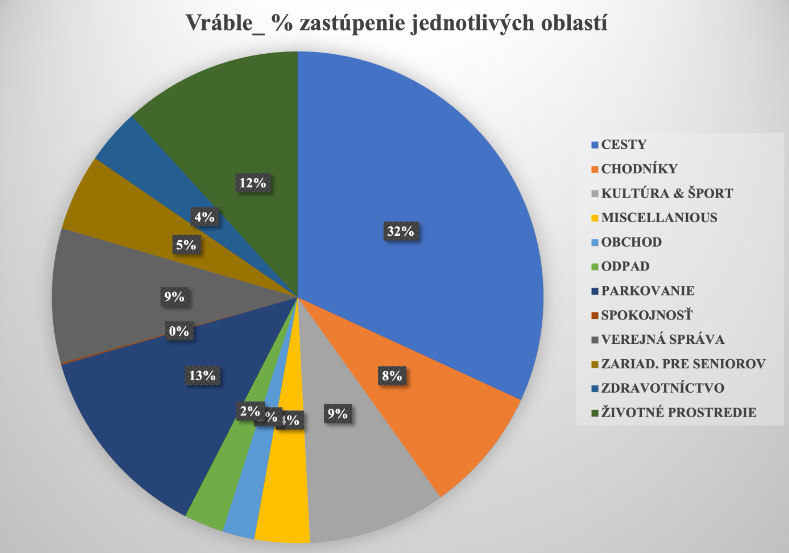
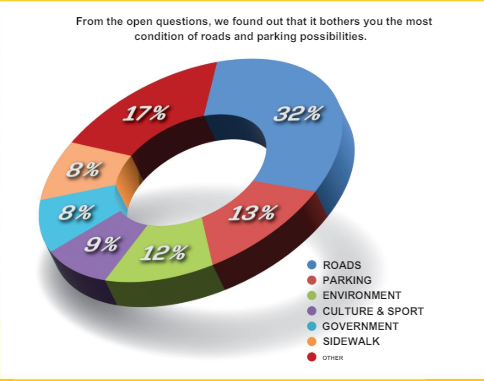
The core team member or members focused on data and communication can support the presentation by preparing different visuals for presenting the data. Review the differences in Box 20 to understand how visuals can be polished and prepared to be most easily read and understood.