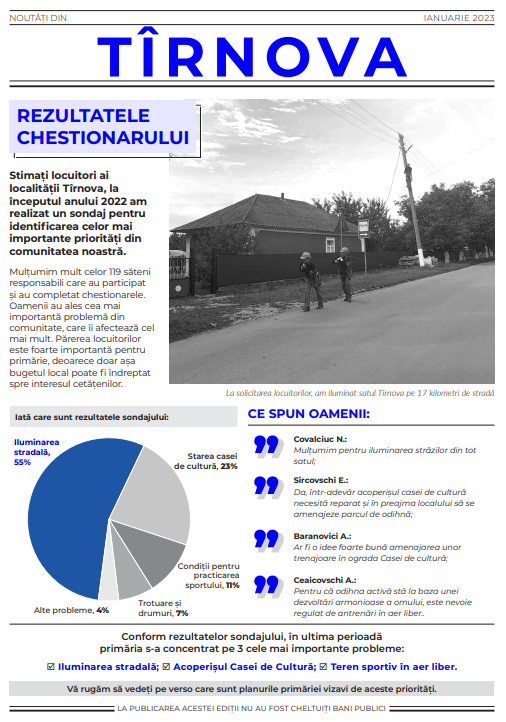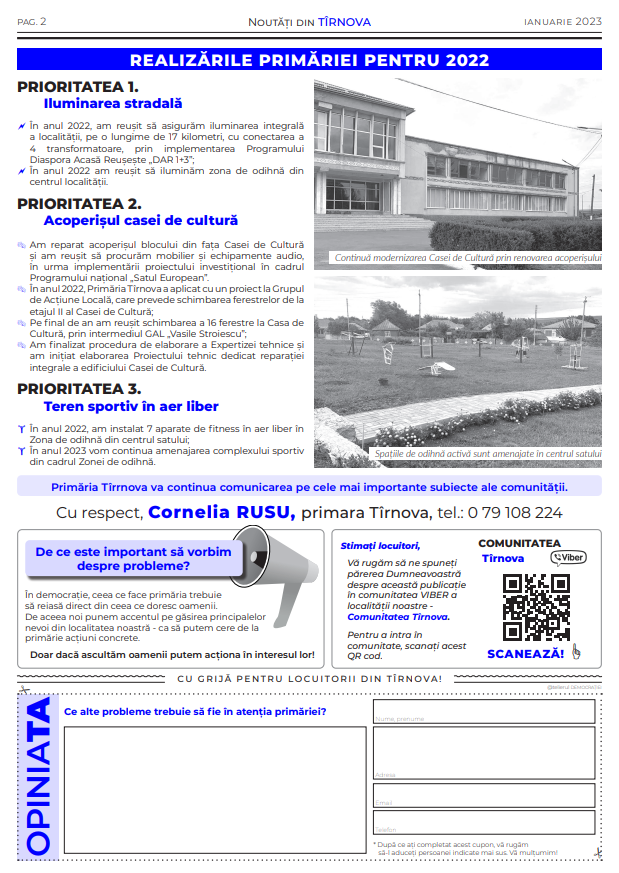
The following is a template for a close-the-loop letter (see Box 31) that may be mailed or distributed to the public virtually, through a door-to-door campaign, or some other way.
We use the term “letter,” but it could also be a more detailed report, a simple flier or a social media post. You can adapt this template for a public presentation at a public meeting. Whatever format you choose, your goal is to share it as widely as possible and to cover at least the following suggested contents:
- Describe what you learned: Remind the public of the priorities set during the data collection. Briefly describe the process: for example, “Back in September, we issued questionnaires by going door to door, and 450 of you responded.” You may wish to re-share a chart of the survey results again and include quotes you have collected from the public (either through the surveys or through other communications) that relate to these priorities.
- Report how you took action to solve the issue (and if the issue is resolved): Next, take the top three priorities, and provide an update on what has been done so far. What has been achieved? How was it paid for? If the issue remains unresolved, explain (briefly) why – is funding missing, has the city issued a tender for bids or is the problem a technically complex one? For each issue, provide this information, as well as photographs of the progress made (for visual learners and to help people connect the changes they’ve seen with their feedback).
- Ask for more feedback (iterate): Finally, close with a brief note to the public. Are you looking for volunteers? Is there a social media or message board they can join to stay current? In the template and examples below, the mayors offer several ways for residents to contact them, including a slip of paper where residents can write down an issue and their contact information. This slip can then be torn off the publication and returned to city hall. Alternatively, include the email address or social media handle of a local authority office or officer that the public can contact electronically to share ideas.
As always, keep in mind the importance of two-way dialogue – always offer a means for the public to stay involved.